
Gadsden County Property Records
Gadsden County property records are maintained by the Property Appraiser's office in Quincy, Florida, which sits just west of Tallahassee in the state's panhandle region. This county of roughly 46,000 residents keeps parcel data, ownership rolls, assessment histories, and exemption filings for all real property within its borders. Whether you're researching land for a potential purchase, checking your own assessment, or tracing ownership history, this page points you to the right offices and tools.
Gadsden County Property Records Quick Facts
Gadsden County Property Appraiser
The Gadsden County Property Appraiser is located at 5B E Jefferson Street, Quincy, FL 32351. Phone: 850-875-1985. The office website is at gadsdencopa.org. From there you can search parcel records, review exemption information, and get contact details for staff. The appraiser's primary job is to set the just value for each parcel in the county as of January 1 each year.
Florida's Chapter 193 statutes lay out how property appraisers must value real property statewide. In Gadsden County, the appraiser reviews sales data from arm's-length transactions and uses those to set values for similar properties across the county. Agricultural land, residential parcels, and commercial properties each follow different valuation methods set by Florida law.
The appraiser's office in Quincy handles not just valuation but also the processing of exemption applications, ownership transfers, and address changes. Staff can assist in person during regular business hours, which are generally Monday through Friday, 8:00 a.m. to 5:00 p.m.
The Florida Department of Revenue maintains statewide property tax data, including information that is useful for understanding how Gadsden County assessments compare to the rest of Florida.
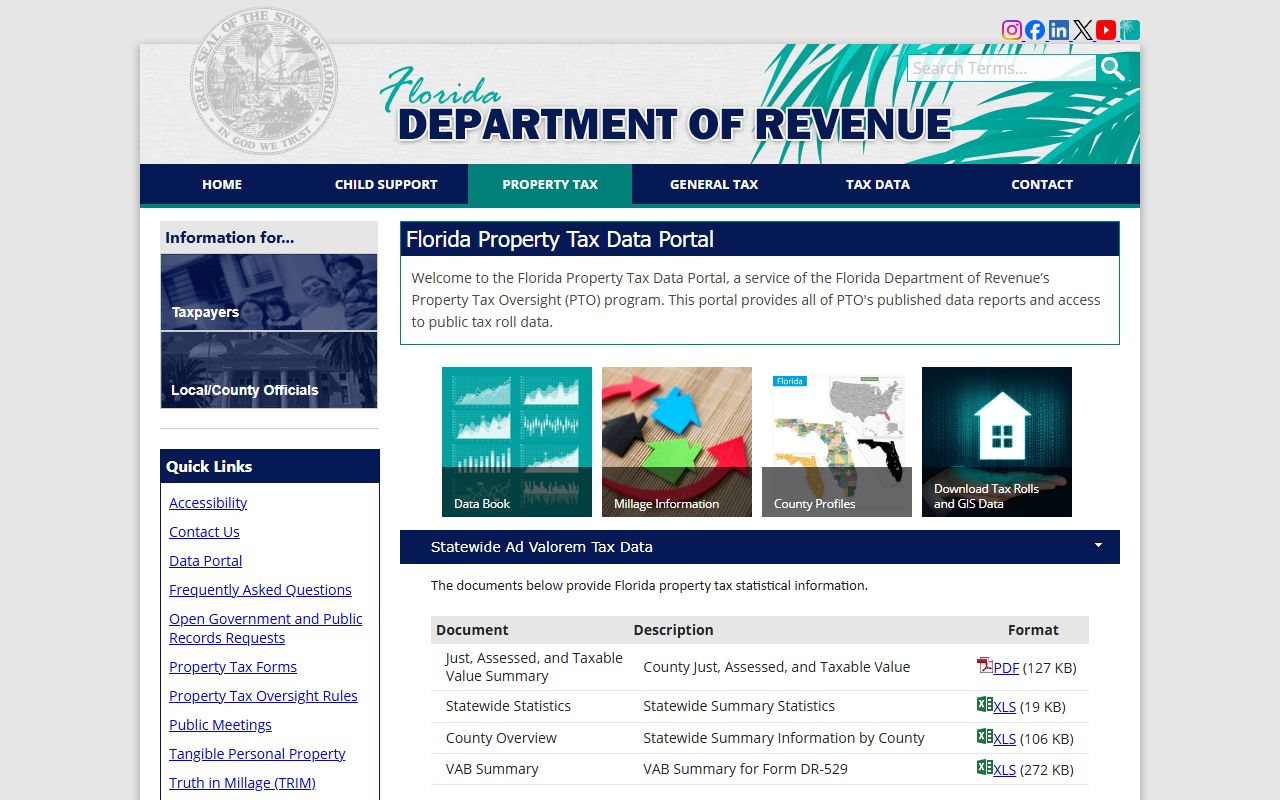
This DOR data portal is a helpful supplement to the local appraiser's site when you want statewide context on assessment practices or exemption rates.
Searching Parcels and Ownership Data
The online search tool at gadsdencopa.org lets you look up Gadsden County parcels by owner name, street address, or parcel identification number. Each result shows the assessed value, just value, taxable value, land area, building data, and any exemptions currently on file. The legal description of the parcel also appears in the record, which is the language used in recorded deeds.
Search results include year-by-year value histories. This is useful when you want to see how a property's assessment has changed over time, whether due to improvements, market shifts, or a change in exemption status. If you're researching a commercial parcel, you can also see tangible personal property information tied to that address.
Note: Parcel IDs in Gadsden County follow a specific format tied to the county's geographic coding system. If you're searching by address and get no results, try a partial address or check the spelling against county records.
Recorded Documents and Deed Research
Deeds, mortgages, liens, and other instruments that affect Gadsden County real property are filed with the Gadsden County Clerk of Courts. Under Chapter 28 of the Florida Statutes, the clerk is the legal custodian of all recorded documents in the county. Those records are public and available for review. The Clerk's office can provide certified copies of deeds and other documents for a fee.
Most recorded deeds in Florida include a documentary stamp tax amount. That tax is based on the sale price, so the stamp amount can give you a reasonable estimate of what a property sold for. A deed with a documentary stamp tax of $700 suggests a sale price around $100,000. This is a common method for estimating sale prices from public records when the actual price isn't shown on the deed.
The Clerk's recorded documents search can be done by grantor name, grantee name, or document type. Older records may be in paper or microfilm form. Check with the Clerk's office about the availability of digital records for the time period you're researching.
Homestead and Other Exemptions
Gadsden County property owners who live in their home as a primary residence can apply for homestead exemption. This reduces the assessed value by up to $50,000, with the first $25,000 applying to all levies and the second $25,000 applying only to non-school taxes. The deadline to apply each year is March 1.
Seniors who meet income thresholds may qualify for an additional exemption that can freeze their assessed value or provide a further reduction. Disabled veterans in Gadsden County may be eligible for significant exemptions, and in some cases total exemption if they are fully and permanently disabled as a result of service. The appraiser's office can review your situation and let you know which exemptions apply.
Save Our Homes limits annual increases in assessed value for homesteaded properties to 3% or the CPI rate, whichever is lower. Over time, this can create a large difference between a property's just value and its assessed value. If you sell and buy in Florida, you may be able to carry some of that benefit to your new home through the portability process.
Property Taxes in Gadsden County
Once the appraiser certifies the tax roll, the Gadsden County Tax Collector sends bills in November. Under Chapter 192, property taxes are due by March 31 of the following year. Paying early saves money: 4% in November, 3% in December, 2% in January, 1% in February. Taxes paid after March 31 are delinquent and subject to penalties.
Delinquent property taxes in Gadsden County can lead to tax certificates being sold to investors, and eventually to tax deed sales. The Clerk of Courts handles tax deed proceedings. If you're researching a property with a history of delinquencies, check both the Tax Collector's records and the Clerk's official records for any outstanding certificates or pending tax deed applications.
Public Records and Your Right to Access
Florida's Chapter 119 gives every person the right to inspect and copy public records held by government agencies, including all Gadsden County property offices. You don't need to be a Florida resident or explain your reason for requesting records. Ownership information, assessment rolls, deed records, and tax payment history are all open to the public under this law.
The Florida Department of Revenue's local officials directory is a good resource for finding contact information for Gadsden County's appraiser, tax collector, and related offices. The DOR also maintains taxpayer guides that explain the assessment and appeals process in plain terms.
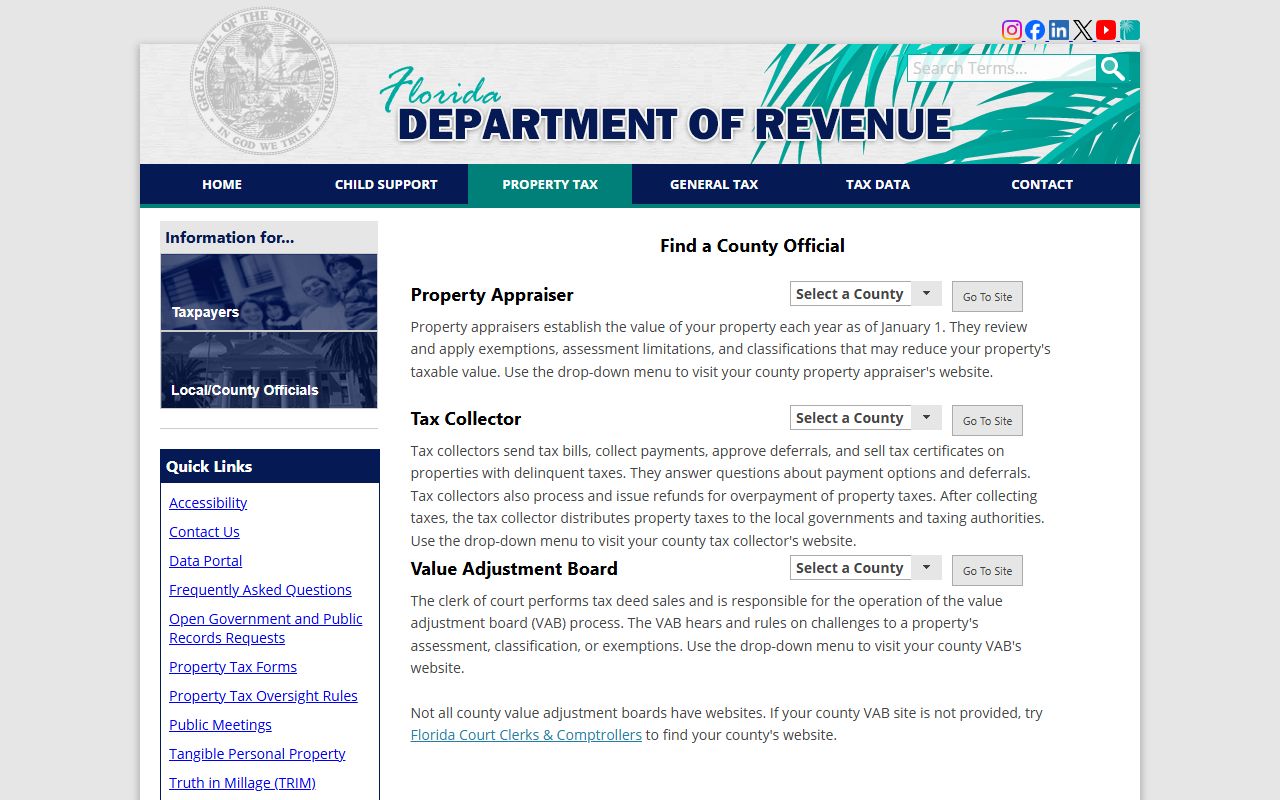
Using the DOR directory can help you confirm current contact details and website addresses for Gadsden County offices, which can change over time.
Appealing Your Property Assessment
If you believe the Gadsden County Property Appraiser has set your property value too high, you can challenge it. The first step is to contact the appraiser's office and ask for an informal review. Bring recent comparable sales or a professional appraisal that supports a lower value. The appraiser can adjust the value if the evidence is convincing.
If that doesn't work, you can file a petition with the Gadsden County Value Adjustment Board by the deadline on your TRIM notice, which arrives in August. The VAB holds hearings, reviews evidence, and can lower the appraiser's value. After a VAB decision, you can still seek review in circuit court. This full process is governed by state law and gives property owners meaningful options to contest what they believe are inflated assessments.
Cities in Gadsden County
Gadsden County has no cities that meet the population threshold for a dedicated city page on this site. Quincy is the county seat and the largest city in the county. Other communities include Chattahoochee, Greensboro, Havana, and Midway, all smaller municipalities without individual pages here.
Nearby Counties
Gadsden County borders four counties. Leon County lies to the east and is home to Tallahassee. Jackson County is to the northwest, Liberty County to the southwest, and Jefferson County to the southeast. Each has its own property appraiser and recording office.