
Florida Property Records
Florida property records are public documents managed by the property appraiser in each of the state's 67 counties. These records cover assessed values, ownership information, exemptions, and land descriptions for every parcel in Florida. The Florida Department of Revenue oversees property tax administration statewide, but the actual records are held at the county level. You can search most Florida property records online through each county's property appraiser website, visit the local office in person, or request copies by mail. Under Florida law, these records are open to any person without a stated reason.
Florida Property Records Quick Facts
The Florida Property Records System
Florida manages property records through a network of 67 elected county property appraisers. Each one is a constitutional officer who works independently of state and local government. Their core job is to find, list, and value all property in the county as of January 1 each year. Under Chapter 192, Florida Statutes, the county property appraiser must assess all property in the county, whether taxable, exempt, or subject to a use classification. This covers both real property and tangible personal property held by businesses across the state.
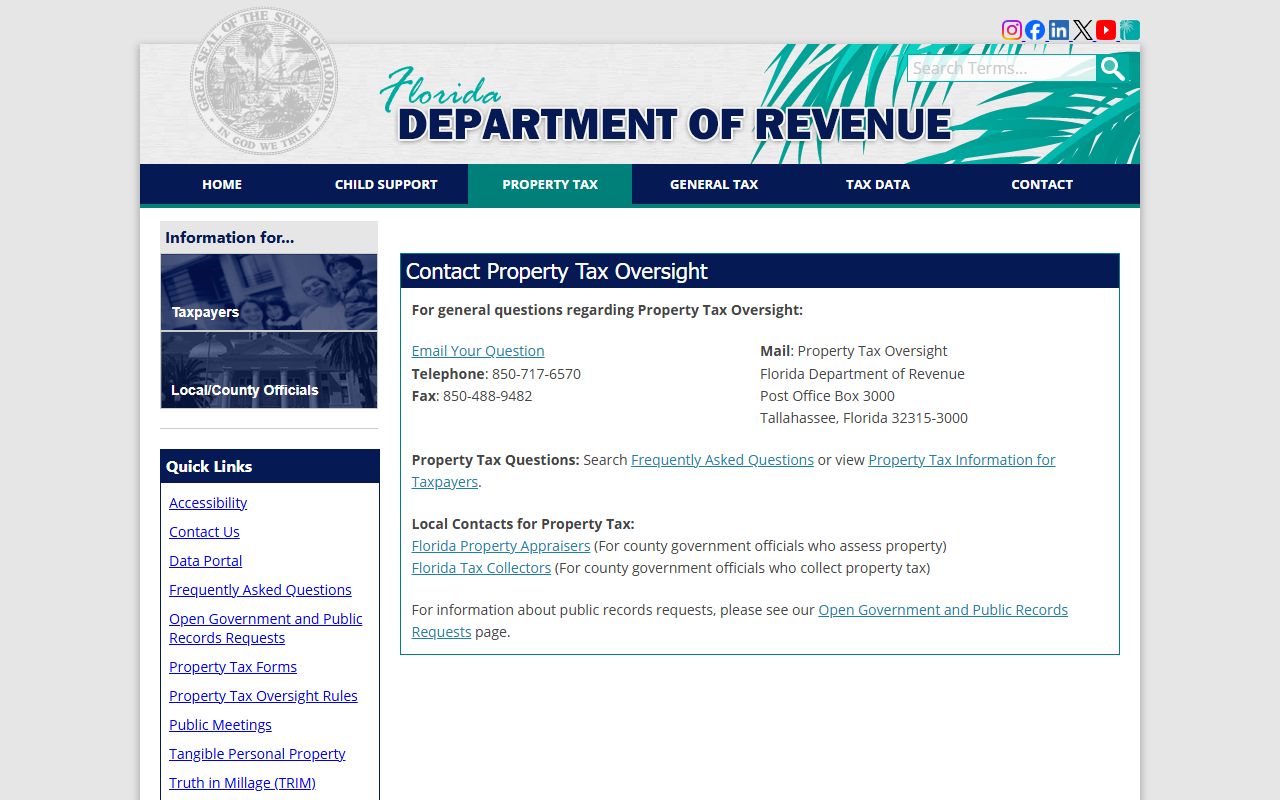
The Florida Department of Revenue (DOR) runs its Property Tax Oversight (PTO) program to provide guidance and set standards. The PTO does not set local values or handle individual county records, but it does publish statewide data, approve tax rolls, and assist taxpayers. Their office is at 5050 West Tennessee Street, Tallahassee, FL 32399, and they can be reached at 850-717-6570 or PTOTechnology@floridarevenue.com. The main property tax page is at floridarevenue.com/property.
The Florida Property Tax Data Portal is a free tool that gives public access to tax roll reports and county-level data for all 67 counties. It includes just value and taxable value summaries, county overviews, and data from the Value Adjustment Board process. Reports are available as PDF and Excel downloads.
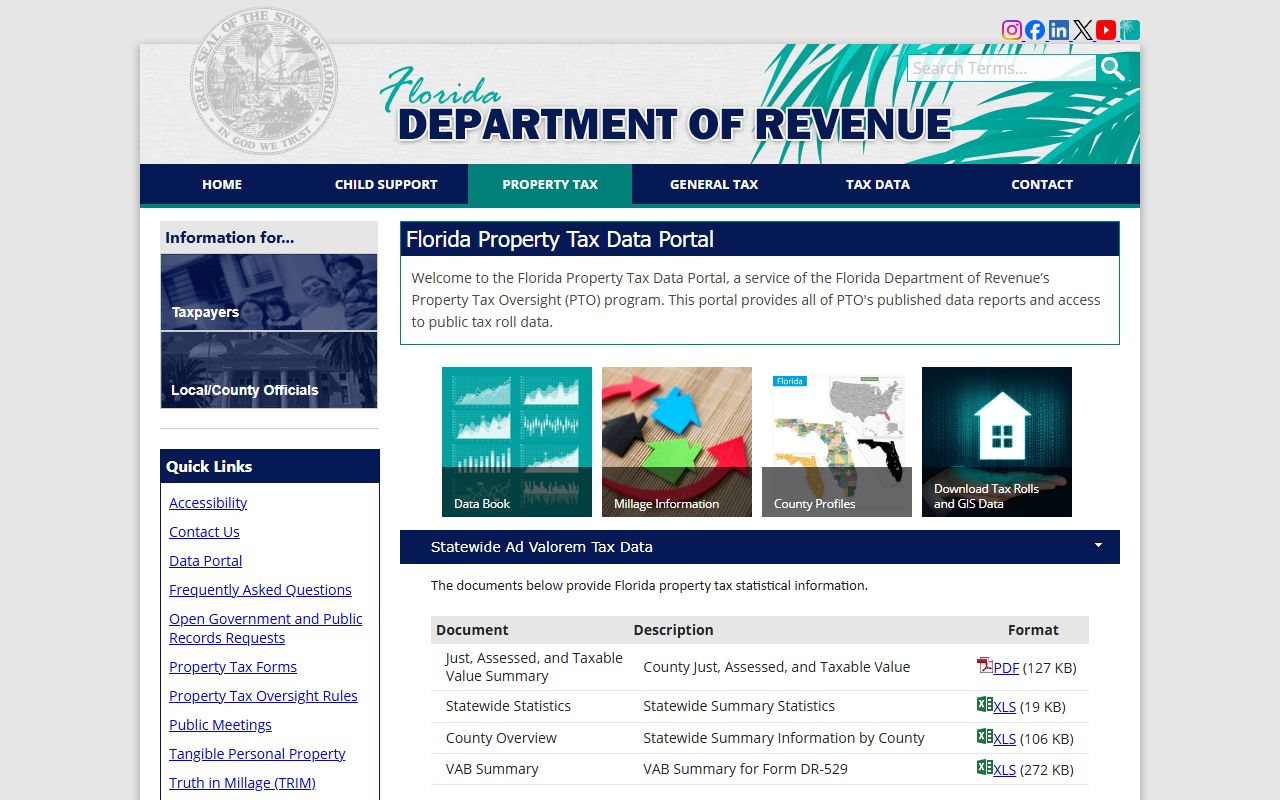
The portal covers county and municipal tax data, assessment roll evaluations, and tax valuation rate tables. It is a good place to start when you need statewide context or want to compare data across multiple Florida counties.
How to Search Florida Property Records
Most counties in Florida offer free online property record searches through the property appraiser's website. You can look up a parcel by owner name, property address, or parcel ID number. Results typically show the current owner, assessed value, market value, taxable value, applied exemptions, and a legal description of the land. Many county sites also include sales history, GIS maps, and building detail pages.
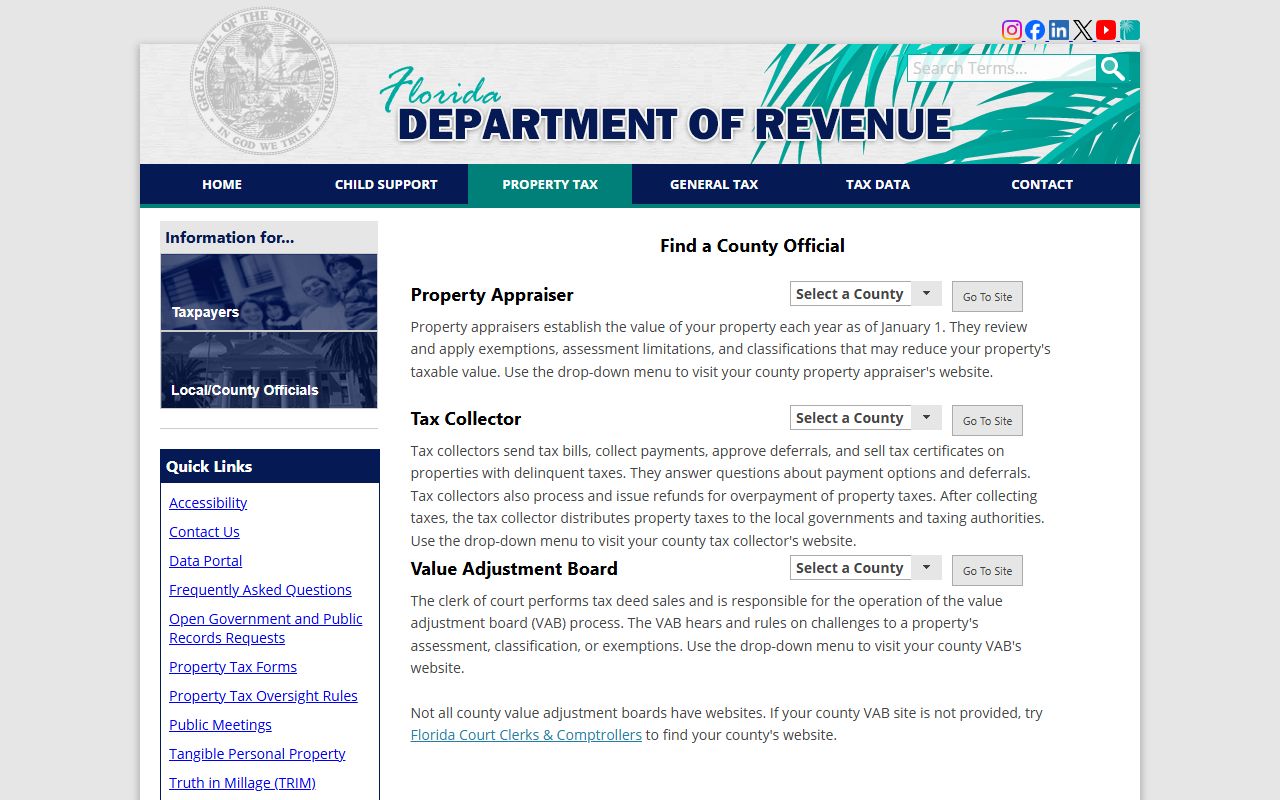
The County Officials Directory on the DOR website lists every county property appraiser in Florida with direct links to their offices and websites. This is the fastest way to find the right search tool for any county. Each county runs its own system, so the look and features vary, but all are free to use. No login or registration is needed for basic searches.
For recorded documents like deeds, mortgages, and liens, you go to the Clerk of the Circuit Court in the county, not the property appraiser. The clerk holds the recorded documents; the appraiser holds the assessment data. Both sets of Florida property records are public. If you want a certified copy of a deed, contact the clerk's office for the county where the property sits.
In-person searches are also an option at any county property appraiser office. Staff can help you look up parcels, explain values, and direct you to the right forms. Call ahead to confirm office hours, which vary by county across Florida.
What Florida Property Records Contain
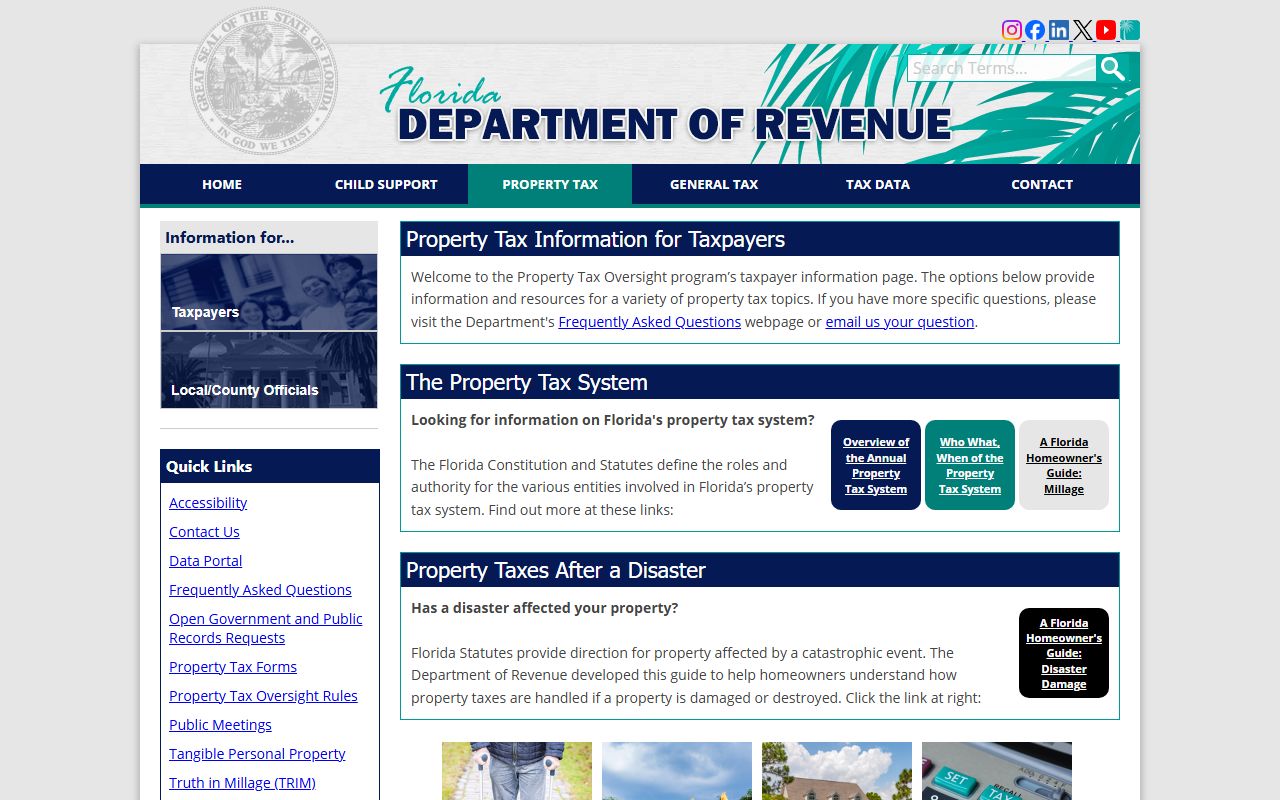
A Florida property record from the county appraiser holds far more than a tax figure. The full record covers ownership, physical details, and valuation data all in one place. The Florida taxpayer information page explains how values are set and what owners can expect each year from the assessment process.
Under Chapter 193, Florida Statutes, the appraiser must weigh eight specific factors when arriving at just value. These include current use of the property, income potential, cost to replace structures, and what similar properties have sold for in the area. Market value and assessed value are not the same in Florida because of the assessment caps that apply to homestead and certain non-homestead properties.
Florida property records typically include the following details:
- Parcel identification number (Folio or Parcel ID)
- Owner name and mailing address
- Property address and legal description
- Just (market) value, assessed value, and taxable value
- Applied exemptions (homestead, senior, veteran, disability)
- Sales history with dates and prices
- Land and building details, including square footage and year built
Note: Some county sites also show aerial photos, zoning designations, and flood zone data alongside the core property appraiser records.
Florida Homestead Exemption
Homeowners who use their Florida property as a primary residence can apply for a homestead exemption. This lowers the taxable value of the home by up to $50,000. The first $25,000 applies to all tax levies, and the second $25,000 applies only to non-school taxes. The filing deadline is March 1 of the tax year. Applications go to the county property appraiser where the home is located.
The Save Our Homes provision, under Section 193.155, Florida Statutes, limits how much the assessed value of a homesteaded property can rise each year. The cap is 3% or the Consumer Price Index rate, whichever is lower. Over time, a homesteaded property's assessed value can fall well below its market value. When you search Florida property records, you may see a large gap between just value and assessed value on homesteaded parcels for this reason. The difference represents the accumulated Save Our Homes benefit.
Florida also allows portability of the Save Our Homes benefit. If you sell a homesteaded property and buy a new one in Florida, you can transfer some or all of the accumulated cap benefit to your new home. This can produce big savings on the new property's assessed value. Portability applications are filed with the county property appraiser at the same time you apply for a new homestead exemption.
Additional exemptions are available for seniors over 65, veterans with service-connected disabilities, first responders, and persons with total disabilities. Each has its own eligibility rules and deadlines. Check with your county property appraiser for the full list of available exemptions in Florida.
Note: A homestead exemption filed after March 1 takes effect in the following tax year, not the current one.
Florida Property Tax Timeline
Florida property taxes follow a strict calendar. January 1 is the valuation date every year. The appraiser values all property as of that date, no matter when it sells or what changes happen later in the year. Under Section 193.023, Florida Statutes, the county appraiser must finish all assessments no later than July 1.
Around August 1, every property owner in Florida receives a TRIM notice. TRIM stands for Truth in Millage. This is not a bill. It shows your property's proposed assessed value, the exemptions you have on file, and what your taxes might be if the proposed millage rates pass. The notice lists dates and times of public budget hearings where you can give input. Tax bills go out in November. Early payment earns a discount: 4% in November, 3% in December, 2% in January, and 1% in February. The final deadline for payment without penalty is March 31 of the following year.
Tangible personal property returns for businesses are due April 1 each year. Missing this deadline results in a 5% per month penalty, up to 25% of the assessed value. Businesses with assets under $25,000 may qualify for an exemption, but the initial return must still be filed.
Title and Land Records in Florida
For historical land documents and state-owned land records, the Florida Department of Environmental Protection maintains a separate archive. The Bureau of Survey and Mapping operates a Title and Land Records section that holds original survey field notes, plats, and deeds going back to Florida's territorial era. The section also maintains the state-owned land inventory and handles public land research requests. Most of these records are searchable online through the Board of Trustees Land Document System, known as the BTLDS.
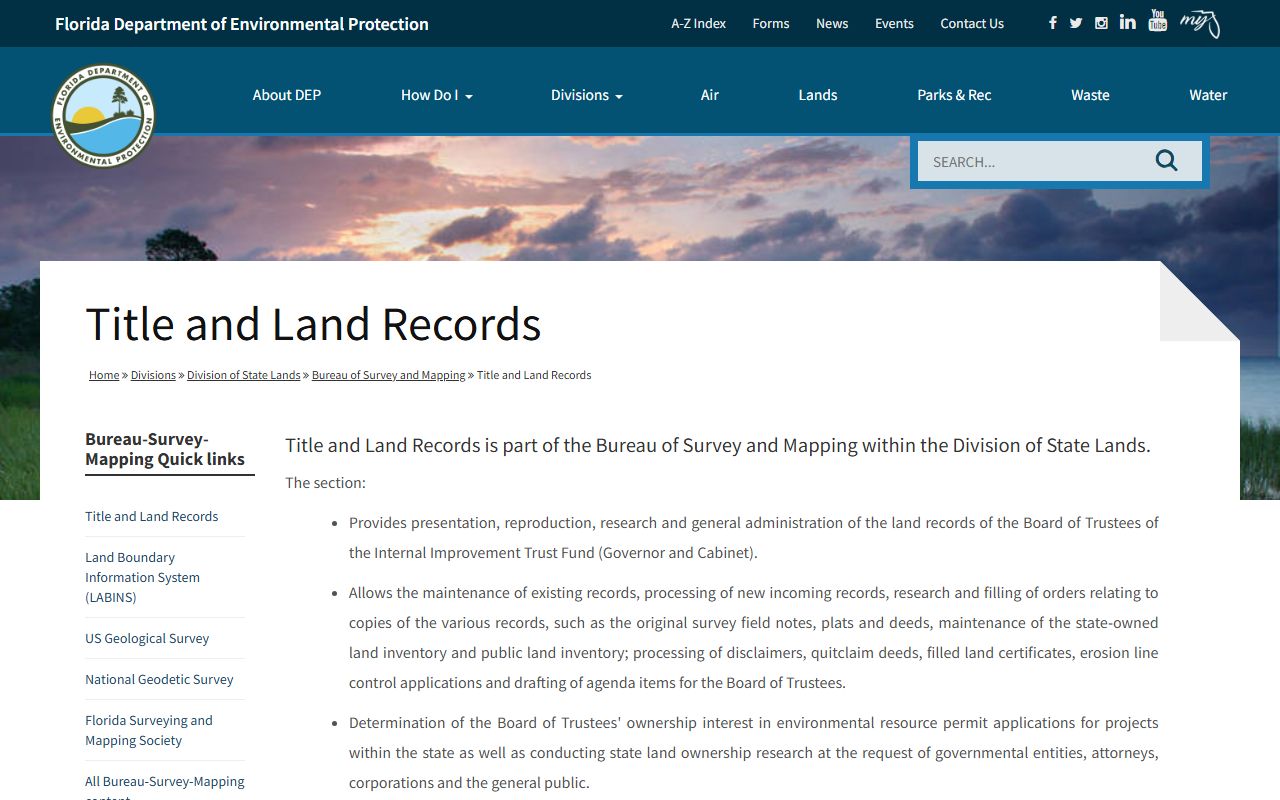
Physical documents are kept in a climate-controlled vault. Access is supervised, and at least one records staff member is present when visitors review materials. For large requests, staff time is charged in addition to copy fees. You can learn more and plan a research visit at the Title and Land Records page on the DEP website.
Florida Public Records Access
Florida has broad public records rights. Under Chapter 119, Florida Statutes, every person has the right to inspect and copy public records. The law says that "a custodian of public records and his or her designee must acknowledge requests to inspect or copy records promptly and respond to such requests in good faith." You do not need to give a reason. Property records at the county appraiser and at the clerk's office are generally public.
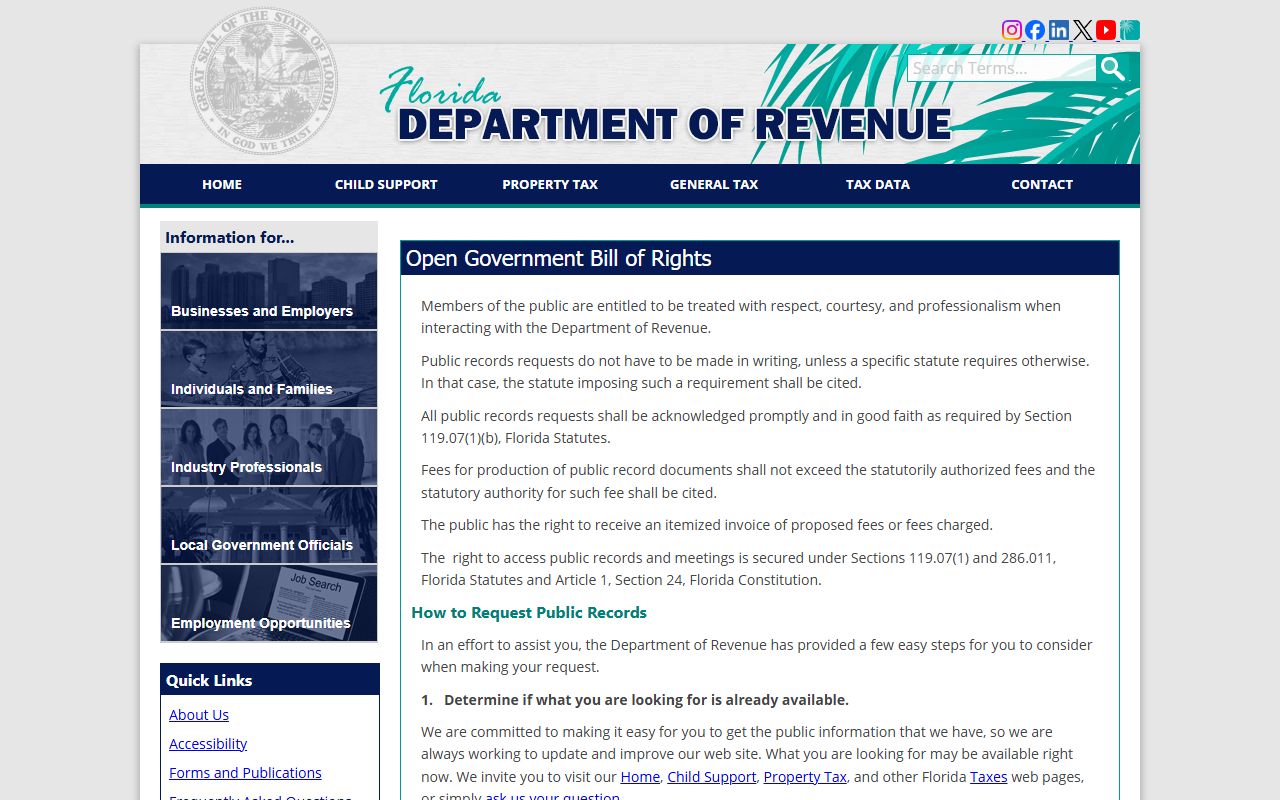
The Florida DOR publishes an Open Government Bill of Rights that describes how the agency handles public records requests. Requests do not have to be in writing unless a specific statute requires it. Fees cannot exceed the amounts set by law, and the agency must cite the legal authority for any fee it charges. Most property records are available at no cost through the online search portals.
To request your own tax records from the DOR by mail, send a written request to: Department of Revenue, Records Management Room 1-4364, 5050 W. Tennessee St., Tallahassee, FL 32399-0158. Include your Federal Employer Identification Number or Social Security Number, the property location, a copy of your photo ID, and the types of records you need. The department keeps sensitive personal and business information for millions of people, and some of that information is exempt from disclosure under Florida law.
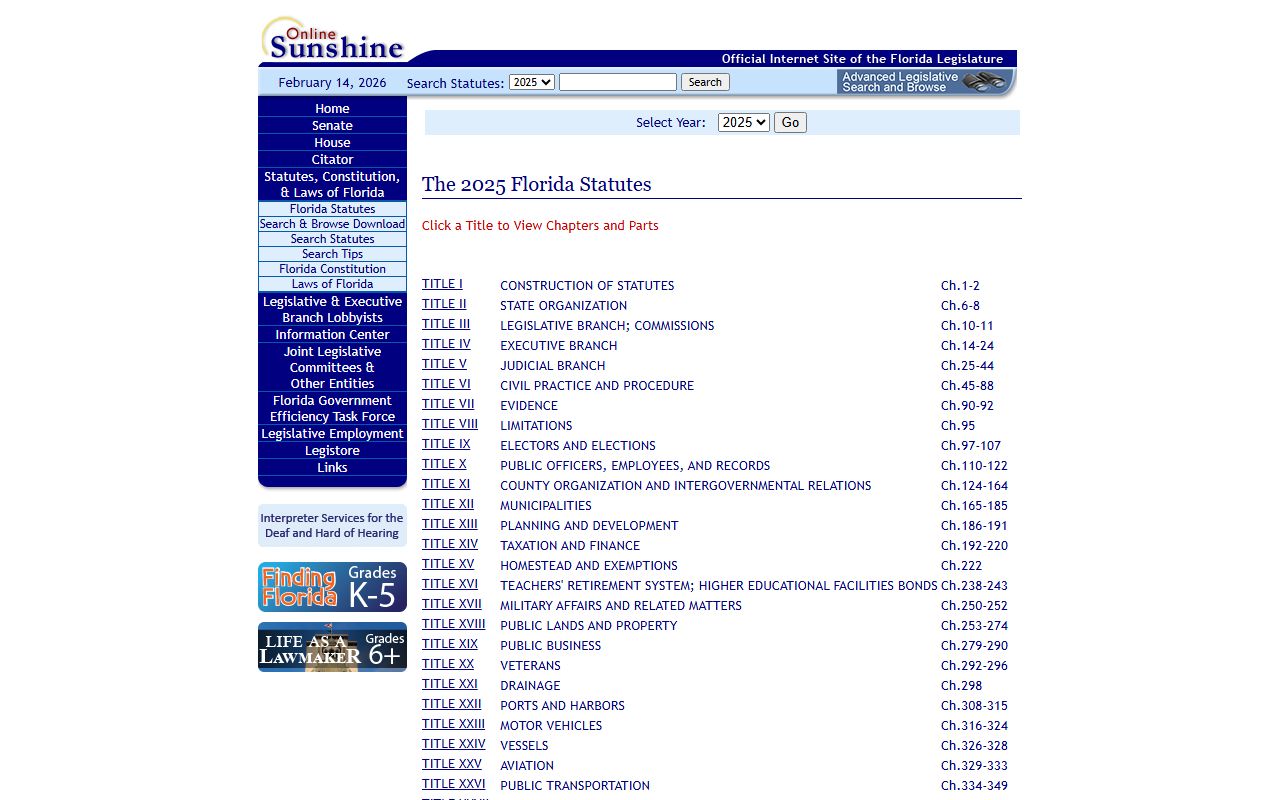
The full text of Florida's property and public records statutes is free at leg.state.fl.us. The Florida Administrative Code, which holds DOR rules for property appraisers, is at flrules.org.
Official Records at the County Clerk
The Clerk of the Circuit Court in each Florida county serves as the official recorder of documents. Under Section 28.222, Florida Statutes, the clerk records all required instruments into one series called Official Records. The clerk keeps a general alphabetical index of all instruments filed for record, direct and inverse. Instruments in the Official Records include deeds, mortgages, notices of lien, tax warrants, bills of sale, and other documents that affect ownership or encumbrance of property in Florida.
If you need a copy of a deed, a satisfaction of mortgage, or a recorded lien, you contact the Clerk, not the property appraiser. The property appraiser uses deeds recorded by the clerk to update ownership in the assessment records. Both offices maintain public records, but they are separate systems. Under Section 28.2221, the clerk must provide electronic access to official records online.
Note: For ownership, values, and exemptions, contact the county property appraiser. For deeds, mortgages, and recorded instruments, contact the county clerk of the circuit court.
Florida Department of State Resources
The Florida Department of State maintains several tools that relate to property matters. The agency oversees elections, corporations, historical records, and state libraries under Secretary of State Cord Byrd. For business owners who hold real property or have interests tied to real estate, the Sunbiz portal tracks corporate and LLC registrations. Knowing whether a business entity that owns property is active or inactive can matter when researching a parcel in Florida.
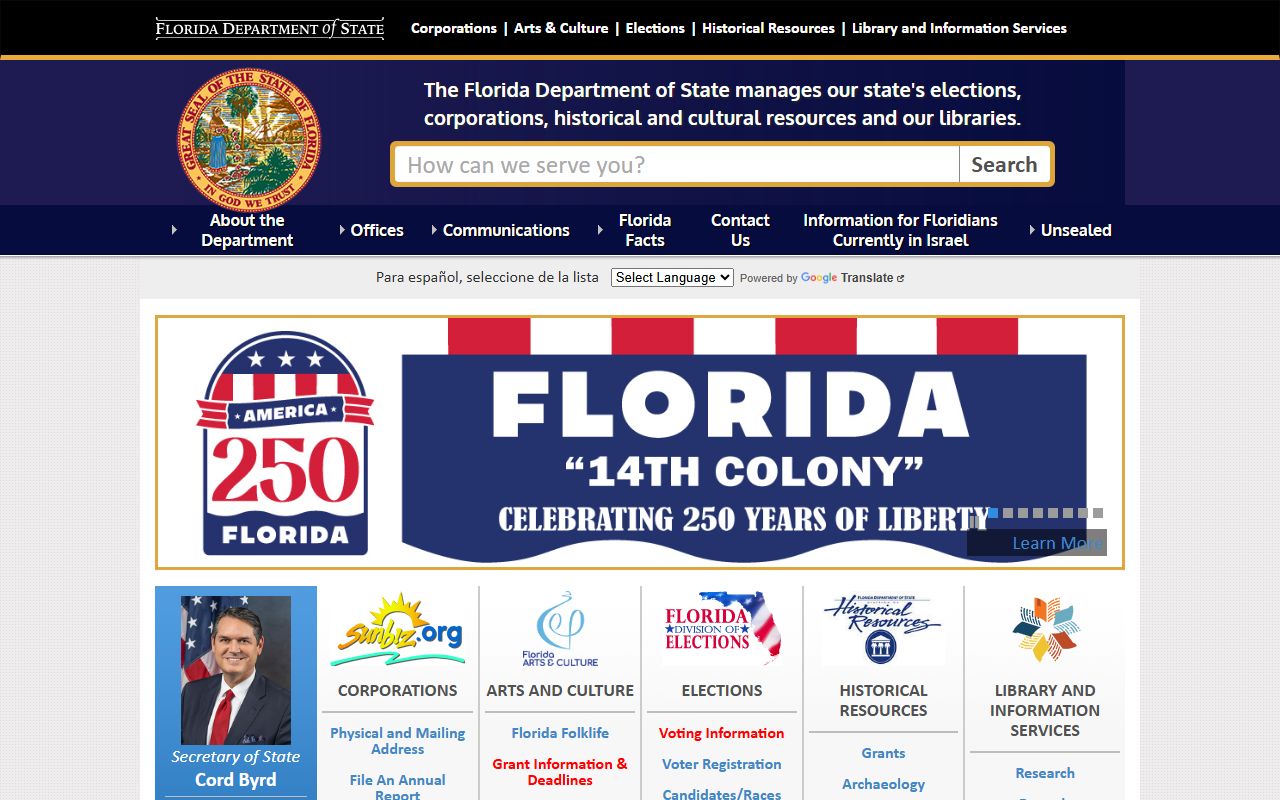
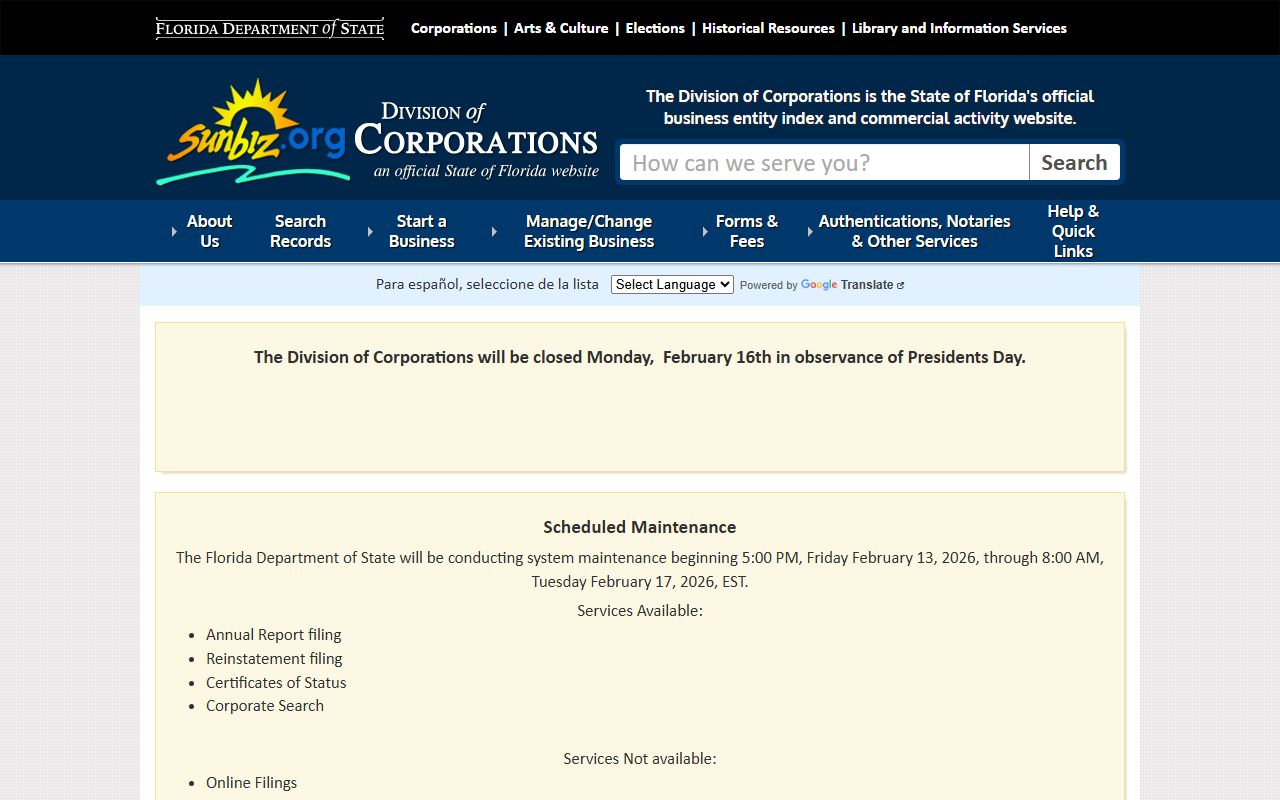
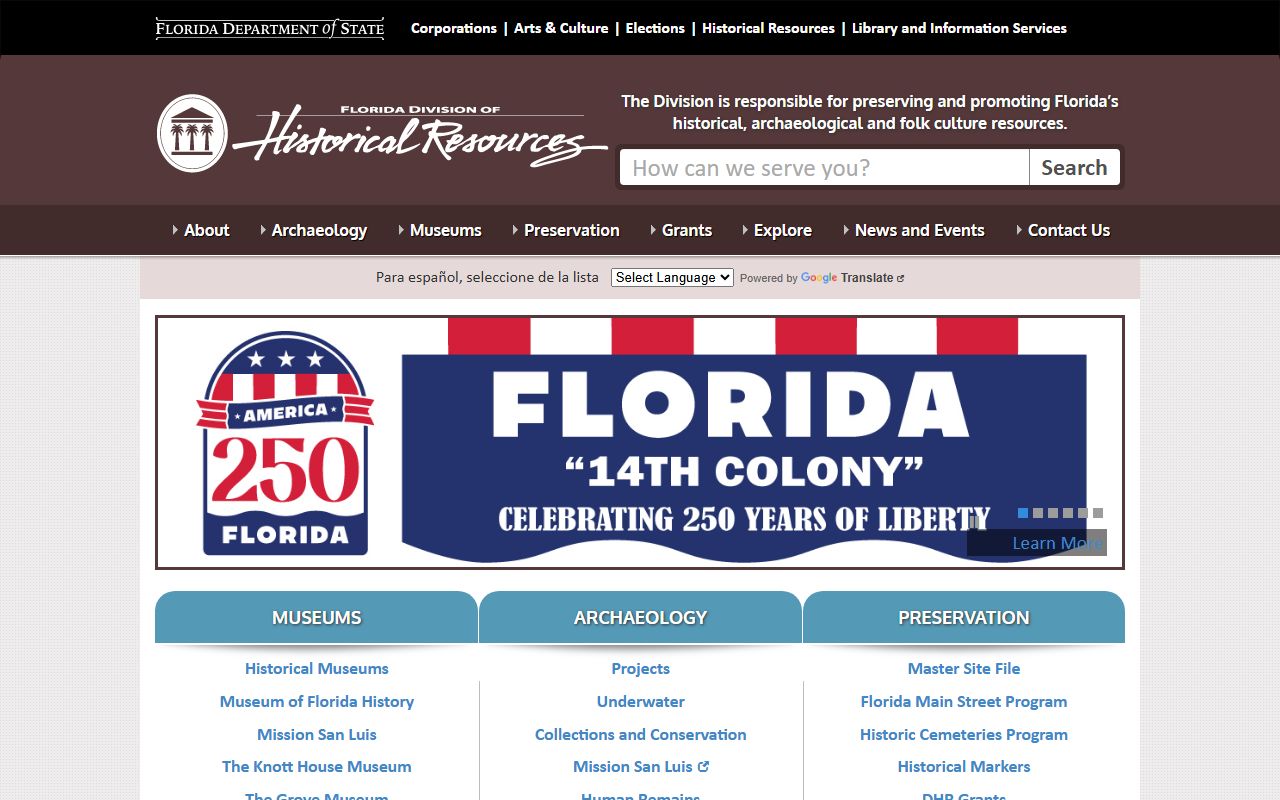
The Sunbiz database at dos.fl.gov/sunbiz is free to search and shows registered agents, officers, and filing history for any Florida business entity. This is useful when a property is owned by an LLC or corporation rather than an individual. The Florida Department of State website also links to the Division of Historical Resources and the Division of Library and Information Services, both of which can assist with deep historical property research.
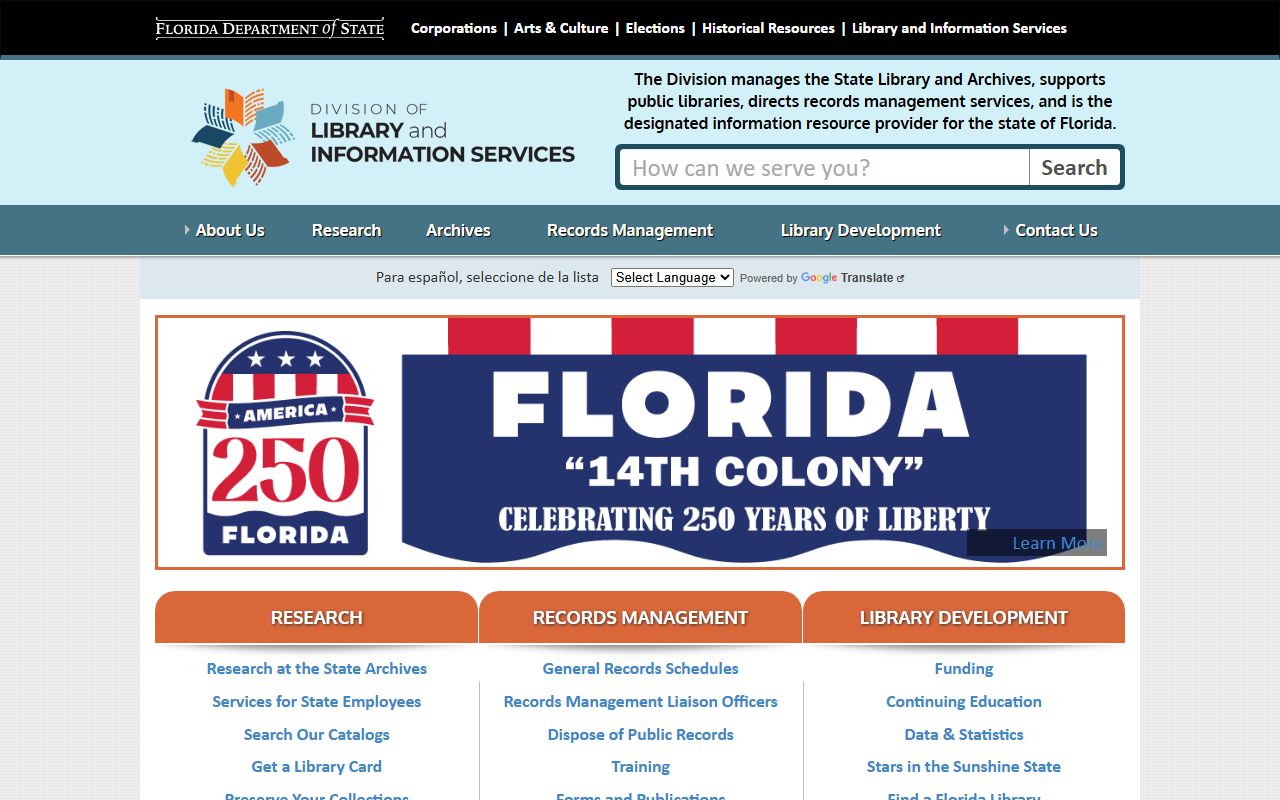
The Division of Library and Information Services at dos.fl.gov/library-archives holds archival collections and can help with historical land research in Florida. This division maintains the State Library of Florida and the Florida State Archives, both of which contain records relevant to early land ownership and territorial-era surveys.
Browse Florida Property Records by County
Each of Florida's 67 counties has its own property appraiser who maintains local records. Pick a county below to find contact information, search tools, and resources for property records in that area.
Florida Property Records by City
Florida's major cities file property records through the county property appraiser. Pick a city below to find property records resources for that area.