
Search Hernando County Property Records
Hernando County property records are maintained by the county property appraiser and the clerk of court, giving residents, buyers, and researchers a clear path to ownership data, assessed values, tax exemptions, and deed history for parcels throughout the county. Whether you are searching for a home in Brooksville, reviewing a lot near Spring Hill, or looking into the history of a commercial parcel along U.S. 19, these records are public under Florida law and available to anyone who requests access.
Hernando County Property Records Quick Facts
Hernando County Property Appraiser
The Hernando County Property Appraiser office sits at 15400 Citrus Way, Brooksville, FL 34601. The office phone number is 352-754-4190, and the website is hernandocopa.org. From that site, you can access the property search database, download exemption application forms, and find answers to common questions about the assessment process. Staff work year-round to update the tax roll, review new construction, and process exemptions before the annual certification deadline.
The office operates under Florida Statutes Chapter 193, which establishes how all 67 Florida counties must assess property, handle assessment challenges, and certify the tax roll to the state Department of Revenue each year. Hernando County has grown steadily over the past two decades, and the appraiser's office processes a large volume of new construction assessments, ownership transfers, and exemption filings each year.
Hernando County is part of the Tampa Bay region and shares many characteristics with neighboring Pasco and Citrus counties, including a mix of residential communities, rural land, and some commercial corridor development. The appraiser's office handles all of this across a single unified database.
The statewide Florida Department of Revenue data portal provides supplemental information for researchers and property owners who want to look beyond a single county's records.
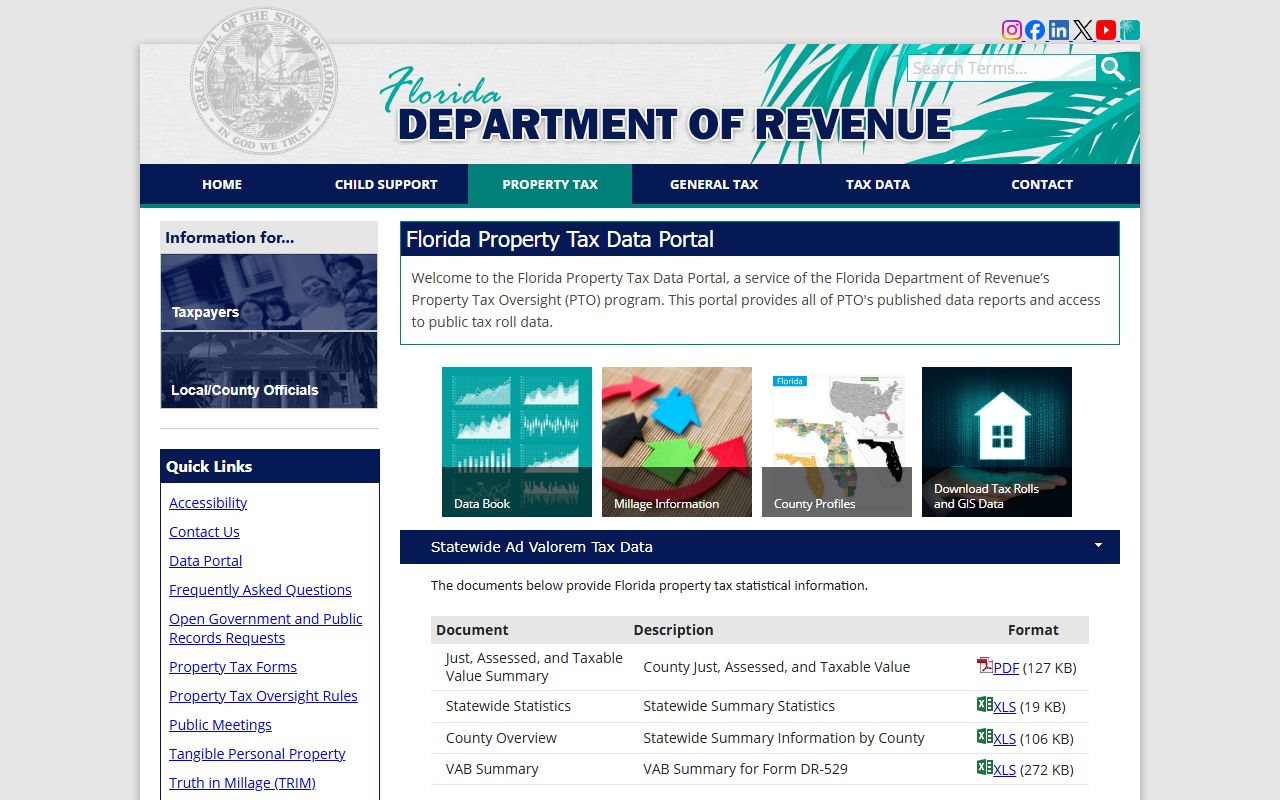
This state-level resource includes archived roll data and comparison tools that can be useful when researching property values across county lines.
How to Search Hernando County Property Records
The online property search at hernandocopa.org is the fastest way to look up a parcel. Enter the owner's name, the property address, or the parcel identification number to pull up the full record. Results show the legal description, current ownership, just and assessed values, exemption status, and a sales history with deed book references. The database is updated on a regular basis as new transactions, assessments, and exemption changes are processed.
In-person service is available at the Citrus Way office in Brooksville during regular business hours. If you are trying to track down older records, research a property with a complicated ownership chain, or need help understanding what a record shows, the staff can assist you. Bring what you know: an address, a prior owner's name, or a parcel number is enough to get started.
For recorded instruments such as deeds, mortgages, judgment liens, and notices of commencement, you need the Hernando County Clerk of the Circuit Court. The clerk maintains the official records index under Florida Statutes Chapter 28. Those documents are separate from the appraiser's database but cross-reference through parcel numbers and legal descriptions. Note: You can search the clerk's records to find copies of recorded deeds, but you will pay a per-page fee for certified copies.
What Hernando County Property Records Show
A property record from the Hernando County Property Appraiser typically includes the current owner's name and mailing address, the property's physical location, the parcel identification number, and the legal description taken from the recorded deed. The valuation section breaks the record into just value (market value), assessed value after any applicable caps, and taxable value after all exemptions are subtracted. Each of these numbers matters for different purposes: just value matters for sales comparisons, assessed value is what caps and portability calculations are based on, and taxable value is what the millage rate is applied to when computing the tax bill.
Sales history is a key part of the record. Prior sales are listed with dates, recorded prices, and deed instrument references, which lets you trace the ownership chain and understand how market value has shifted over time. Florida Statutes Chapter 192 requires that all property be placed on the tax roll, so every parcel in Hernando County has a record even if it has not changed hands recently.
Building data covers square footage, year built, construction type, and roof type. Land data shows the lot size, zoning code, and land use designation. Extra features such as pools, docks, or detached garages are listed separately with their own value calculations.
Homestead Exemption in Hernando County
Florida's homestead exemption cuts the taxable value of a primary residence by up to $50,000. The first $25,000 covers all taxing authorities, and the second $25,000 applies only to non-school millage on assessed values between $50,000 and $75,000. You must own the property, live there as your permanent Florida residence, and file with the Hernando County Property Appraiser by March 1 of the tax year for which you want the exemption.
Once homestead is established, the Save Our Homes cap under Florida Statutes Section 193.155 limits annual assessed value increases to 3% or the prior year's Consumer Price Index change, whichever is smaller. Hernando County has seen strong home price appreciation in recent years, so the Save Our Homes cap has provided meaningful protection for long-term homeowners. If you sell your home and buy a new one in Florida, you may be able to transfer the accumulated assessment savings to your new property through the portability process.
Additional exemptions are available for qualifying veterans with service-connected disabilities, their surviving spouses, seniors with household incomes below the state threshold, widows and widowers, and people with total and permanent disabilities. Each requires separate documentation and must be applied for at the property appraiser's office. Note: Applications must be filed by March 1 each year; there is no automatic renewal process for some exemption types, so check with the office if your status changes.
Property Tax Process in Hernando County
Each August, the Hernando County Property Appraiser mails a Truth in Millage (TRIM) notice to every property owner. The TRIM notice is not a tax bill. It shows the proposed assessed value, any exemptions currently on file, and the proposed millage rates from each taxing authority that has jurisdiction over your property. It also tells you when and where public budget hearings will be held so you can attend and speak on proposed rate increases.
Property owners who believe their assessed value is wrong can first contact the appraiser's office informally. Many disputes get resolved at this stage without a formal hearing. If the office does not agree to an adjustment, you can file a petition with the Value Adjustment Board by the deadline on the TRIM notice. The VAB is an independent panel made up of county commissioners, school board representatives, and citizen members, and it can order a reduction if the evidence supports a lower value.
Actual tax bills come out in November. Discounts apply for early payment: 4% off in November, 3% in December, 2% in January, and 1% in February. The full amount without discount is due by March 31. If taxes remain unpaid after that date, interest and fees begin to accrue. Eventually, unpaid taxes may result in a tax certificate sale, which can put the property at risk if the certificates are not redeemed.
The Florida Department of Revenue's taxpayer information page at floridarevenue.com/property/Pages/Taxpayers.aspx explains the TRIM process, exemptions, and the VAB appeal process in plain language for homeowners and investors alike.
Official Records at the Hernando County Clerk
The Hernando County Clerk of the Circuit Court records and maintains deeds, mortgages, liens, satisfaction of mortgage instruments, and other documents that affect title to real property in the county. When a deed is recorded with the clerk, it becomes part of the permanent public record and provides constructive notice of ownership to anyone who later searches the index. This recording system is the legal basis for the chain of title that title companies and real estate attorneys rely on during property transactions.
Florida's public records law under Chapter 119 makes virtually all recorded instruments available to the public. You can search the clerk's records in person or through any online portal the clerk provides. Certified copies carry a fee per page and per document. If you are doing a title search before buying property in Hernando County, checking the clerk's official records alongside the appraiser's database gives you the most complete view of ownership history and any encumbrances against the property.
The county officials directory at the Florida Department of Revenue site is a useful starting point if you need contact information for the clerk or any other county office.
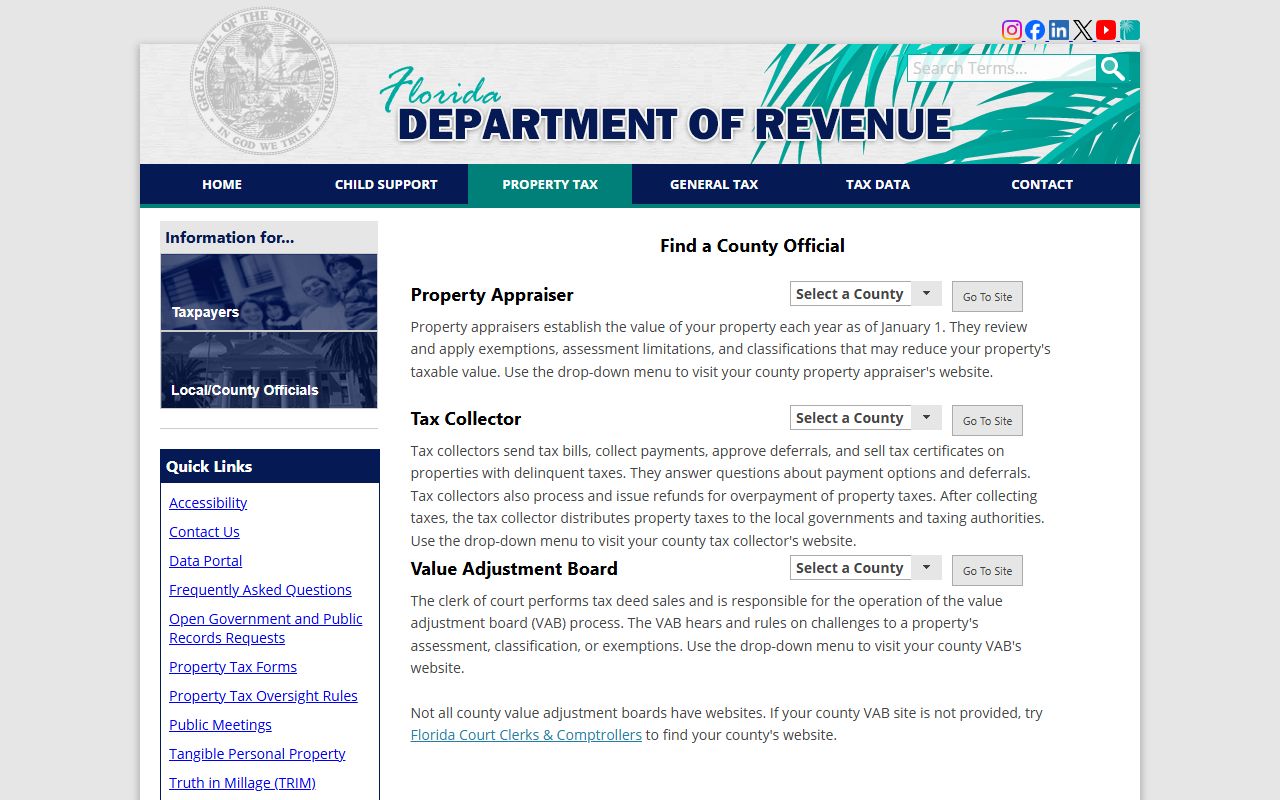
The directory links to each county's official contact pages and is updated as offices change addresses or phone numbers.
Nearby Counties
Hernando County borders several other counties in west-central Florida, each with its own property appraiser and official records system.