
Nassau County Property Records
Nassau County property records are maintained by the Nassau County Property Appraiser, located in Yulee at 96135 Nassau Place. The office handles all parcel data for Nassau County, from Fernandina Beach and Amelia Island to the fast-growing communities near the Duval County line. You can search ownership history, assessed values, exemptions, and sales data online at nassaucopa.com, or reach the office by phone at 904-491-7300.
Nassau County Property Records Quick Facts
Nassau County Property Appraiser Office
The Nassau County Property Appraiser is located at 96135 Nassau Place, Yulee, FL 32097. The office phone is 904-491-7300. The public website at nassaucopa.com offers a free parcel search tool along with exemption information, forms, and links to related county services. The appraiser's office is responsible for setting just values on all real property in Nassau County, maintaining the annual tax roll, and administering exemption programs.
Nassau County is one of the faster-growing counties in northeast Florida. Its location just north of Jacksonville and along the Georgia state line has made it attractive to buyers who want lower land prices and a smaller-county feel while remaining close to a major metro area. This growth has meant more new construction, more ownership changes, and more exemption applications for the appraiser's office to process each year.
While the county seat is Fernandina Beach, the appraiser's office is situated in Yulee, which is a more central location given the county's development patterns. If you plan to visit in person, confirm office hours by calling ahead. Bring a parcel number or property address to speed up the process when you arrive.
Note: The Property Appraiser assesses values but does not collect taxes. Contact the Nassau County Tax Collector for payment and delinquency questions.
How to Search Nassau County Property Records Online
The Nassau County Property Appraiser's website provides a free public search. You can search by owner name, parcel ID, or street address. Each result shows the parcel's current owner, mailing address, legal description, land use code, and all assessed and taxable values. Sales history is included, with each transfer showing the date, price, deed type, and official records instrument number. The site is the primary tool for anyone looking up a specific Nassau County parcel.
Florida statute links are helpful if you want to understand the legal basis for how property is assessed and how records must be maintained. The full text of Florida statutes is available on the legislature's official website.
The Florida Statutes website provides the full text of all Florida laws, including the chapters that govern property assessment, public records access, and clerk duties that apply in Nassau County.
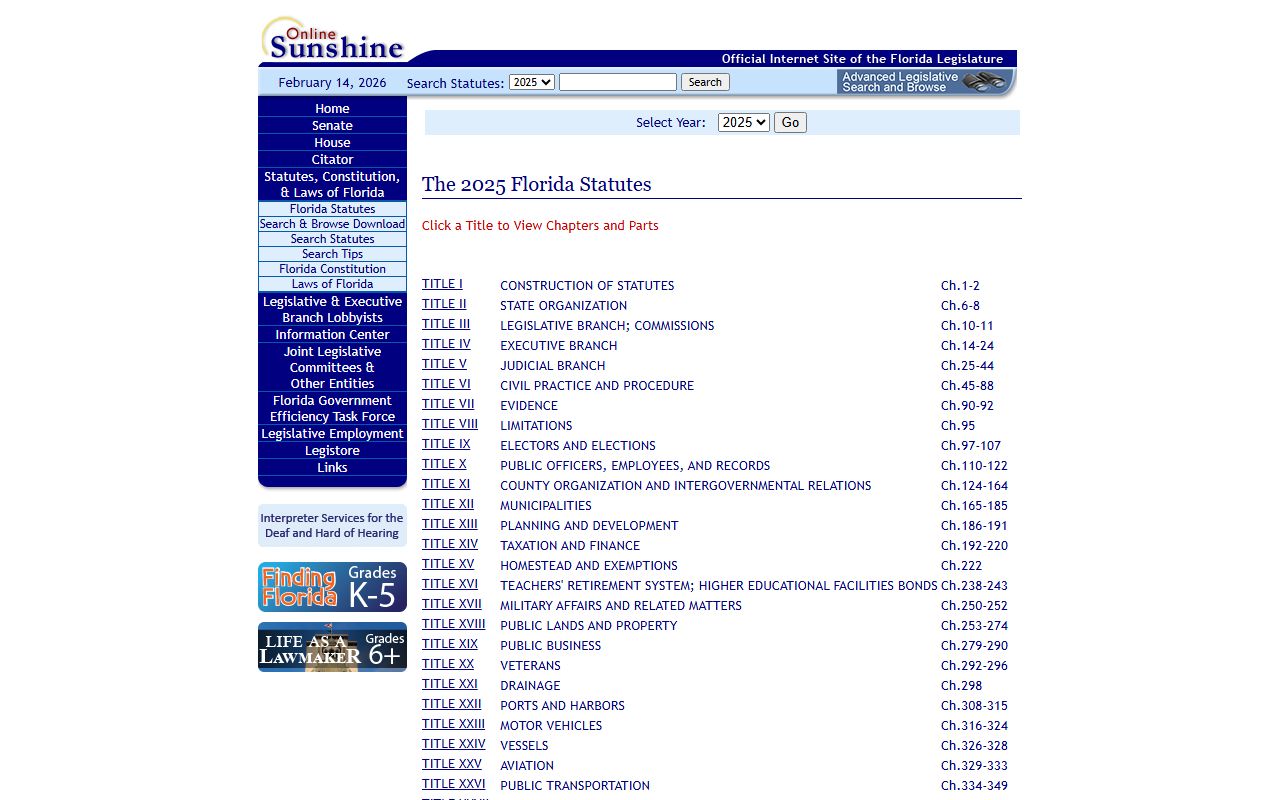
Key statutes for Nassau County property records include Chapter 192 (definitions and general provisions), Chapter 193 (assessment of property), Chapter 119 (public records), and Chapter 28 (clerk of court duties).
What Nassau County Property Records Contain
Each Nassau County property record includes the owner's name and mailing address, the physical address of the property, the legal description, the parcel identification number, and the land use classification. Valuation data fields show the just value (market value), the assessed value (which may be lower due to the Save Our Homes cap), and the taxable value after exemptions. Any active exemptions are noted on the record, including homestead, agricultural, or disability-related exemptions.
Residential records show building details such as the year of construction, total living area, number of bedrooms and baths, garage or carport size, and the presence of a pool or other amenity. Nassau County has a mix of older homes in Fernandina Beach, newer subdivisions near Yulee and Callahan, and beachfront properties on Amelia Island. Each type of property is assessed using methods appropriate to its class and condition.
Sales history data shows prior ownership changes back through multiple transactions. Each sale links to the official records instrument recorded with the Nassau County Clerk. You can use these references to pull the actual deed document from the clerk's online system. This is useful if you need to verify the chain of title for a property you are buying or researching.
Agricultural parcels in Nassau County's rural western areas show acreage, land use type (row crops, timber, pasture, etc.), and any agricultural classification that reduces the assessed value. The appraiser reviews agricultural classifications periodically to confirm that the land is genuinely being used for a bona fide agricultural purpose.
Homestead Exemption and Save Our Homes in Nassau County
Nassau County residents who own and use their home as their primary residence can apply for the homestead exemption. The exemption reduces assessed value by up to $50,000. The first $25,000 applies to all property tax levies. The second $25,000 applies to all levies except school taxes. You must apply by March 1 of the tax year in which you want the exemption to take effect. Applications are filed with the Nassau County Property Appraiser.
Save Our Homes limits annual increases in a homesteaded property's assessed value to 3% or the consumer price index, whichever is lower. In fast-growing areas like Yulee and the communities along US-17, where sale prices have climbed significantly in recent years, this cap gives longtime homeowners real protection against rising tax bills. New buyers pay taxes based on the full just value in the first year before the cap takes effect on their property.
Portability lets you take the accumulated Save Our Homes benefit from your old Florida home to a new one. You apply for portability at the same time as your homestead exemption on the new property. The Nassau County Property Appraiser calculates the benefit and applies it to the new assessment. This can result in a lower assessed value on your new home from the first year of ownership.
Additional exemptions in Nassau County include those for seniors with limited income, veterans with service-connected disabilities, first responders with total and permanent disability, and surviving spouses of certain veterans. Each exemption has its own income, age, or service requirements. The appraiser's website lists current programs and the forms needed to apply.
TRIM Notices and the Nassau County Tax Process
Nassau County property owners receive a Truth in Millage (TRIM) notice in August. This notice shows the proposed assessed value, all active exemptions, and the proposed tax rates from every taxing authority that covers the parcel. In Nassau County, taxing bodies include the county government, the Nassau County School Board, the City of Fernandina Beach for parcels within city limits, and various special districts.
If you think your assessed value is wrong, start by contacting the appraiser's office for an informal review. Many disputes get resolved at this stage. If you still disagree after the informal review, you can file a formal petition with the Nassau County Value Adjustment Board within 25 days of the TRIM notice mailing date. The VAB process gives you the right to present evidence at a hearing before a special magistrate.
After final millage rates are set, the Nassau County Tax Collector mails tax bills in November. Paying early earns a discount: 4% in November, 3% in December, 2% in January, and 1% in February. Full payment is due by March 31. Properties with unpaid taxes after that date become delinquent.
The DOR Property Tax Oversight office provides guidance to county officials and can be contacted if you believe a county is not following state law in its assessment or appeals process.
The Florida DOR's Contact Property Tax Oversight page lists the DOR office contacts for taxpayers who have concerns about the property tax process at the county level.
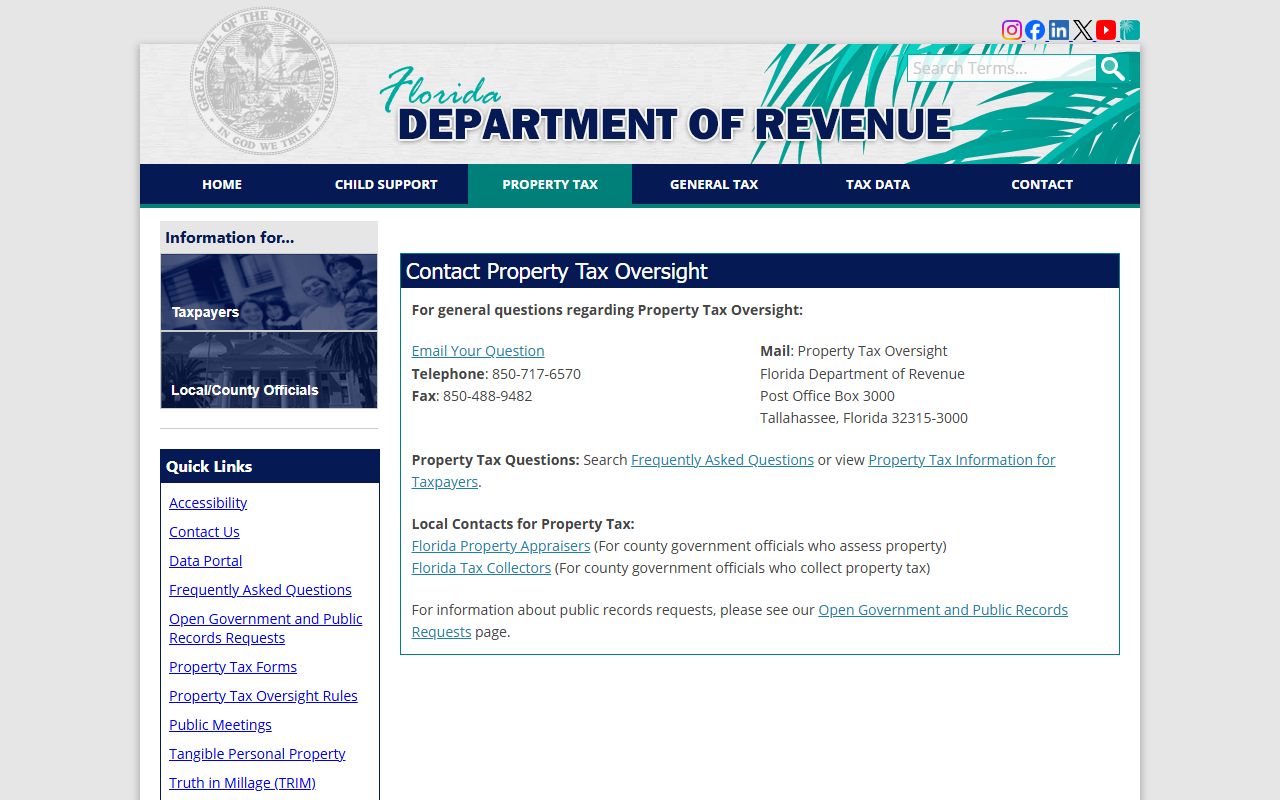
This resource is particularly useful if you have exhausted county-level options and still believe your property has been incorrectly assessed or that your exemption was wrongly denied.
Official Records and Florida Property Law
The Nassau County Clerk of Circuit Court records all official instruments affecting real property, including deeds, mortgages, and liens. These records are public under Chapter 28, Florida Statutes, and the clerk's office maintains an online search tool for most recent documents. Recorded instruments are indexed by grantor and grantee name, document type, and recording date.
Property assessment in Nassau County follows Chapter 192 and Chapter 193, Florida Statutes. These chapters define just value, set the rules for how the appraiser must assess different property classes, and establish the rights property owners have in the appeals process. The Florida Department of Revenue reviews Nassau County's assessment rolls each year and can require corrections if assessments do not meet just value standards.
Public access to all Nassau County property records is guaranteed by Chapter 119, Florida Statutes. Any person can inspect or copy records held by the appraiser or clerk, and agencies must respond to records requests promptly. There is no requirement to give a reason for requesting records, and fees are limited to the actual cost of duplication.
Cities in Nassau County
Fernandina Beach is the county seat and main incorporated city in Nassau County, with a population of roughly 13,000. Yulee is a growing unincorporated community, and Callahan is a small incorporated town. None of these communities reach the 100,000 population threshold for a dedicated city page on this site. All Nassau County property records, including those for parcels in Fernandina Beach and on Amelia Island, are searchable through the county property appraiser's online tool.
Nearby Counties
Nassau County sits in the far northeast corner of Florida, bordering Georgia to the north and sharing boundaries with three Florida counties.