
Find Property Records in Lakeland
Lakeland property records are maintained by the Polk County Property Appraiser and the Polk County Clerk of Circuit Court. This guide explains how to search ownership data, assessed values, sales history, homestead exemptions, and recorded instruments for any parcel in Lakeland, the largest city in Polk County and one of the fastest-growing cities in central Florida.
Lakeland Property Records Quick Facts
How Lakeland Property Records Are Managed
All property records for Lakeland are held and maintained by Polk County government offices. Polk County is a large county in central Florida, situated between Tampa and Orlando along the I-4 corridor. The Polk County Property Appraiser's office is responsible for valuing all real property in the county each year and maintaining the official parcel database.
The Property Appraiser's office is located at 255 W Central Avenue, Bartow, FL 33830. Bartow is the county seat, about 10 miles southeast of Lakeland. The office phone is 863-534-4777. The website is polkaopa.com. If you need in-person help with a Lakeland parcel, the Bartow office is the main location. Hours and any satellite office information are listed on the website.
Florida law requires the Property Appraiser to assess all real property at just value annually under Chapter 193 of Florida Statutes. Polk County follows this requirement and maintains records for thousands of residential, commercial, and agricultural parcels. Lakeland's parcel data is part of the county's centralized database, so there is one place to search for any property within city limits.
Recorded instruments like deeds, mortgages, and liens are maintained separately by the Polk County Clerk of Circuit Court, not the Property Appraiser. The Clerk's Official Records index is governed by Chapter 28 of Florida Statutes. Both offices are distinct; you will use one for assessment data and the other for recorded documents.
How to Search Lakeland Property Records
The Polk County Property Appraiser's website at polkaopa.com offers a free public search of all parcel records. You can look up any Lakeland property by:
- Owner name
- Property address or street
- Parcel ID number
- Subdivision name
- Map or geographic search
When you find a parcel, the record shows the current owner, mailing address, legal description, property use code, land and building square footage, year built, just value, assessed value, taxable value, and a complete sales history. The sales history includes sale dates, prices, and the type of deed for each transfer. This is useful when researching comparable sales or verifying recent ownership changes.
The Florida Department of Revenue maintains a statewide property tax data portal that gives a broader view of assessment trends across all 67 counties, including Polk County.
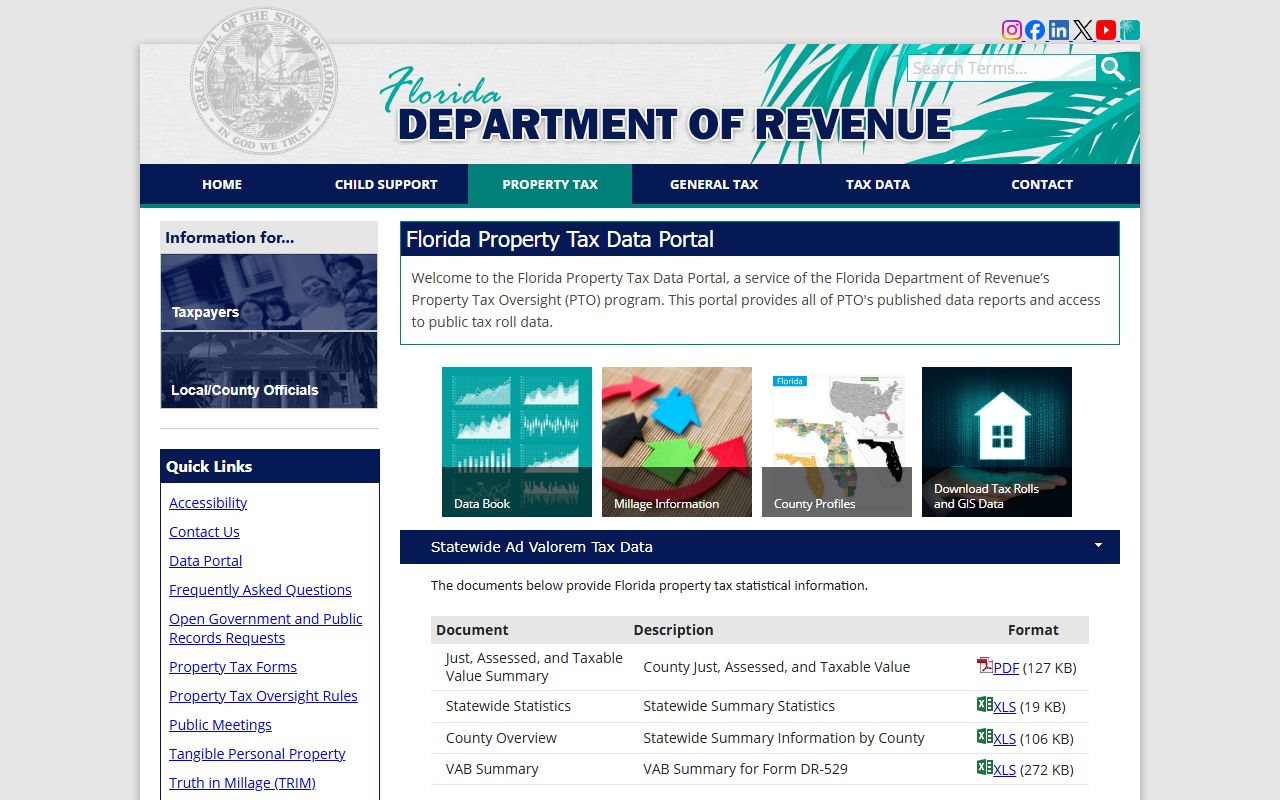
The Florida DOR data portal includes assessment rolls, exemption data, and taxable value summaries for every county. If you want to compare Polk County values or trends against the state as a whole, this is the place to start. Data is typically updated annually after the assessment roll is certified.
For recorded documents in Polk County, the Clerk of Circuit Court provides an online Official Records search. You can search by party name, document type, and recording date. Many documents can be viewed and downloaded at no charge. Certified copies require a fee per page as allowed under Florida law.
What Lakeland Property Records Show
Polk County property records for Lakeland parcels contain a full set of assessment and ownership data. Here is what a standard parcel record includes:
- Owner of record - current legal owner and mailing address
- Parcel ID - the unique identifier for the parcel in Polk County
- Legal description - from the recorded deed
- Property use code - residential, commercial, agricultural, etc.
- Land area and building size
- Year built and construction type
- Just value - the annual market value estimate required by Florida law
- Assessed value - possibly capped below just value for homesteaded properties
- Taxable value - just value minus all applicable exemptions
- Active exemptions - homestead, senior, disability, veteran
- Sales history - all recorded transfers with dates and prices
Buyers in Lakeland should pay attention to the difference between assessed value and just value on any homesteaded property. If a seller has held the property for many years, their assessed value may be significantly below market value due to the Save Our Homes cap. When the property transfers, the assessed value resets to just value, which can mean a higher tax bill for the new owner starting in the first full year of ownership.
Homestead Exemption for Lakeland Homeowners
Florida's homestead exemption reduces taxable value on a primary residence by up to $50,000. The first $25,000 applies to all taxing bodies. The second $25,000 covers the portion of assessed value between $50,000 and $75,000 and is exempt from all levies except the school board millage. Together they can make a real difference on a Lakeland tax bill.
To be eligible, you must own the home and make it your permanent residence as of January 1 of the tax year. Florida residency is required. The filing deadline is March 1 each year. First-time filers should contact the Polk County Property Appraiser at 863-534-4777 or visit the office at 255 W Central Avenue in Bartow. The website at polkaopa.com may also provide an online filing option or application form to download.
Once you have the exemption, the Save Our Homes cap under Section 193.155 limits how much your assessed value can rise each year. The cap is 3% or the rate of inflation, whichever is lower. Over years this builds up a benefit. When you sell and buy another Florida home, you can carry that benefit forward through homestead portability. Portability is not automatic. You have to apply for it by March 1 of the year after your move.
Other exemptions in Polk County include a low-income senior exemption, a $500 disability exemption, a widow or widower exemption, and veteran-related exemptions. Some of these require annual renewal. The Property Appraiser's office can tell you which exemptions apply to your situation.
City of Lakeland Government Resources
Lakeland's city government handles permits, zoning, and code enforcement through separate city departments. City Hall is at 228 S Massachusetts Avenue, Lakeland, FL 33801. The general city phone is 863-834-6000 and the website is lakelandgov.net.
The Building Division is at 925 S Boulevard, Lakeland, FL 33803, phone 863-834-6005. Their site is lakelandgov.net/building-division. Permit records are an important part of any property research because they show what work was done on a building, what inspections were completed, and whether any open permits remain. Open permits can complicate a sale or a refinance, so checking before you buy is worth doing.
The Florida Department of Revenue publishes taxpayer guidance that covers property tax obligations, exemption rules, and how to work with county offices statewide.
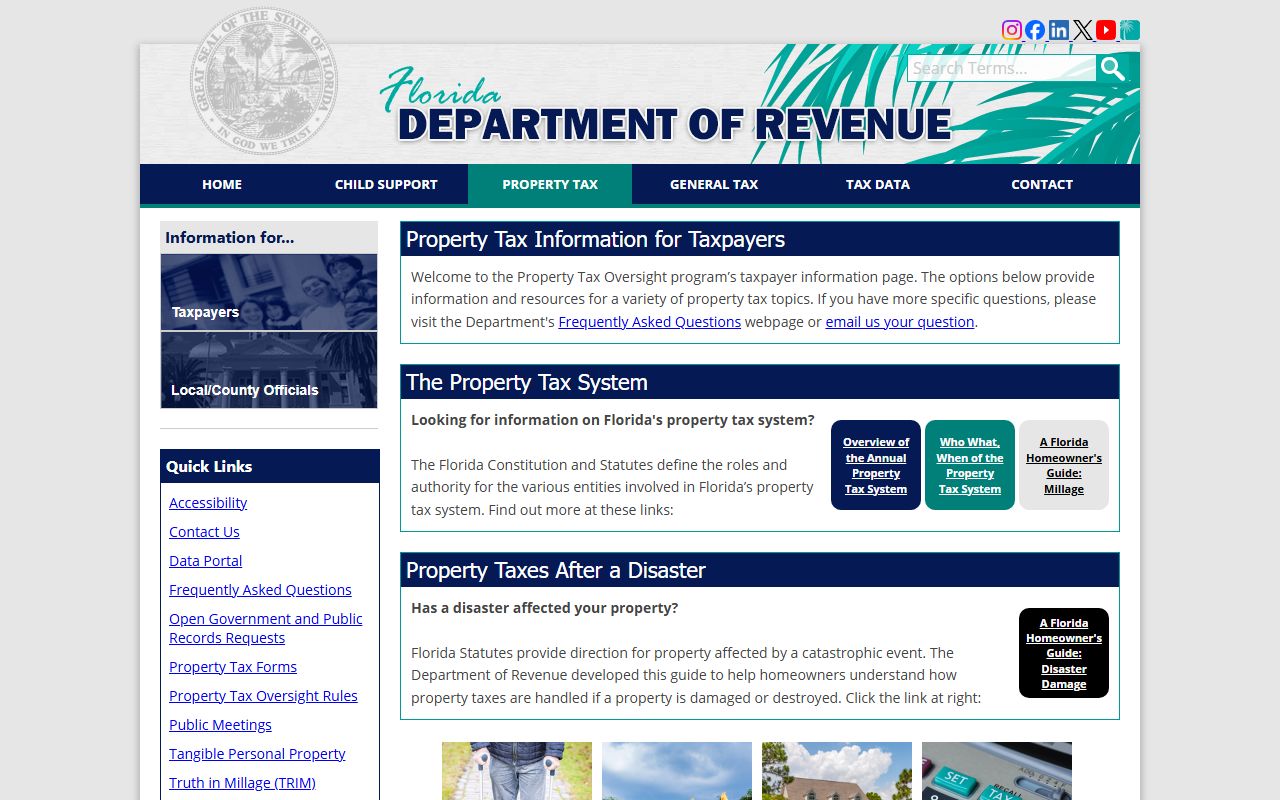
The DOR taxpayer page explains how property values are set, how exemptions work, how to appeal, and what the TRIM notice means. It is a good starting point if you are new to Florida's property tax system and want to understand the rules before contacting your county office.
The City of Lakeland also maintains a geographic information system (GIS) map that can be useful for viewing parcel boundaries, zoning overlays, and city service areas. Check the city website at lakelandgov.net for a link to the GIS portal. Lakeland's growth means the zoning and land use maps are updated regularly, so always verify current status through the city directly.
Official Records at the Polk County Clerk
Recorded property documents in Lakeland are filed with the Polk County Clerk of Circuit Court. Under Chapter 28 of Florida Statutes, the Clerk maintains the Official Records index for all recorded instruments. For Lakeland parcels, this includes:
- Warranty deeds and quitclaim deeds
- Mortgages and mortgage satisfactions
- Mechanic's liens and lien releases
- Lis pendens notices
- Judgment liens
- Easements and plats
The Clerk's main office is in the Polk County Courthouse in Bartow. An online search portal lets you look up documents by party name or document type. Many documents are available to view online at no cost. Access to public records is a right under Chapter 119 of Florida Statutes, which sets the rules for public records access across the state. Certified copies carry a fee per page as set by law.
TRIM Notice and Tax Calendar
Polk County sends TRIM notices to all property owners each August. TRIM means Truth in Millage. The notice shows your property's proposed assessed value for the upcoming year, any exemptions the Property Appraiser has on file, and the proposed millage rates from all taxing authorities that cover your parcel.
The TRIM notice is not a bill. It is a warning and a window to act. If you think your assessed value is wrong, you have approximately 25 days from the TRIM notice date to file a petition with the Polk County Value Adjustment Board. The VAB process is independent from the Property Appraiser and gives you a formal hearing to present your case. You can hire an agent or attorney, but many property owners handle the process themselves.
After September budget hearings, final millage rates are set. Tax bills are mailed in November. You get a discount for paying early: 4% if you pay in November, 3% in December, 2% in January, and 1% in February. Taxes must be paid by March 31 to avoid delinquency. After April 1, unpaid taxes are subject to the tax certificate sale process under Chapter 192 of Florida Statutes.
Nearby Cities
Lakeland sits along the I-4 corridor between Tampa and Orlando. Other qualifying Florida cities are reachable within about an hour's drive.