
Orlando Property Records
Orlando property records are maintained by the Orange County Property Appraiser and the Orange County Comptroller. Whether you are searching parcel ownership, sales history, assessed values, or homestead exemption status for a property inside Orlando city limits, both offices provide free online access to the records you need.
Orlando Property Records Quick Facts
How Orlando Property Records Are Maintained
The City of Orlando lies within Orange County. Property appraisal and assessment for all Orlando parcels is done at the county level by the Orange County Property Appraiser. The city itself does not maintain separate property valuation records.
The Orange County Property Appraiser is Amy Mercado. The office is located at 200 S. Orange Avenue, Suite 1700, Orlando, FL 32801. The phone number is 407-836-5044 and you can reach the office by email at helpdesk@ocpafl.org. The primary website for property searches is ocpaweb.ocpafl.org.
Florida law under Chapter 193 requires that all property be assessed at just value annually as of January 1. The Orange County Property Appraiser follows this process each year and publishes the resulting values in August through the TRIM notice system.
Recorded documents including deeds and mortgages are maintained by the Orange County Comptroller, who serves as the county's Official Records keeper under Chapter 28 of Florida Statutes. You will use the Property Appraiser for value and tax data and the Comptroller for recorded instruments.
How to Search Orlando Property Records
The Orange County Property Appraiser's online search is at ocpaweb.ocpafl.org. From there you can search by:
- Owner name
- Property address
- Parcel ID number
- Subdivision or community name
The Orange County Property Appraiser's main search portal is shown in the screenshot below. This is the primary starting point for any Orlando property lookup.
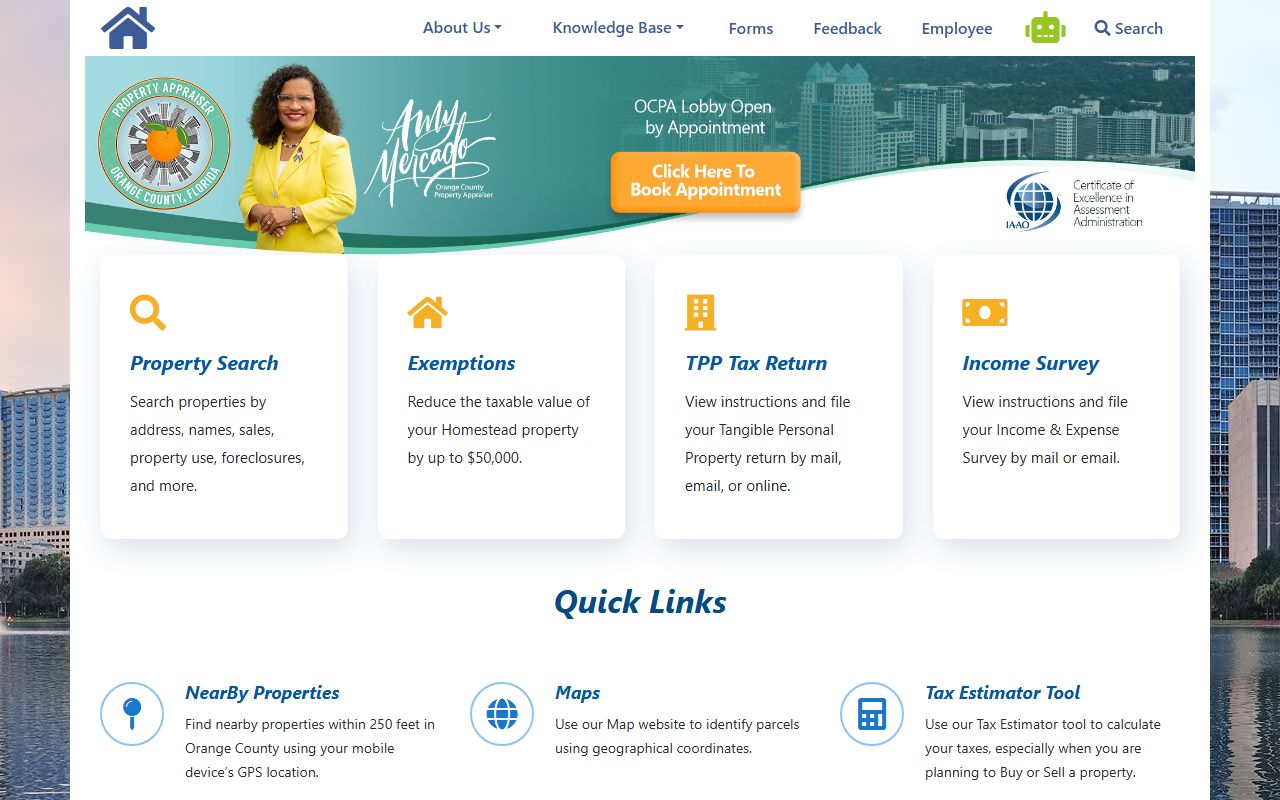
The search results link directly to full parcel detail pages that include all assessed values, exemptions, building data, and sales history for the selected property.
For homestead exemption applications, Orange County has a dedicated e-filing portal at exemption.ocpafl.org. You can apply online without visiting the office in person. The portal walks you through the application steps and lets you upload required documents.
The Orange County homestead exemption e-filing system is shown below. This portal is available for new homestead applications and portability requests.
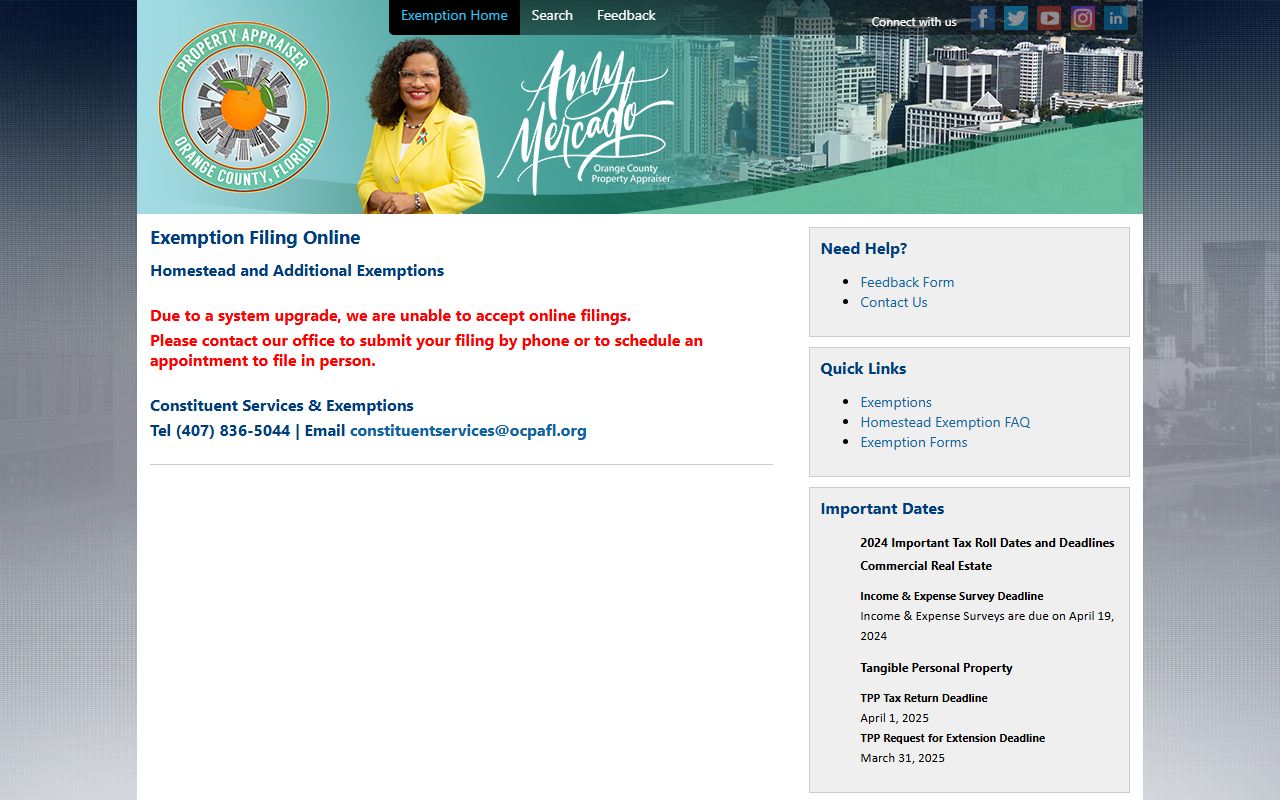
Applications filed through this portal are processed the same as in-person applications. You still need to meet the March 1 deadline regardless of whether you file online or in person.
For recorded documents, the Orange County Comptroller's Official Records search is at orangeclerk.org. You can search by name, document type, or recording date. Many documents are available as free PDFs. Certified copies require a fee under Chapter 119.
What Orlando Property Records Show
Each parcel record in the Orange County Property Appraiser's system includes a wide range of data. Here is what you will typically find:
- Owner name and mailing address
- Parcel ID number
- Legal description
- Land use code and zoning designation
- Lot size
- Building data: year built, square footage, construction type, number of bedrooms/bathrooms
- Just value
- Assessed value (capped for homesteaded properties)
- Taxable value after all exemptions
- Exemptions on file
- Sales history with dates, prices, and instrument types
Orlando has a mix of single-family homes, condominiums, commercial buildings, and vacant land. For condominiums, each unit gets its own parcel ID and is assessed separately. The unit's common area allocation is factored into its assessed value. If you are researching a condo, search by the unit address or the unit's parcel ID rather than the building address alone.
Homestead Exemption for Orlando Residents
Florida homeowners who use a property as their permanent primary residence as of January 1 can apply for a homestead exemption. The exemption cuts taxable value by up to $50,000. The March 1 deadline applies every year for new applications.
Online applications are available through the Orange County e-filing portal at exemption.ocpafl.org. You can also apply in person at 200 S. Orange Avenue, Suite 1700, or by mail. Required documents typically include a Florida driver's license or ID, voter registration card, and proof of ownership. Social Security numbers for all owners and spouses are also required as part of the application.
Once approved, the homestead triggers the Save Our Homes cap starting the following year. From that point, annual assessed value increases are limited to 3% or the CPI change, whichever is smaller. In a strong real estate market, this cap can produce a large difference between just value and assessed value over time. That gap is lost when a property changes hands.
Portability allows you to take the accumulated Save Our Homes benefit to a new homestead within Florida. You apply for portability along with the new homestead exemption, and the deadline is also March 1. The Orange County Property Appraiser's office can calculate your portability amount if you contact them before applying. Other exemptions in Orange County include senior low-income, disability, totally and permanently disabled veterans, and surviving spouse of a veteran or first responder.
City of Orlando Resources
The City of Orlando provides building permits, planning, and zoning services that are separate from the county Property Appraiser functions. City Hall is at 400 S Orange Avenue, Orlando, FL 32801. The main city number is 407-246-2121 and the city website is orlando.gov.
The Permitting Services division handles building permits and inspections for construction work inside Orlando city limits. The phone for permitting is 407-246-2378. The online permit search is at orlando.gov/Permitting-Services. You can look up open and closed permits for any address in the city. Permit records are public and show what work was done and whether inspections were completed. This is useful research when buying or evaluating a property.
The City of Orlando's zoning and land use rules apply inside city limits. The county's zoning applies to unincorporated areas. If a property is inside the city, use the city's planning resources for zoning information. If it is outside the city, use Orange County's planning department. The Property Appraiser's record will show the parcel's municipality status, which tells you which zoning authority applies.
Official Records at the Orange County Comptroller
The Orange County Comptroller holds the Official Records for all instruments recorded in Orange County. Under Chapter 28, the Comptroller records and indexes every deed, mortgage, lien, and related document. These records are the legal source for chain of title and encumbrance research.
Document types in Orange County's Official Records include:
- Warranty deeds and quitclaim deeds
- Mortgages and satisfactions
- Mechanic's liens and lien releases
- Judgment liens
- Lis pendens notices
- Plats and easements
- HOA notices and restrictions
Most documents recorded in Orange County can be searched and viewed online at no cost through the Comptroller's public access system. Documents recorded in recent years are available as PDFs. Older records may require a visit to the office or a written request. Certified copies cost a per-page fee under Chapter 119.
TRIM Notice and Property Tax Timeline
Orange County property owners receive a TRIM notice each August. The notice shows the proposed assessed value, exemptions on file, and proposed tax rates from Orange County, the City of Orlando (for parcels inside city limits), the school board, and any other taxing districts that levy on the parcel. It also gives an estimated tax amount based on those proposed rates.
If you believe your assessed value is too high, you have 25 days from the TRIM notice date to file a petition with the Orange County Value Adjustment Board. The VAB process is available to all property owners. You can appear in person or hire a licensed tax representative. The filing fee is small. The VAB makes its decision independent of the Property Appraiser.
After September hearings set final millage rates, tax bills go out in November. The discount for early payment is 4% in November, 3% in December, 2% in January, and 1% in February. Taxes paid by March 31 are on time. After that date, taxes are delinquent and the county initiates tax certificate sales under Chapter 192.
Nearby Cities
Orlando is the largest city in Central Florida. Other qualifying cities in the greater Orlando metro area include cities to the south and west.