
Flagler County Property Records Search
Flagler County property records cover all land, homes, and commercial parcels in this growing coastal county on Florida's northeast shore. The Flagler County Property Appraiser in Bunnell maintains ownership data, assessed values, exemption filings, and parcel maps for roughly 120,000 residents. Whether you need to look up a deed, check an assessment, or research a parcel before buying, this page walks you through the main sources and how to use them to find what you need.
Flagler County Property Records Quick Facts
Flagler County Property Appraiser
The Flagler County Property Appraiser is the county office that sets assessed values for tax purposes and keeps the official ownership rolls. The office is located at 1769 E Moody Boulevard, Building 2, Suite 102, Bunnell, FL 32110. You can reach them by phone at 386-313-4150. The office website at flaglercounty.org/property-appraiser gives you access to their online parcel search, where you can look up any property in the county by owner name, address, or parcel ID number.
Florida law under Chapter 193 sets out how property appraisers must assess real property each year. In Flagler County, that process starts with January 1 as the assessment date. The appraiser looks at sales data, building permits, and market trends to arrive at a just value for each parcel. From that just value, the office applies any exemptions the owner qualifies for before the taxable value is sent to the tax collector.
Office hours are typically Monday through Friday, 8:00 a.m. to 5:00 p.m. If you plan to visit in person, the Moody Boulevard office can help with homestead applications, address changes, and ownership questions. Staff can also pull printed parcel records for you during your visit.
Searching Parcel and Ownership Data
The online parcel search is the fastest way to find Flagler County property records. You can search by owner name, street address, or parcel ID. Results show the property's just value, assessed value, taxable value, land size, building square footage, and a list of any exemptions on file. The search tool also displays the legal description of the parcel, which you need when referencing the deed recorded at the Clerk's office.
For a broader look at county-level data, the Florida Department of Revenue maintains a property tax data portal with statewide figures. The screenshot below is from that state resource, which shows how to find county-specific data across Florida.
The Florida Department of Revenue's data portal provides a statewide view of property tax information that complements local records.
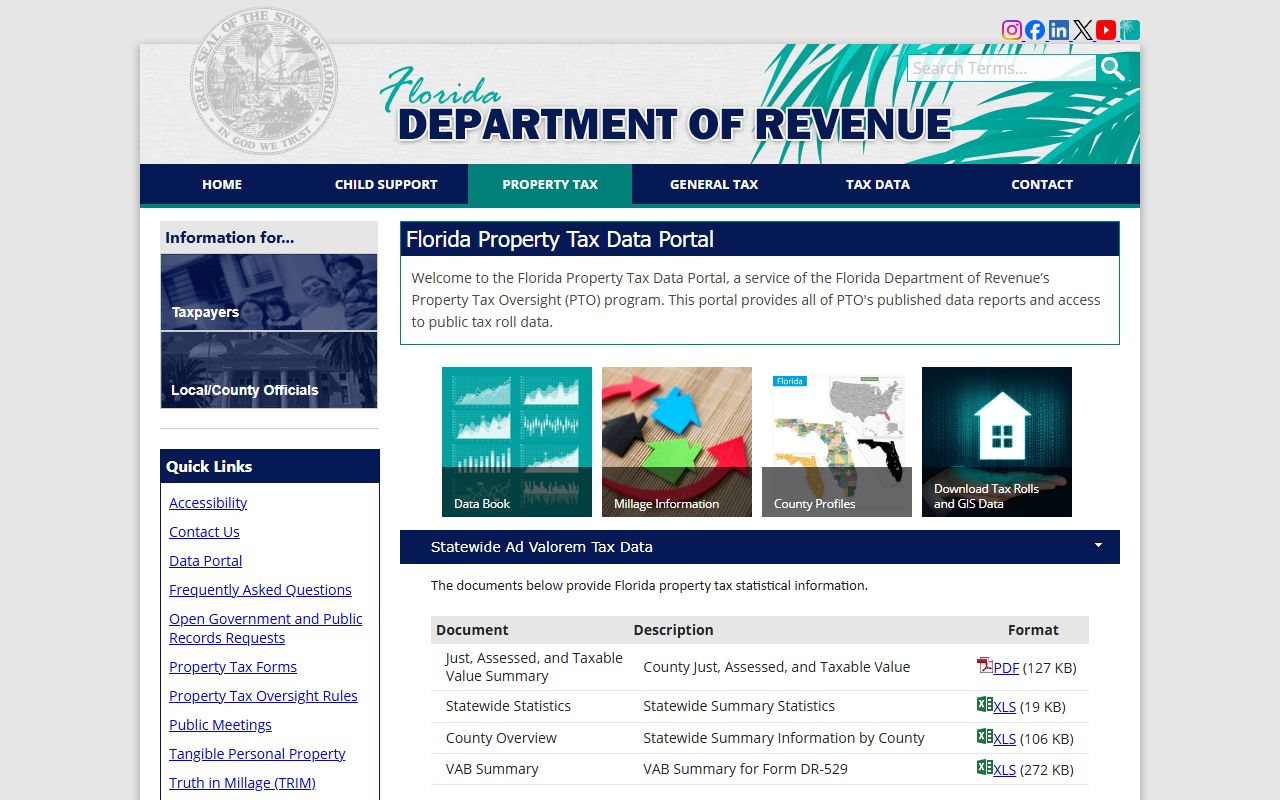
The data portal is useful when you want to compare Flagler County assessment trends against neighboring counties or check statewide averages for exemption amounts.
Note: Parcel boundaries shown online are for reference only and may not reflect recent surveys or legal plat descriptions.
Deeds and Recorded Documents
Deeds, mortgages, liens, and other instruments affecting title to Flagler County property are recorded with the Flagler County Clerk of Courts. Under Chapter 28 of the Florida Statutes, the clerk is the official custodian of all recorded land documents in the county. The Clerk's online records portal lets you search by grantor/grantee name, book and page number, or document type. Most documents recorded from the mid-1980s forward are available in digital form.
When a property sells in Flagler County, the deed is recorded with a documentary stamp tax calculated on the sale price. This makes recorded deeds a useful source for verifying recent sale prices even before the appraiser updates the roll. Mortgage satisfactions, lis pendens notices, and judgment liens are also recorded there and can affect the title to a parcel.
Homestead and Other Exemptions
Florida homeowners who live in their property as a primary residence can apply for the homestead exemption, which reduces the assessed value by up to $50,000. The first $25,000 applies to all tax levies. The second $25,000 applies to non-school levies only. In Flagler County, applications must be filed with the Property Appraiser's office by March 1 of the tax year for which you want the exemption.
Beyond homestead, Flagler County property owners may qualify for additional exemptions depending on age, disability, veteran status, or widower status. Seniors who meet income limits may get an extra exemption. Disabled veterans can get significant reductions or full exemptions in some cases. Chapter 196 of the Florida Statutes covers all exemption types. The Property Appraiser's office can tell you which ones apply to your situation.
Save Our Homes is another key protection. Once you have homestead status, your assessed value cannot rise more than 3% per year or the Consumer Price Index rate, whichever is lower. This cap can create a big gap between assessed value and just value for long-time homeowners in Flagler County, where home prices have risen sharply over the past decade.
Note: Homestead exemption does not transfer automatically when you sell your home, but you may be able to port some of your accumulated Save Our Homes benefit to a new Florida home.
Property Tax Payments and the Tax Collector
Once the Property Appraiser sets values and exemptions, the Flagler County Tax Collector sends annual tax bills. Bills go out in November and are due by March 31 of the following year. Early payment discounts apply: 4% if paid in November, 3% in December, 2% in January, and 1% in February.
Florida law under Chapter 192 sets the general framework for property taxation, including timelines and the rights of property owners. If taxes go unpaid, the county can eventually hold a tax deed sale. Flagler County publishes upcoming tax deed sales through the Clerk's office. Bidders at those sales take on responsibility for any other liens not cleared by the sale.
You can pay Flagler County property taxes online, by mail, or in person at the Tax Collector's office. The Tax Collector also handles tangible personal property tax bills for businesses that own equipment, furniture, or other non-real-estate assets in the county.
Using State Resources for Flagler County Records
The Florida Department of Revenue supports property owners and researchers with statewide tools. Their local officials directory lists every county property appraiser in Florida, which is useful if you need to cross-reference records from a neighboring county.
The Florida DOR's local officials page lists every county appraiser's contact information and links to their individual websites for easier access to records.
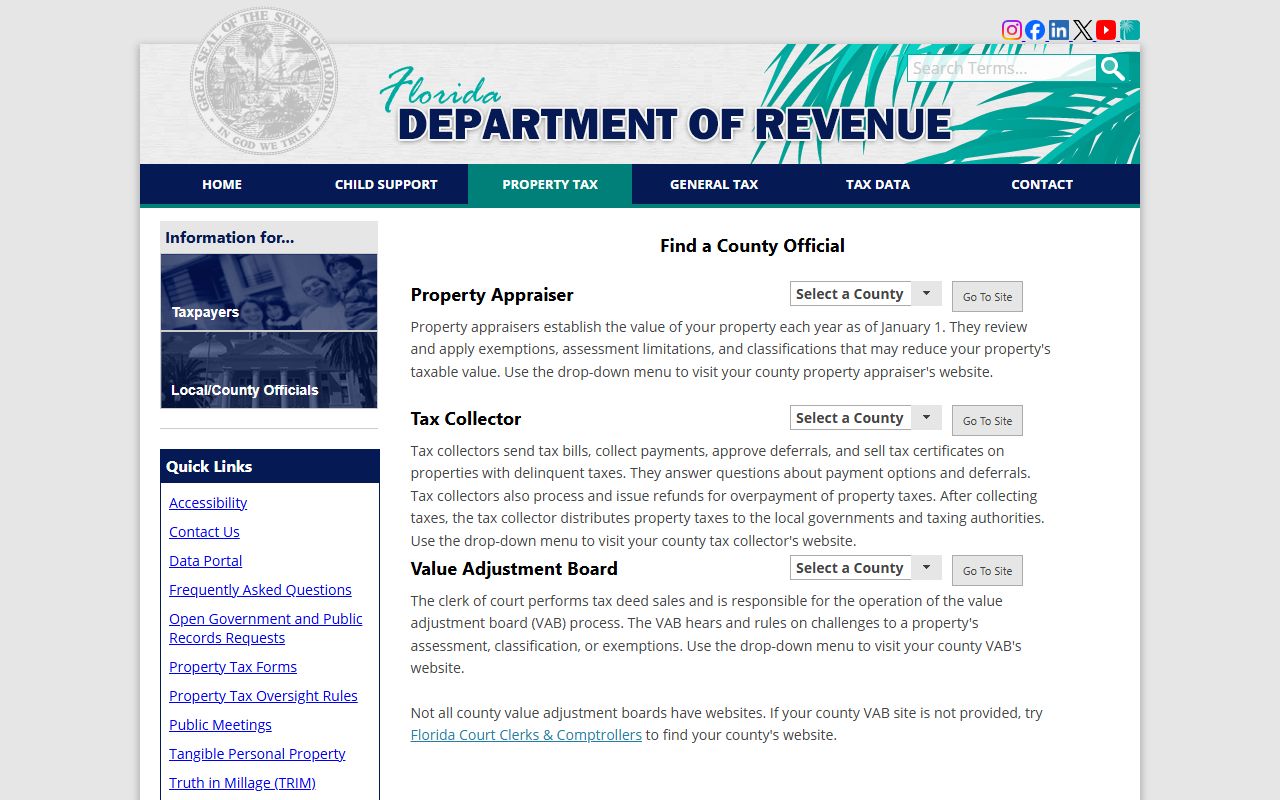
This resource is especially helpful when you need to reach out to a property appraiser in a county adjacent to Flagler, such as St. Johns or Volusia, to compare assessment data for a parcel near a county line.
The DOR's taxpayer information page also explains rights and responsibilities for Florida property owners. It covers how to challenge your assessment, what records are public, and how the appeals process works through the Value Adjustment Board.
Challenging Your Assessment
If you think the Flagler County Property Appraiser has overvalued your property, you have the right to appeal. The first step is an informal review with the appraiser's office. Many disputes get resolved at this stage when the owner provides evidence of a lower market value, such as a recent appraisal or comparable sales data.
If the informal review doesn't fix the problem, you can file a petition with the Flagler County Value Adjustment Board. Petitions must be filed by the deadline shown on your TRIM notice, which is the assessment notice you receive in August. The VAB holds hearings and issues decisions. From there, a circuit court appeal is the next step if you still disagree with the result. Under Chapter 119, records from VAB hearings are public documents you can request and review.
Public Records Access in Flagler County
Florida's public records law, found in Chapter 119, gives anyone the right to inspect and copy government records, including most property records held by Flagler County offices. This means assessment rolls, deed records, exemption applications, and related files are generally open to the public without the need to explain why you want them.
Some personal information may be exempt under specific statutes, such as addresses of protected individuals. But the core property data, ownership names, parcel values, and tax status are all public. You can view them online or request copies from the relevant county office.
Cities in Flagler County
Palm Coast is the largest city in Flagler County and the only one that meets the population threshold for a dedicated page. Other communities in the county include Bunnell, Flagler Beach, and Beverly Beach, but these are smaller municipalities without individual city pages on this site.
Nearby Counties
Flagler County borders three counties. St. Johns County lies to the north, Putnam County to the west, and Volusia County to the south. Each has its own property appraiser office and recorded documents database.