
Access Gulf County Property Records
Gulf County property records are managed by the Property Appraiser's office in Port St. Joe, a small Gulf Coast county in Florida's panhandle with around 16,000 residents. The county spans barrier islands, coastal wetlands, and inland timber and agricultural land. Property records here include ownership rolls, annual assessments, legal descriptions, exemption filings, and deeds recorded with the Clerk of Courts. This page shows you how to find what you need from the right county offices.
Gulf County Property Records Quick Facts
Gulf County Property Appraiser
The Gulf County Property Appraiser is at 1000 Cecil G. Costin Sr. Boulevard, Port St. Joe, FL 32456. Phone: 850-229-6115. The office website is at gulfcountygov.com/property-appraiser. From there, you can search parcel records, view exemption information, and get contact details for staff. The appraiser sets the just value for all Gulf County real property each January 1 as required by Florida's Chapter 193.
Gulf County has a range of property types. Beachfront and bay-front parcels in areas like Cape San Blas and St. Joseph Peninsula can carry high market values. Inland timber tracts and agricultural land are assessed at much lower rates under Florida's agricultural classification system. The appraiser handles both types and uses different valuation methods for each.
Office hours are generally Monday through Friday, 8:00 a.m. to 5:00 p.m. Staff at the Port St. Joe office can help with exemption applications, address updates, ownership questions, and informal assessment reviews. Because Gulf County is small, you can often speak with a staff member quickly in person or by phone.
Online Parcel Search and Data
The Gulf County Property Appraiser's website offers an online parcel search where you can find properties by owner name, address, or parcel ID. Each record shows the current owner, mailing address, legal description, land size, building details, just value, assessed value, and any exemptions on file. Assessment history for prior years is also viewable, which helps you track how values have changed.
For Gulf County properties near the coast, parcel boundaries may be tied to mean high water lines or other variable markers. The parcel map shown online is for reference, and formal survey work is needed for boundary disputes or construction projects. Always verify the legal description in the recorded deed when doing title research.
The Florida Department of Revenue maintains statewide property data that can supplement local records. Their data portal provides county-level figures and context.
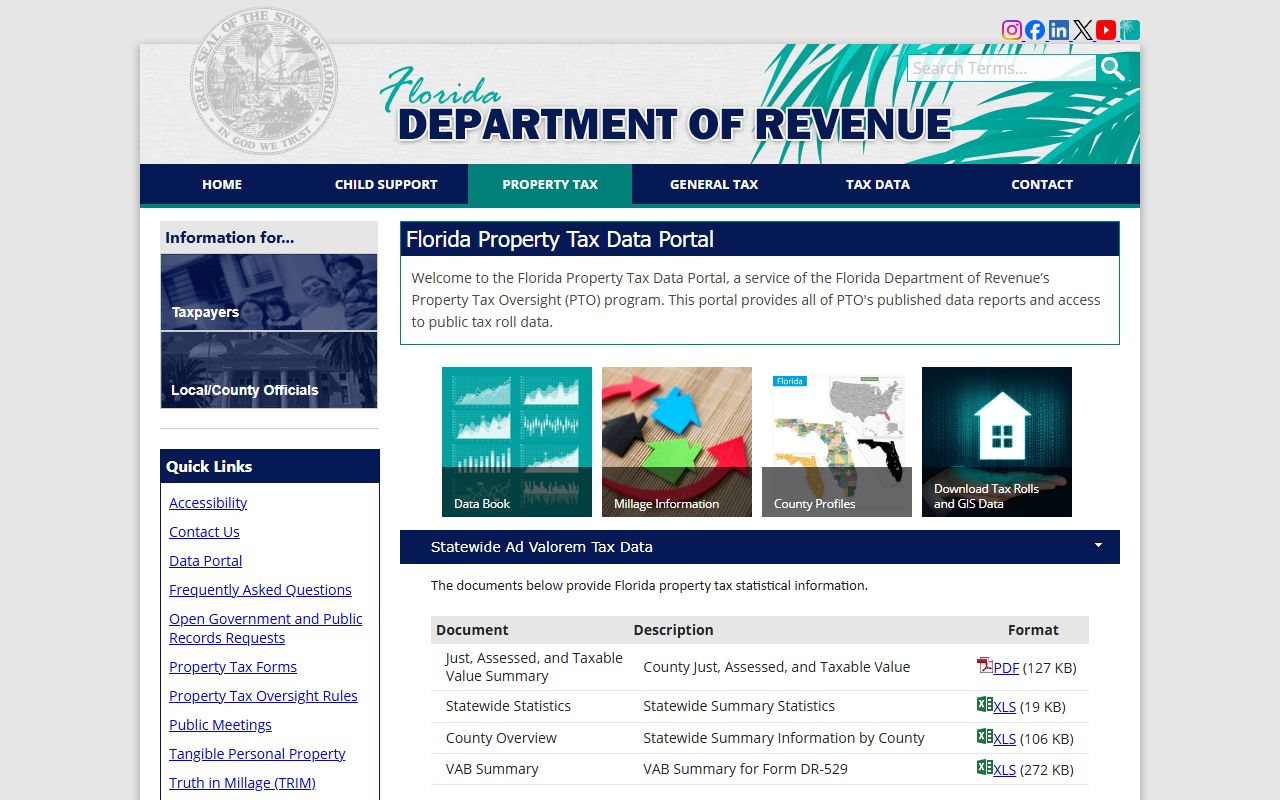
This state portal is particularly useful when looking at how Gulf County assessment levels compare to similar coastal counties in the panhandle region.
Note: Hurricane Michael in 2018 significantly affected Gulf County. Some parcels may have post-storm data updates that changed building values or classifications. Verify current data with the appraiser's office if you're researching properties affected by that storm.
Recorded Deeds and Official Land Records
Deeds and other recorded instruments for Gulf County real property are filed with the Gulf County Clerk of Courts in Port St. Joe. Under Chapter 28, the clerk is the legal custodian of all recorded official documents in the county. Deeds, mortgages, easements, plat maps, and lien filings are all kept in the official records and are public under Florida law.
When you look at a recorded deed in Gulf County, the documentary stamp tax amount can give you a sense of the purchase price. The tax is $0.70 for each $100 of the sale price, so a deed showing $350 in stamps suggests a sale of about $50,000. This technique is commonly used to estimate transaction prices from public records.
Older Gulf County records may be available in paper or microfilm format at the Clerk's office. The staff can assist with locating records from different time periods. Newer documents are generally searchable online through the Clerk's portal.
Homestead and Exemptions in Gulf County
Gulf County property owners who live in their home full time as a primary residence can apply for homestead exemption. The exemption lowers the assessed value by up to $50,000. Applications must be filed by March 1 with the Property Appraiser's office. You'll need to show proof of Florida residency such as a driver's license, voter registration, or vehicle tag showing a Gulf County address.
Once you have homestead status, the Save Our Homes cap limits annual assessment increases to 3% or the CPI rate, whichever is lower. For Gulf County coastal property owners who purchased before recent price spikes, this cap can mean a large difference between just value and assessed value, which directly reduces your tax bill.
Senior exemptions, disabled veteran exemptions, and widow/widower exemptions are also available in Gulf County. The appraiser's office will tell you which forms you need and what documentation to bring. Qualifying veterans with total and permanent service-connected disabilities may be eligible for a full property tax exemption.
Property Taxes in Gulf County
The Gulf County Tax Collector issues property tax bills in November each year. Under Chapter 192, taxes are due by March 31. Early payment discounts are 4% in November, 3% in December, 2% in January, and 1% in February. After March 31, the account is delinquent and interest accrues.
Delinquent Gulf County taxes can result in a tax certificate sale. If taxes remain unpaid for two years, the certificate holder can apply for a tax deed through the Clerk of Courts. The Clerk advertises and holds a public sale. Anyone researching Gulf County properties at a tax deed sale should check for outstanding liens, code violations, or other encumbrances before bidding.
Access to Gulf County Property Records
Florida's Chapter 119 makes all Gulf County property records open to the public. You can inspect ownership data, assessment rolls, deed records, and tax history without explaining why you want them. Offices must respond to requests in a reasonable time and may charge a fee only for actual copying costs.
The Florida DOR's county officials directory lists the current contact information for the Gulf County Property Appraiser and Tax Collector. That page is updated regularly and is a reliable place to confirm the most current phone numbers and office addresses.
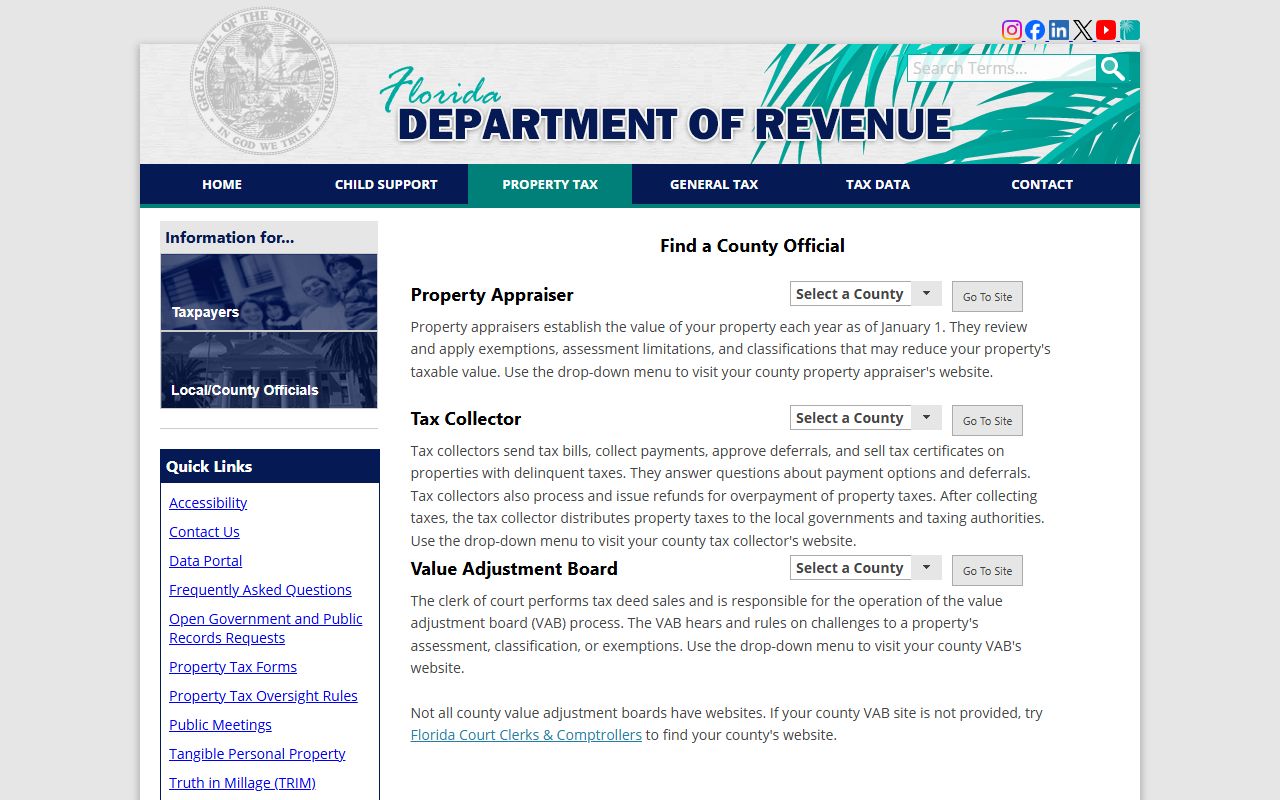
Using this DOR resource can save time when you need to reach multiple county offices across northwest Florida for a comparative property search.
Challenging Your Gulf County Assessment
If you believe your Gulf County property has been overvalued, contact the Property Appraiser first. An informal review costs nothing and can produce a correction if you have good evidence. Bring comparable sales, a recent appraisal, or documentation about the property's condition that might justify a lower value.
If the informal review doesn't work, file a petition with the Gulf County Value Adjustment Board by the deadline on your TRIM notice, which arrives in August. The VAB reviews evidence from both sides and can lower the appraiser's value. If you still disagree after the VAB hearing, the circuit court is the next option. This process is available to all Gulf County property owners regardless of property type or value.
Cities in Gulf County
Gulf County has no cities that meet the population threshold for a dedicated city page on this site. Port St. Joe is the county seat and largest city. Wewahitchka and Cape San Blas are other communities in the county, but none reach the population level needed for an individual page here.
Nearby Counties
Gulf County shares borders with Bay County to the northwest, Calhoun County to the north, Franklin County to the east, and Liberty County to the northeast. Each has its own property appraiser and Clerk of Courts for recorded land documents.