
Highlands County Property Records
Highlands County property records are maintained by the county property appraiser and the clerk of court, making ownership data, assessed values, exemption status, and deed history available to anyone searching for real estate information in the Sebring area and across this central Florida county. Whether you are buying a lakefront lot, reviewing a citrus grove parcel, or checking the assessment history of a home in Avon Park or Lake Placid, these records are public under Florida law and open to all.
Highlands County Property Records Quick Facts
Highlands County Property Appraiser
The Highlands County Property Appraiser office is at 560 S Commerce Avenue, Sebring, FL 33870. Phone is 863-402-6650, and the website is hcpao.org. From that site you can reach the online property search, review exemption information, and contact the office directly. Staff handle all property valuations, tax roll certifications, exemption processing, and tangible personal property assessments for the county.
The office follows Florida Statutes Chapter 193, which sets the framework for how counties assess property, process appeals, and certify the tax roll to the state. Highlands County has a notable amount of agricultural land, including active citrus operations, and the appraiser's office handles agricultural classification filings for qualifying landowners. An agricultural classification can reduce the assessed value significantly compared to the full market value.
The Highlands County Property Appraiser website gives you direct access to the property search portal along with downloadable forms for homestead and other exemptions. It is the main starting point for any online record search in the county.
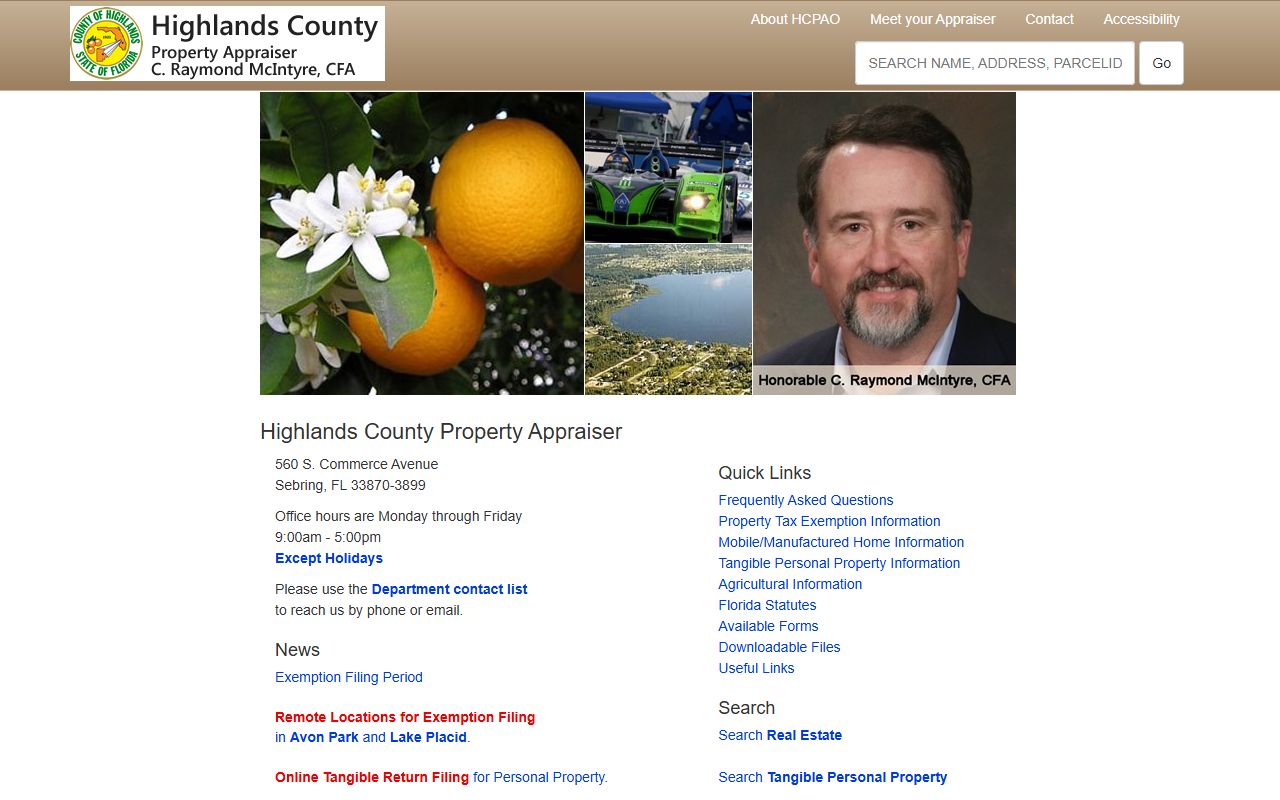
The homepage provides links to the property search tool, exemption information, and office contact details for the Sebring location.
How to Search Highlands County Property Records
The online search portal at hcpao.org is the primary tool for finding property records in Highlands County. You can search by owner name, property address, or parcel identification number. The system returns a record that includes the legal description, current ownership, assessed and just values, exemption status, and prior sales data with deed instrument references. The database is updated as new sales, ownership changes, and assessment decisions are processed throughout the year.
In-person searches are available at the S Commerce Avenue office in Sebring during office hours. Staff can assist with searches that are difficult to complete online, such as finding records for older parcels with complex legal descriptions or properties that predate electronic records. Bring an address, a name, or a rough description of the property's location to help staff narrow the search quickly.
For recorded instruments such as deeds, mortgages, judgment liens, and releases, you need the Highlands County Clerk of the Circuit Court. The clerk maintains those records under Florida Statutes Chapter 28 and indexes them by grantor and grantee names as well as parcel number. Note: The appraiser's database and the clerk's official records complement each other; use both when doing a complete review of a parcel's history.
What Highlands County Property Records Show
A full property record from the Highlands County Property Appraiser includes the owner's name and mailing address, the property's physical location, the parcel identification number, and the legal description from the deed. The value section breaks down the just value (which reflects market conditions), the assessed value after applicable caps, and the taxable value after all exemptions are applied. For agricultural parcels, the record may show both the agricultural classification value and the market value side by side, since the difference can be substantial in citrus-growing areas.
Sales history is part of every record. Prior transactions are listed with dates, sale prices, and deed book references. This lets buyers, appraisers, and lenders trace price trends for individual parcels. Florida Statutes Chapter 192 requires all property in the state to be listed on the tax roll, which means every parcel in Highlands County has a record even if it has been in the same family for decades without a formal sale.
Building information in the record includes square footage, year built, construction type, and condition rating from field inspections. Land data shows acreage and may include zoning, land use, and sometimes soil or water information relevant to agricultural parcels. Extra features like irrigation systems, pole barns, or storage buildings are recorded separately on agricultural and rural properties.
Homestead Exemption in Highlands County
The Florida homestead exemption reduces a primary residence's taxable value by up to $50,000. The first $25,000 applies to all taxing authorities levying against the property. The second $25,000 applies only to non-school taxes and covers assessed values between $50,000 and $75,000. To qualify, you must own and permanently reside in the property and file an application with the Highlands County Property Appraiser by March 1.
With homestead in place, Florida Statutes Section 193.155 activates the Save Our Homes cap, which limits how much the assessed value can rise each year. The maximum increase is 3% or the rate of inflation from the prior year, whichever is lower. Highlands County property values in lakefront communities have increased in recent years, making this cap valuable for owners who have held their homes for several years. When you sell a homestead property and buy a new one in Florida, you may qualify to port some of the accumulated benefit to your new home.
Veterans, seniors, surviving spouses, and people with disabilities may qualify for extra exemptions on top of the standard homestead reduction. The appraiser's office can provide a list of available exemptions and the supporting documents needed for each. Note: You must file a new homestead application when you move to a different property; exemptions do not transfer automatically from one parcel to another.
Property Tax Process in Highlands County
The annual property tax cycle in Highlands County begins each August when property owners receive the Truth in Millage (TRIM) notice. This notice shows your proposed assessed value, the exemptions on file, and the proposed millage rates from the county, municipalities, school board, and any special districts that tax your parcel. The TRIM notice is not a tax bill; it is a preview of what you will owe if the proposed rates are adopted, along with dates for public budget hearings.
If the value on your TRIM notice seems wrong, contact the Highlands County Property Appraiser directly. Most disagreements can be settled informally. If you cannot reach an agreement with the office, you can file a petition with the Value Adjustment Board before the deadline shown on the TRIM notice. The VAB is made up of county officials and citizen members and holds formal hearings where you can present evidence for a lower value.
Tax bills come out in November. Paying in November saves 4%. December saves 3%, January saves 2%, and February saves 1%. The full amount is due by March 31. The Highlands County Tax Collector handles all payments and billing separately from the property appraiser's office. The Florida Department of Revenue provides statewide guidance for taxpayers at floridarevenue.com/property/Pages/Taxpayers.aspx, including explanations of the TRIM process and how to appeal.
Official Records at the Highlands County Clerk
Deeds, mortgages, liens, and other instruments affecting title to real estate in Highlands County are recorded and maintained by the Clerk of the Circuit Court. Recording a deed with the clerk gives constructive notice to the public and establishes the legal chain of title. Anyone can search these records, and they are available under Florida's public records law, Chapter 119, which applies to all county clerks statewide.
A full title search in Highlands County involves reviewing both the clerk's official records and the property appraiser's database. The clerk's records tell you who has recorded claims against the property, including liens and judgments. The appraiser's records tell you assessed values, ownership, and parcel characteristics. Together they give a complete picture of any parcel in the county. Certified copies of recorded instruments are available from the clerk for a per-page fee set by state law. The clerk's office is the place to go if you need a copy of the original deed for a property you own or are buying.
Nearby Counties
Highlands County is surrounded by several counties in central and south Florida. Each maintains its own property appraiser and clerk of court records.