
Find Property Records in Seminole County
Seminole County property records are publicly available through the Property Appraiser's office in Sanford, Florida. This guide explains where to search ownership data, assessed values, exemptions, and sales history, and covers the key laws and processes that apply to property records in this suburban Central Florida county.
Seminole County Property Records Quick Facts
Seminole County Property Appraiser
The Seminole County Property Appraiser's office is located at 1101 E First Street, Sanford, FL 32771. The main phone number is 407-708-6800. The official website, seminolepa.org, gives the public free access to the property database, GIS map viewer, exemption application tools, and other resources. The Property Appraiser is a constitutional officer elected by county voters, operating independently from the County Commission.
The office's primary job is to determine the fair market value of all real and tangible personal property in Seminole County as of January 1 each year. This valuation forms the basis for property tax bills. The office does not set tax rates; that is done by the taxing authorities. It does not collect taxes. The Tax Collector handles billing and collection.
Seminole County is one of the smaller Florida counties by land area but has a substantial population due to its location in the Orlando metro area. This means a large and active real estate market, frequent sales, and a lot of permit activity. The Property Appraiser's database reflects this activity and is updated on a regular basis.
Searching Property Records Online
The Seminole County Property Appraiser's website has a search tool that lets you look up any parcel by owner name, property address, or parcel ID number. Search results show the current owner's name and mailing address, the property's physical address, legal description, land and building details, and a year-by-year breakdown of assessed and taxable values.
Sales history is part of the online record. You can see every arm's-length transaction on file for a parcel, including the sale date and price. This is useful when you want to know what a property actually sold for in recent years or want to compare it against comparable sales in the neighborhood.
The parcel database also shows any exemptions applied to the property. If the current owner has a Homestead Exemption, it appears in the record. Other exemptions, such as senior or veteran exemptions, are also listed. This gives you a clear view of the difference between the market value and the taxable value for any given year.
For older records or recorded instruments like deeds, you will need the Clerk of the Circuit Court. The Clerk's official records database covers recorded documents and is searchable by name, instrument type, and date range. Both offices offer free public access to their online systems.
Florida Taxpayer Information
The Florida Department of Revenue provides detailed guidance for property owners on how assessments work, what rights taxpayers have, and how to navigate the appeal process. Their taxpayer information page is a useful reference alongside the county's local resources.
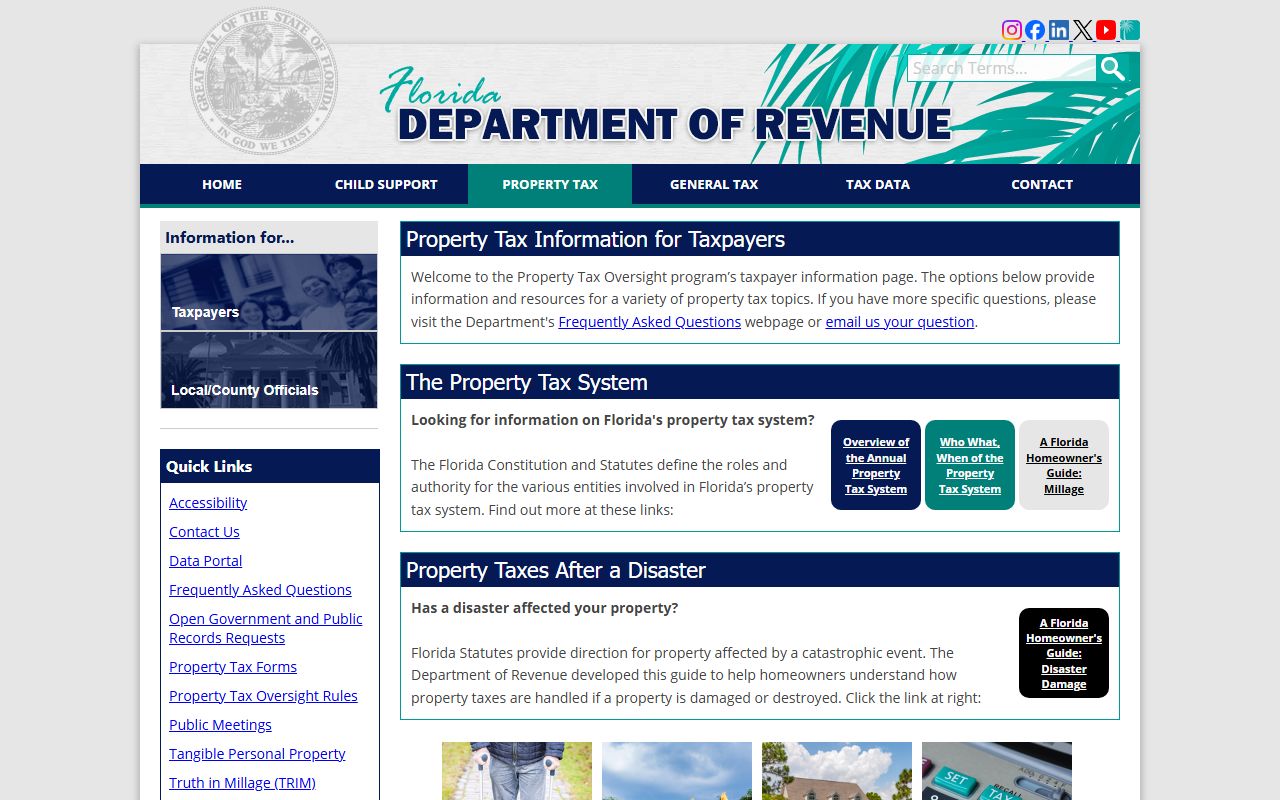
The DOR taxpayer page covers topics including how to read your TRIM notice, what constitutes a valid appeal, how the Save Our Homes cap is applied, and what documentation you need to file for exemptions. It also links to forms used statewide and to each county's local resources. If you have a general question about Florida property tax rules, this is a good first stop before calling the county office.
Homestead Exemption in Seminole County
Florida's Homestead Exemption is available to any owner who uses a Seminole County property as their permanent primary residence as of January 1. The exemption reduces the assessed value by up to $50,000 and must be applied for through the Property Appraiser's office. You can apply online at seminolepa.org or in person at 1101 E First Street in Sanford. The deadline is March 1 each year.
To qualify, you must have a Florida driver's license or ID showing the property address, Florida vehicle registration, and Florida voter registration at the same address. All three documents need to show the homestead address. If you recently moved, updating these documents before the January 1 cutoff is important.
The Homestead Exemption also activates the Save Our Homes assessment cap. Once the exemption is in place, your assessed value can rise by no more than 3% or the rate of inflation per year, whichever is lower. In a hot real estate market, this cap can produce very large gaps between market value and taxable value over time.
Portability lets you move that SOH benefit from one Florida home to another. If you sell your Seminole County home and buy another in Florida, you can transfer your accumulated SOH benefit to the new property's assessed value, up to $500,000. Apply during the same window you apply for Homestead Exemption on the new home.
Other Exemptions and Classifications
Seminole County property owners may qualify for several additional exemptions beyond the standard Homestead:
- Senior exemption for residents age 65 and older who meet income limits
- Veteran's exemption for those with a service-connected disability rating
- Total and permanent disability exemption
- First Responder disability exemption for qualifying first responders injured in the line of duty
- Widow and widower exemption of $500
- Tangible personal property exemption for businesses with qualifying asset values
- Agricultural classification under Florida's Greenbelt Law for qualifying farm and timber land
Each program has its own rules. Income limits apply to the senior exemption, and the agricultural classification requires that the land actually be used for bona fide agricultural purposes. The Property Appraiser reviews these applications and may inspect the property. Call 407-708-6800 to ask which exemptions apply to your situation.
Property Tax FAQs
The Florida Department of Revenue maintains a frequently asked questions page for property tax topics. It covers common questions about assessments, exemptions, TRIM notices, and the Value Adjustment Board process.
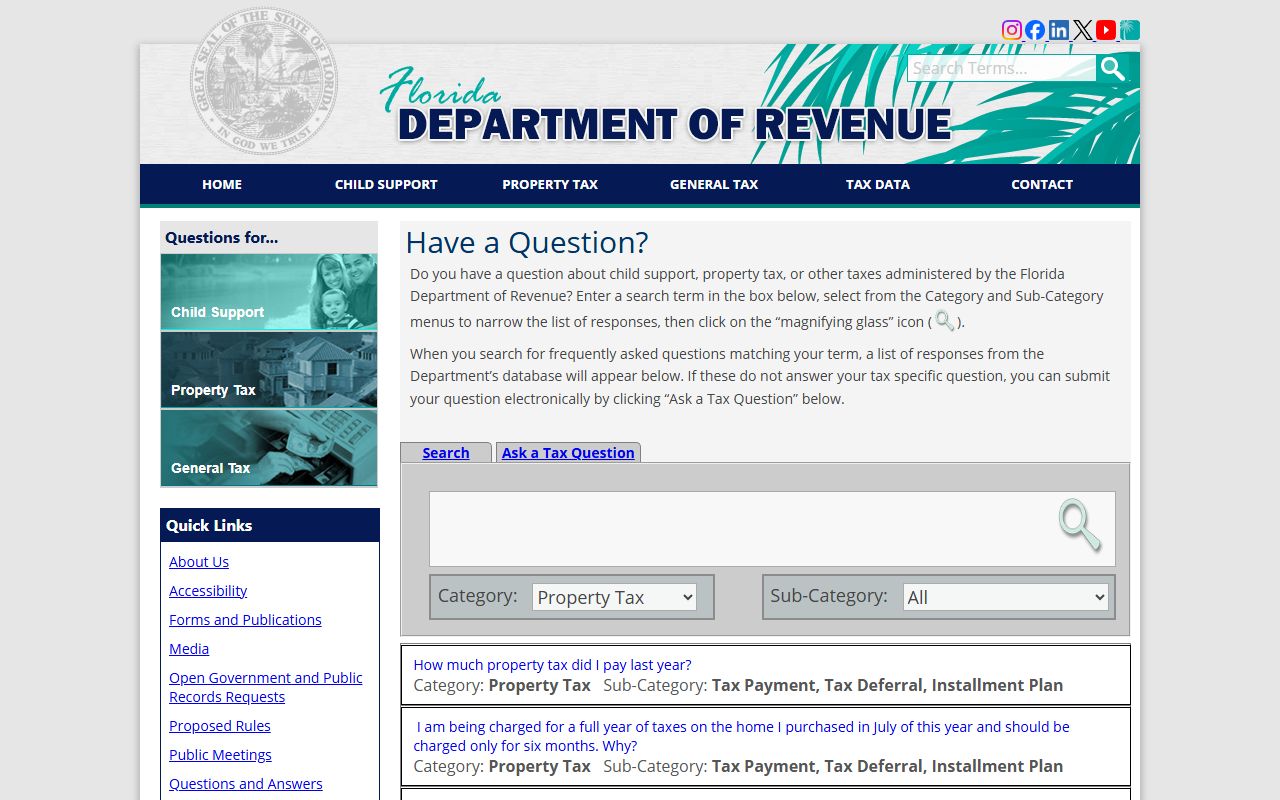
The FAQ page is useful for understanding terms that appear in your TRIM notice, such as "just value," "assessed value," "taxable value," and the difference between them. It also explains what happens if you miss the Homestead Exemption deadline and whether late applications are ever accepted. Property owners in Seminole County dealing with an assessment dispute will find the appeal section especially helpful.
Appealing Your Assessment
If you think your Seminole County property has been overvalued, the process starts with an informal review at the Property Appraiser's office. Call 407-708-6800 and ask for a review of your parcel. Bring recent sales of comparable properties, an independent appraisal, or any evidence showing the assessed value is above fair market value. A lot of disputes get resolved at this stage.
If that does not work, you can file a petition with the Seminole County Value Adjustment Board. The fee is $15. Your TRIM notice shows the deadline for filing, typically in mid-September. The VAB conducts hearings before a special magistrate who reviews the evidence. The board then issues a final order.
Taxpayers who disagree with the VAB's decision can appeal to the circuit court. That path involves legal costs and more time. For most residential disputes, the VAB process is where things get resolved.
Legal Framework for Property Records
Seminole County property records are governed by Florida Statutes. Chapter 192 covers general property tax law. Chapter 193 governs the assessment process, including how property is classified and how the appraiser sets values. Chapter 119, Florida's Public Records Law, makes most government records available to the public, including records held by the Property Appraiser and the Clerk.
Chapter 28 covers the Clerk of the Circuit Court and the recording of instruments that affect real property, such as deeds and mortgages. These are distinct from the Property Appraiser's records but are equally public and essential for title research. The Clerk's online system for Seminole County lets you search recorded documents at no cost.
Cities in Seminole County
Seminole County includes Sanford, Altamonte Springs, Casselberry, Longwood, Oviedo, Winter Springs, and Lake Mary. None of these cities currently meet the population threshold for a dedicated city records page. For property records in any Seminole city or unincorporated area, use the county Property Appraiser's resources above.
Nearby Counties
Seminole County borders Lake to the west, Orange to the south, Osceola to the south, and Volusia to the north.