
Wakulla County Property Records
Wakulla County property records are kept by the county property appraiser and the clerk of court, giving the public a direct way to look up ownership data, assessed values, exemption status, and deed history for any parcel in this coastal northwest Florida county. The county seat is Crawfordville, and records cover rural acreage along the Apalachicola National Forest, waterfront and coastal parcels near the Gulf, and residential properties scattered across this largely rural county south of Tallahassee. All records are open under Florida law to anyone who wants to search them.
Wakulla County Property Records Quick Facts
Wakulla County Property Appraiser
The Wakulla County Property Appraiser office is at 3093 Crawfordville Highway, Crawfordville, FL 32327. The main phone number is 850-926-0500. The office website is wakullapa.com, where you can find the online property search tool, exemption forms, and contact details for staff. The appraiser is responsible for valuing all real and tangible personal property in the county each year and certifying the tax roll to the state in compliance with Florida law.
Work in the office is governed by Florida Statutes Chapter 193, which sets out how property must be assessed across all 67 counties. Wakulla County has a mix of residential parcels, rural acreage, wetland tracts, and coastal lots. Waterfront properties along the coast add complexity to valuations because market values there can shift quickly based on access, flood zone, and proximity to the Gulf. The appraiser's office handles those along with agricultural classifications for timberland and farming parcels in the county's interior.
As a smaller county, the Wakulla office is often a practical first stop for property record questions. Staff typically have solid local knowledge about specific areas, roads, and parcel types, which can help when you are researching an unfamiliar tract or trying to sort out a boundary issue. Walk-ins are welcome during normal business hours.
The Florida Department of Revenue maintains a statewide property tax data portal with records from all counties, including Wakulla. The state portal can be a useful supplement when you want to compare Wakulla data against neighboring county records or access historical assessment data in a single place.
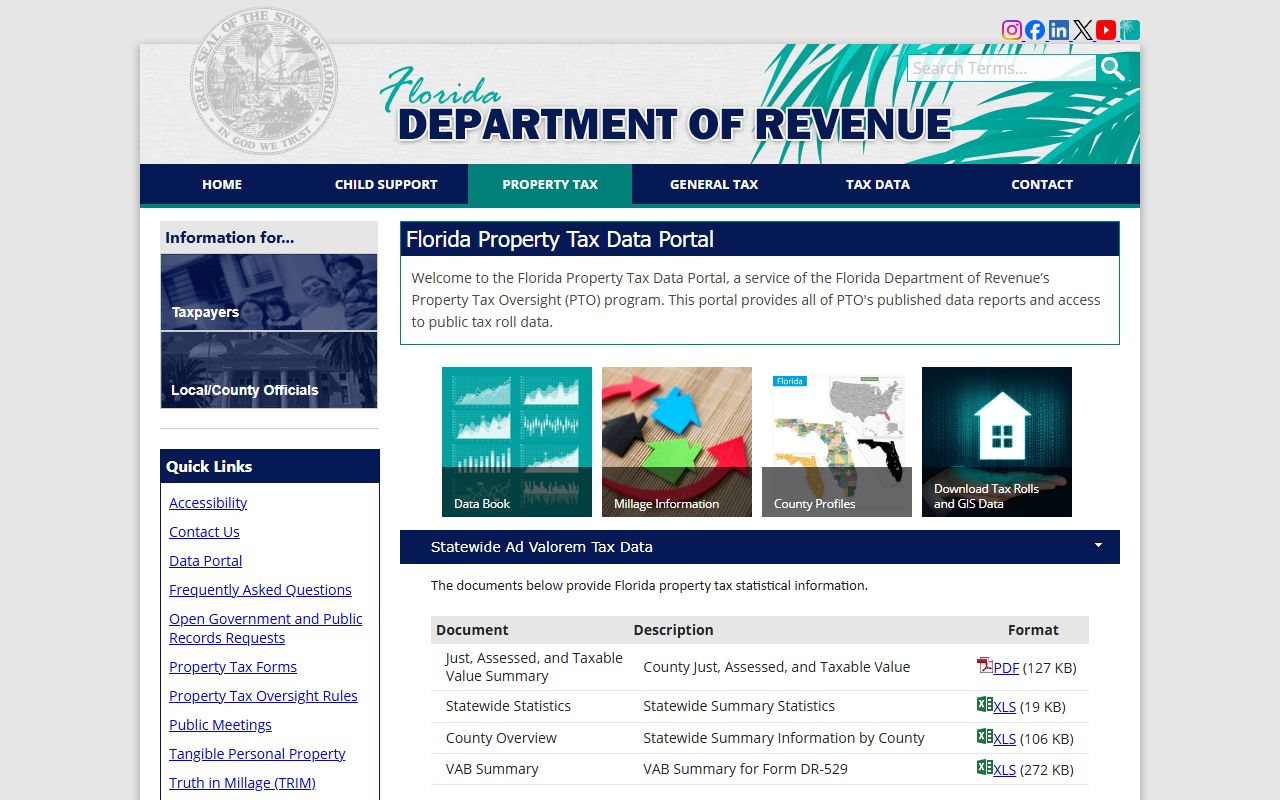
The Florida DOR data portal at floridarevenue.com provides statewide property tax data, including Wakulla County records, and is a useful starting point alongside the local appraiser site.
How to Search Wakulla County Property Records
The online search tool at wakullapa.com is the quickest way to pull a property record. You can search by owner name, property address, or parcel identification number. Results show the legal description, current and prior owners, assessed and just values, the exemptions on the parcel, and a sales history that lists each prior transaction with a deed reference. The database covers all parcels in the county, from small residential lots in Crawfordville to large rural tracts farther out.
For older records, documents with complex legal descriptions, or parcels that have changed hands several times, visiting the office in person at the Crawfordville Highway address is often the most effective approach. Staff can search historical files and help with questions that the online system may not fully answer. Bring any identifying information you have: an address, a prior owner's name, or a nearby road or community name is usually enough to start a search.
Recorded instruments such as deeds, mortgages, and liens are held by the Wakulla County Clerk of the Circuit Court, not the property appraiser. The clerk's records are separate from the appraiser's assessment database but linked through parcel numbers and legal descriptions. Under Florida Statutes Chapter 28, the clerk records and indexes all official documents affecting real estate in the county. Reviewing both systems together gives a full picture of a property's history, current ownership, and any recorded claims against the title.
What Wakulla County Property Records Show
A standard record from the Wakulla County Property Appraiser includes the current owner's name and mailing address, the property's physical address or location description, the parcel identification number, and the full legal description from the recorded deed. The value section lists the just value (which is the appraiser's estimate of market value), the assessed value after any applicable caps or agricultural classifications, and the taxable value after all exemptions are applied. For coastal and waterfront lots in Wakulla County, just values can reflect premium location factors that push market value well above what you might expect for similar interior parcels.
Sales history is included, listing each prior sale date, the recorded price, and a reference to the deed book and page number where the instrument is filed at the clerk's office. Florida Statutes Chapter 192 requires every parcel in the county to appear on the tax roll, so every piece of real property has an official record regardless of whether it has ever been sold. Improvement data covers structures on the parcel, including the size, year built, construction type, and general condition. For rural parcels, accessory structures such as barns, well houses, or storage buildings may be listed separately.
Land data shows the total acreage, land use classification, and any special classifications such as agricultural or timberland that reduce the assessed value. For wetland parcels in Wakulla County, the classification coding on the record indicates how the appraiser has treated the land value, which matters for buyers trying to understand what is taxable and what may be subject to environmental restrictions.
Homestead Exemption in Wakulla County
Florida's homestead exemption cuts the taxable value of a qualifying primary residence by up to $50,000. The first $25,000 applies to all taxing authorities. The second $25,000 applies only to non-school taxes on the portion of assessed value between $50,000 and $75,000. To qualify, you must own the property, use it as your permanent Florida home, and file an application with the Wakulla County Property Appraiser by March 1 of the first year you are claiming the benefit. Applications are available online at wakullapa.com or in person at the Crawfordville office.
Once homestead is on file, Florida Statutes Section 193.155 limits how fast the assessed value can rise. The Save Our Homes cap keeps annual increases to 3% or the rate of inflation, whichever is less. Over several years, this cap can create a meaningful gap between the assessed value and the actual market value of the home, which is a real benefit for long-term owners in a county where coastal and near-Tallahassee property values have moved over time. If you move to a new Florida home, you may transfer all or part of that accumulated benefit to the new property through portability. Talk to the appraiser's office when you apply for exemption on the new home.
Additional exemptions are available for veterans with service-connected disabilities, surviving spouses, seniors who meet income limits, widows and widowers, and people with total and permanent disabilities. Each requires documentation and must be filed before March 1. Missing the deadline means waiting until the next tax year, so file as early as possible if you are a new owner or become newly eligible for an extra exemption.
Property Tax Calendar for Wakulla County
Every August, the Wakulla County Property Appraiser mails a Truth in Millage (TRIM) notice to each property owner. The TRIM notice is not a bill. It shows the proposed assessed value, any exemptions on record, and the proposed millage rates from the county commission, school board, and any applicable special districts. The notice also lists the dates of public budget hearings where owners can attend and speak about proposed rates or spending.
If you think the proposed value is too high, contact the property appraiser's office as soon as possible after receiving your TRIM notice. Many valuation disputes in smaller counties like Wakulla are resolved through an informal review without needing to go further. If an informal discussion does not fix the problem, you can file a petition with the Value Adjustment Board (VAB) before the deadline shown on the notice. The VAB holds a hearing, and if your evidence supports a lower value, the board has the authority to reduce it.
Tax bills are mailed by the Wakulla County Tax Collector in November. Early payment earns discounts: 4% in November, 3% in December, 2% in January, and 1% in February. The full amount without discount is due by March 31. Taxes that remain unpaid after that date become delinquent and are subject to a tax certificate sale. The Florida Department of Revenue provides a full explanation of how county tax officials work together on the local officials page at floridarevenue.com/property/Pages/LocalOfficials.aspx.
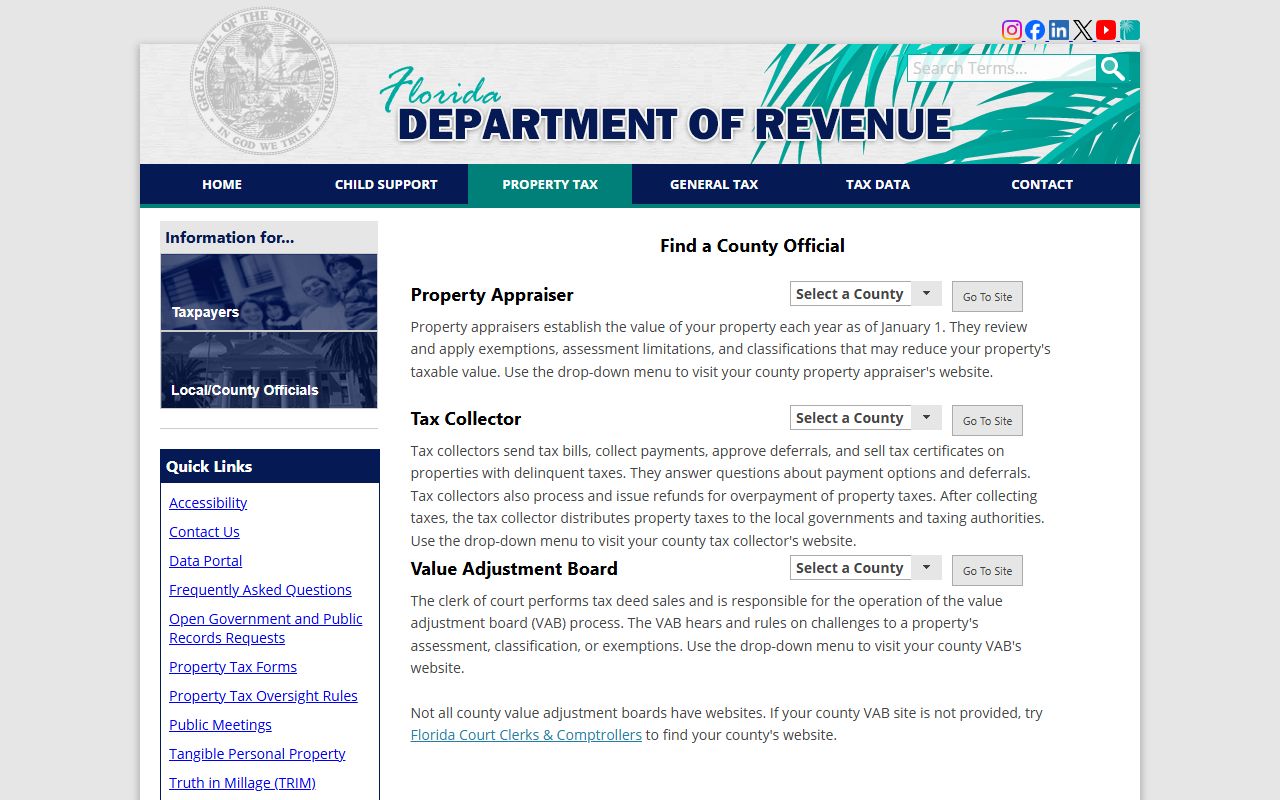
The DOR local officials page lets you look up contact information for property appraisers, tax collectors, and clerks in Wakulla County and every other Florida county from a single resource.
Official Records at the Wakulla County Clerk
Deeds, mortgages, liens, judgments, and other instruments affecting real estate in Wakulla County are recorded by the Clerk of the Circuit Court. Recording creates a public record that provides notice of ownership and encumbrances to anyone who later searches the index. Florida's public records law, Chapter 119, makes virtually all recorded documents open to the public, whether you want to review them at the courthouse or request certified copies for legal or title work.
A thorough review of any Wakulla County parcel before a purchase should cover both the appraiser's assessment records and the clerk's recorded instruments. The appraiser's file tells you what the property is worth and how it is classified. The clerk's index tells you who has legally recorded claims against the title, including any outstanding mortgages, liens, or court judgments that would need to be resolved before a clean transfer. Certified copies of recorded documents are available for a per-page fee set by state law. For rural and coastal parcels in Wakulla County, where legal descriptions may reference old survey lines or natural features, reviewing the actual deed language at the clerk's office is especially worthwhile.
Florida Department of Revenue Oversight
The Florida Department of Revenue oversees property assessment statewide through its Property Tax Oversight (PTO) program. The PTO program reviews each county appraiser's work to make sure valuations follow state law and are uniform across county lines. Wakulla County, like all Florida counties, submits its tax roll to the DOR for review each year before values become final.
The DOR website at floridarevenue.com/property is worth bookmarking if you are researching Wakulla County property records. The site has guides on how the exemption process works, how to appeal a value, what the TRIM notice means, and how the Save Our Homes cap is calculated. For property owners who want to understand the full legal framework behind what the appraiser does, it is a clear and well-organized resource. The DOR also publishes statewide assessment data that lets you see how Wakulla County's ratios and rates compare to neighboring counties in the Panhandle.
Cities in Wakulla County
No city in Wakulla County meets the population threshold for a dedicated city page. Crawfordville, the county seat, is the largest community in the county but remains well under the threshold. All property records for parcels throughout Wakulla County are handled at the county level through the Property Appraiser and Clerk offices in Crawfordville.
Nearby Counties
Wakulla County is in the Florida Panhandle and shares borders with several neighboring counties, each maintaining its own property records system.