
Melbourne Property Records Search
Property records for Melbourne, Florida are managed by Brevard County offices and are available to the public free of charge online. Melbourne has a population of about 87,561 and is the largest city in Brevard County. It sits along the Indian River Lagoon on Florida's Space Coast. The Brevard County Property Appraiser's Office holds ownership, assessment, and exemption data for every parcel in the city. The Brevard County Clerk of Courts holds recorded documents such as deeds, mortgages, and liens. This guide explains where to search Melbourne property records, what those records contain, how the homestead exemption works, and how the annual property tax cycle runs for Brevard County property owners.
Melbourne Property Records Quick Facts
How Melbourne Property Records Are Managed
Melbourne is an incorporated city in Brevard County. All property assessment and recording functions for city parcels are handled at the county level. The Brevard County Property Appraiser's Office (BCPAO) is located at 400 S Street, Titusville, FL 32780. The main phone is 321-264-6700. The BCPAO website is at www.bcpao.us. The office maintains ownership records, assessment data, and exemption files for every parcel in the county, including those in Melbourne.
Under Chapter 193, Florida Statutes, the property appraiser must assess all real property at just value each January 1. The BCPAO updates ownership records after reviewing recorded deeds from the Brevard County Clerk of Courts. The appraiser processes exemption applications each year and compiles the final assessment roll, which goes to the Brevard County Tax Collector for billing.
Recorded instruments affecting Melbourne property, including deeds, mortgages, and liens, are filed with the Brevard County Clerk of Courts. Under Chapter 28, Florida Statutes, the clerk maintains these public records and makes them available for search. Recording a document establishes priority and creates a legally effective public record.
The Brevard County Property Appraiser's Office website provides the main search portal for Melbourne parcel data, along with exemption forms and contact information.
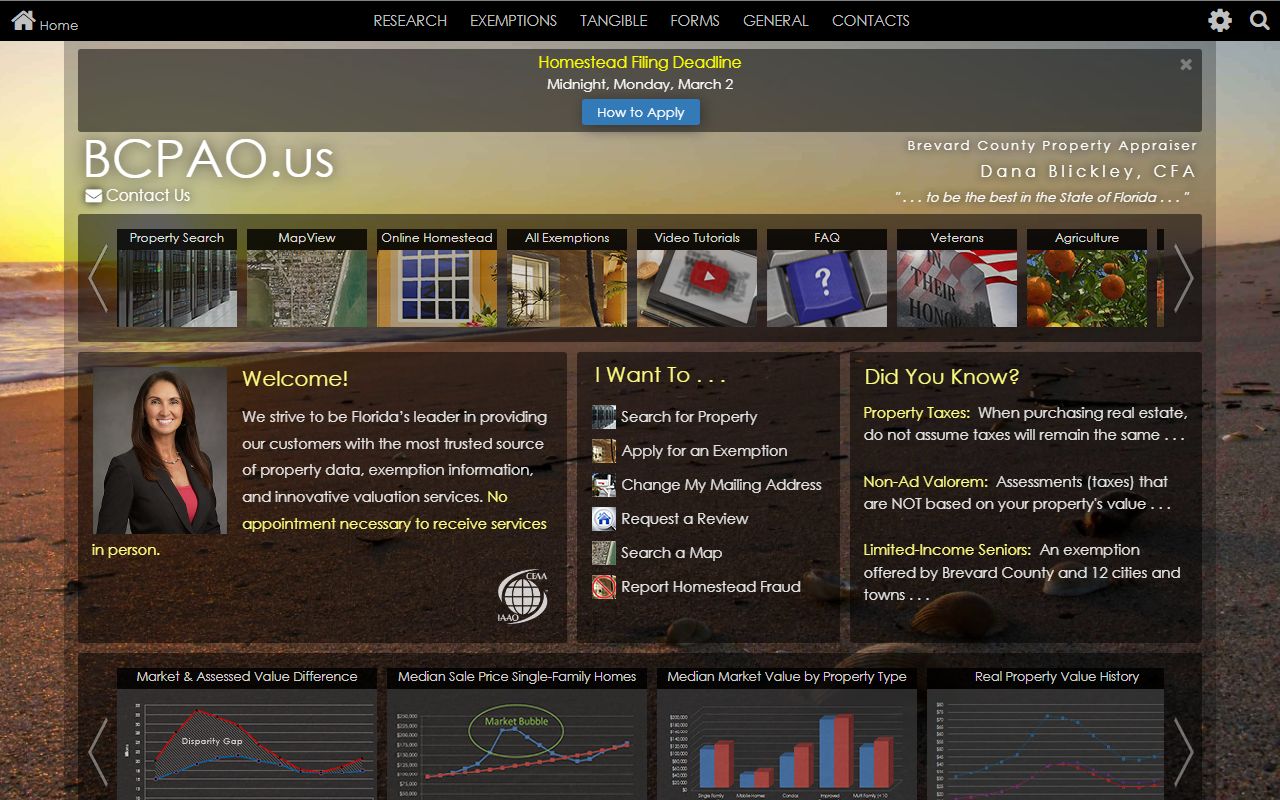
Search Melbourne property records at www.bcpao.us by owner name, parcel ID, or street address, at no charge.
Search Melbourne Property Records Online
The BCPAO's property search tool at www.bcpao.us/PropertySearch is the main resource for Melbourne parcel lookups. You can search by owner name, street address, parcel ID number, or subdivision name. Results include the current owner, mailing address, legal description, building details, land information, and assessed values for the current and prior years.
Sales history appears on every parcel record. Each sale lists the buyer and seller, sale date, price, and deed type. The BCPAO distinguishes between qualified sales that reflect market value and non-qualified transactions such as family transfers, foreclosures, or sales that include personal property. Qualified sales are used to determine just value for similar properties in the neighborhood.
For recorded instruments, the Brevard County Clerk of Courts maintains an online official records search. You can search by grantor or grantee name, document type, or recording date. Deeds, mortgages, satisfactions, judgments, lis pendens, and other instruments are indexed in the system. Document images are available to view and print for most instruments. Certified copies require a fee and can be ordered from the clerk's office.
Permit records for Melbourne properties are kept by the City of Melbourne Building Department. Permit history is important before a purchase. Unpermitted additions or failed inspections can create problems at closing and can affect property value or insurability.
The Brevard County Property Appraiser's online property search lets you look up Melbourne parcels directly by owner name, address, or parcel ID without any registration or fee.
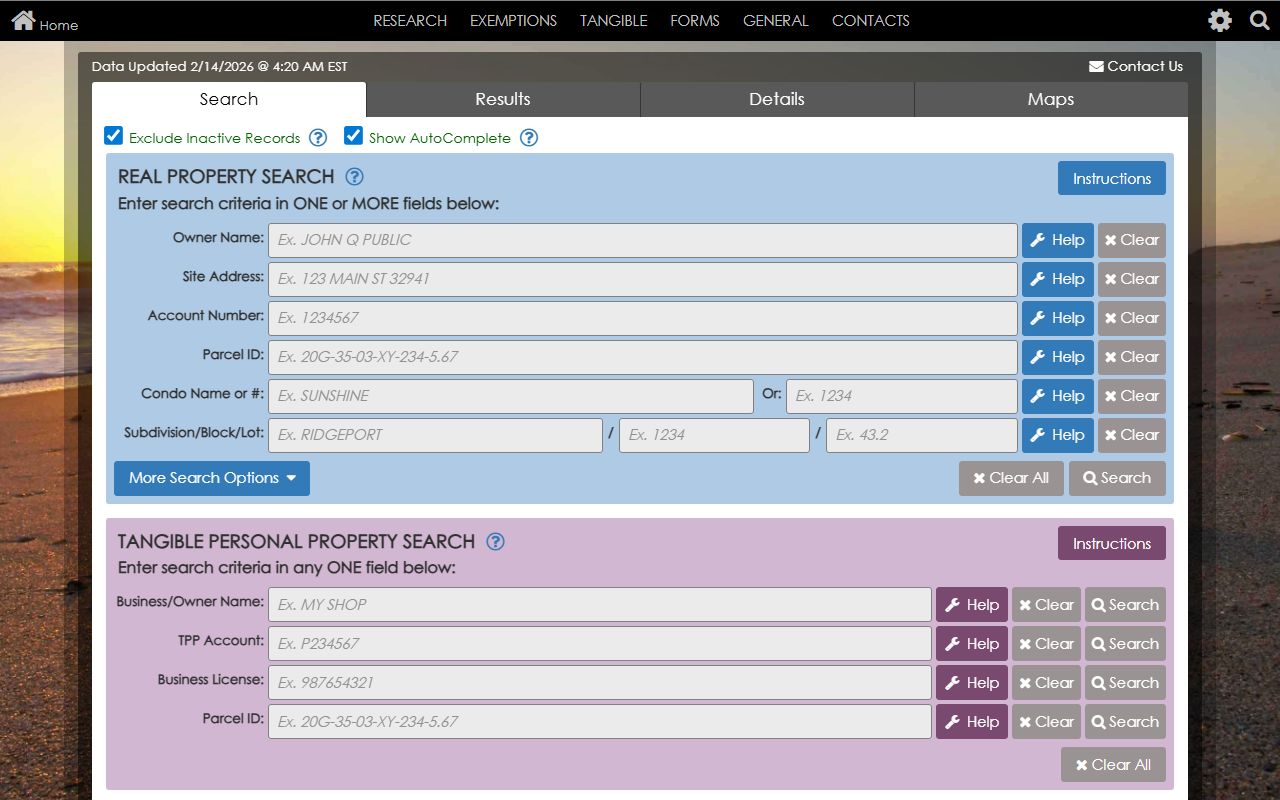
Go directly to the parcel search at www.bcpao.us/PropertySearch to find Melbourne property records.
What Melbourne Property Records Show
Each Melbourne parcel record from the BCPAO contains several categories of data. Ownership information shows the current legal owner's name and mailing address. For recently transferred properties, there can be a short processing delay, but records typically update within a few weeks of the deed being recorded. If you need the most current ownership for a very recent sale, calling the BCPAO directly is the fastest option.
Assessment data includes the just value, assessed value, and taxable value for the current year and prior years. For homestead properties, the assessed value is capped by the Save Our Homes rule. Under that rule, the assessed value can increase by no more than 3% per year or the rate of inflation, whichever is lower. For Melbourne homeowners who have held their property for many years, this often results in an assessed value well below current market value.
The taxable value is what the annual tax bill is based on. It is calculated by subtracting all exemptions from the assessed value. Exemptions include homestead, senior, disability, veteran, and others. Each exemption that applies is listed on the parcel record along with the dollar amount. The full list of available exemptions in Florida is set out in Chapter 196, Florida Statutes.
Building details show the year built, construction type, total area, and room counts. Land data covers lot size, waterfront status, and land use code. All of this information is public under Chapter 119, Florida Statutes.
Homestead Exemption for Melbourne Residents
Melbourne homeowners who use their property as a primary residence can get up to $50,000 off the taxable value through Florida's homestead exemption. The first $25,000 applies to all taxing authorities. The second $25,000 applies to all taxes except the school district levy. For most Melbourne property owners, this results in a meaningful reduction in annual property taxes.
To qualify, you must own the property, live in it as your permanent home, and be a Florida resident on January 1 of the tax year. A Florida driver's license or state ID with the Melbourne address is required. You apply with the Brevard County Property Appraiser, not with the City of Melbourne. The deadline is March 1. Applications filed after March 1 are rejected for that tax year.
Once the exemption is granted, the Save Our Homes cap begins limiting assessed value growth the following January 1. Over time, this can create a large gap between assessed value and market value. That gap is called the Save Our Homes benefit, and it can be transferred to a new Florida home through portability. Portability allows you to carry up to $500,000 of that benefit to a new primary residence anywhere in Florida. You apply for portability at the same time you apply for homestead on the new property, using the BCPAO's portability form. The deadline is March 1 of the year following the year you bought the new home.
Melbourne City Government Resources
The City of Melbourne handles local permits, zoning, and code enforcement for properties inside city limits. City Hall is at 900 E Strawbridge Avenue, Melbourne, FL 32901. The main phone is 321-608-7000. The city website is www.melbourneflorida.org. City staff can assist with questions about local regulations, permits, and zoning.
The Building Department handles permit applications for construction, additions, and other improvements. Their phone is 321-608-7900. Permit information is available at melbourneflorida.org/building-department. Before buying a Melbourne property, it is worth verifying that all work on the property has been properly permitted and that inspections were completed and passed. Open permits can complicate or delay a real estate closing.
Zoning questions are handled by Melbourne's Community Development Department. The city maintains an online GIS portal with zoning maps, parcel information, and flood zone data. Melbourne's location near the Indian River Lagoon means flood zone classification is an important consideration for many properties. The city's GIS system can help you identify a parcel's flood zone and understand what insurance or development restrictions may apply.
Official Records at the Brevard County Clerk
Deeds, mortgages, releases, judgments, and liens affecting Melbourne property are recorded with the Brevard County Clerk of Courts. Under Chapter 28, Florida Statutes, the clerk is responsible for maintaining all recorded public instruments and making them available for search. The Brevard County Clerk's main office is in Titusville, the county seat, with branch locations in other parts of the county.
The Brevard County Official Records search is available online at no charge. You can search by grantor or grantee name, document type, or date range. The system covers instruments recorded back to the 1980s and earlier for many document types. Images are available online for most records. Certified copies require a fee and can be ordered from the clerk.
Documentary stamp tax is paid at the time a deed is recorded. In Brevard County, the rate is $0.60 per $100 of consideration. You can use the documentary stamps on a recorded deed to estimate the sale price of a Melbourne property. Federal tax liens and mechanics liens are also recorded with the Brevard County Clerk and appear in the official records search. A full title search covers all of these instruments and is standard practice for any Melbourne real estate purchase.
TRIM and the Property Tax Calendar
Brevard County mails TRIM notices to all property owners each August. The TRIM (Truth in Millage) notice shows the proposed assessed value, the exemptions on file, and the proposed millage rates from each taxing authority. For Melbourne properties, those authorities include Brevard County, the City of Melbourne, the Brevard County School District, and applicable special districts. The TRIM notice is not a bill. It is a notice of what your taxes will be if proposed rates are adopted.
If you disagree with the proposed assessed value or if an exemption was denied, you have 25 days from the TRIM mailing date to file a petition with the Brevard County Value Adjustment Board. The VAB is independent of the property appraiser. A special magistrate hears each petition and issues a recommended decision. You do not need a lawyer to file, but some owners hire tax professionals for larger commercial properties.
Tax bills go out in early November. Under Chapter 192, Florida Statutes, the state governs the framework for property tax administration in all 67 Florida counties. The early-payment discount is 4% in November, 3% in December, 2% in January, and 1% in February. The full amount is due by March 31. Taxes unpaid after April 1 are delinquent. The county holds a tax certificate sale in late May or early June, where investors can bid on the delinquent tax certificates. Property owners can redeem certificates by paying the taxes plus interest at any time before a tax deed is issued.
Nearby Cities
Palm Bay is the other major Brevard County city with a property records page.