
Search Gilchrist County Property Records
Gilchrist County property records are kept by the Property Appraiser's office in Trenton, Florida, a small north-central Florida county with around 18,000 residents. The county covers a mostly rural area between Gainesville and the Gulf Coast. Property records here include ownership data, annual assessments, land descriptions, recorded deeds, and exemption filings. This page explains how to find those records and what to expect from each county office involved.
Gilchrist County Property Records Quick Facts
Gilchrist County Property Appraiser
The Gilchrist County Property Appraiser is at 112 S Main Street, Trenton, FL 32693. Phone: 352-463-3190. The office website is gilchristcounty.org/property-appraiser. Staff there handle parcel searches, exemption applications, and ownership records. The appraiser sets the just value for all Gilchrist County real property as of January 1 each year, following the requirements of Florida's Chapter 193.
Gilchrist County is predominantly agricultural and rural. The property types the appraiser handles range from timber and pasture land to small residential parcels in Trenton and Bell. Agricultural land is assessed under a special classification system based on its use value rather than market value, which often results in a much lower taxable value for qualifying farmland.
Office hours are typically Monday through Friday, 8:00 a.m. to 5:00 p.m. For simple searches, the online parcel tool is faster. But if you have questions about agricultural classification, exemption eligibility, or a complex parcel history, visiting in person is often more efficient in a small county like Gilchrist.
Online Parcel Search
The appraiser's website offers a parcel search tool where you can look up Gilchrist County properties by owner name, address, or parcel ID. Each record shows the current owner, mailing address, legal description, land size, building details, and assessed value history. You can also see any exemptions currently attached to the parcel, including homestead, agricultural classification, and disability exemptions.
The state's broader property tax data resources can help you put Gilchrist County records in context. The Florida Department of Revenue maintains a statewide data portal with county-level information.
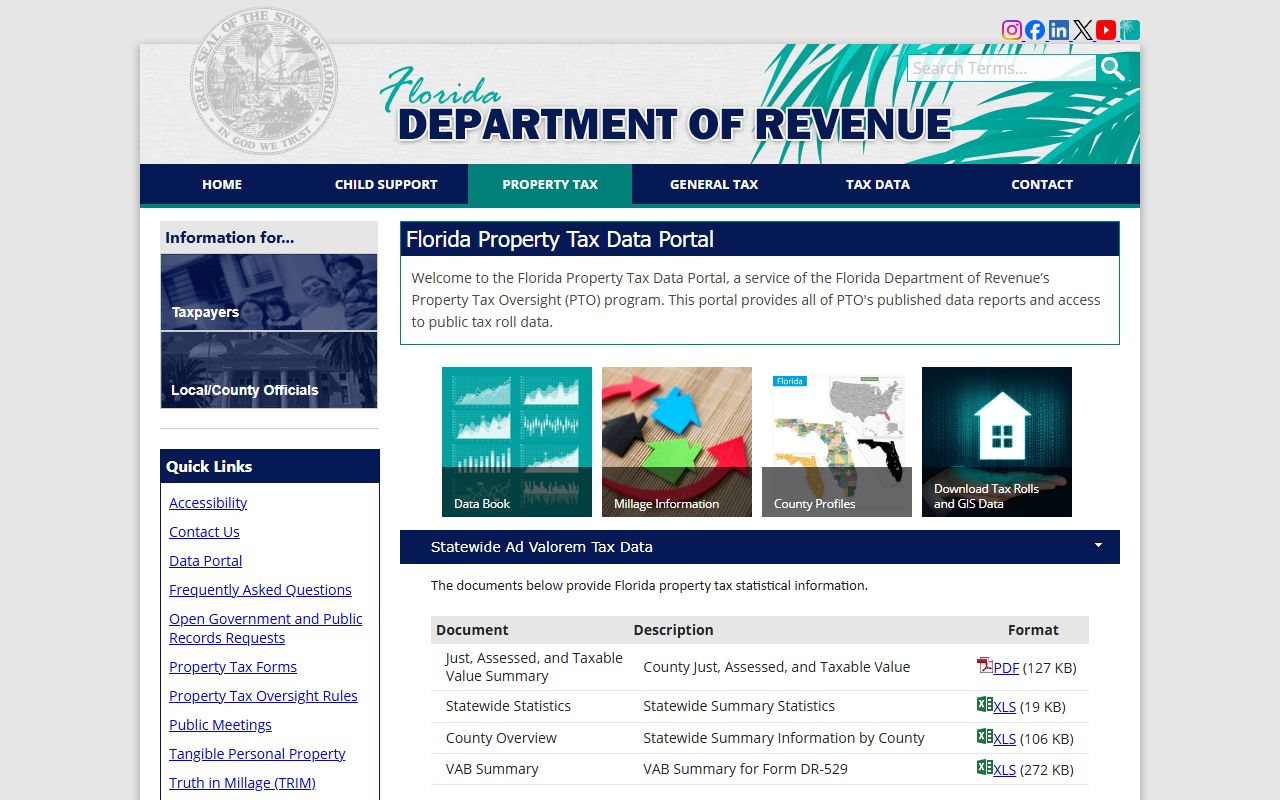
This DOR portal is especially useful when comparing Gilchrist County assessments to neighboring counties like Alachua or Levy, where different market conditions may produce different valuation patterns.
Note: Gilchrist County's rural character means many parcels have mailing addresses that differ from the property location. Always confirm the physical address using the legal description and parcel map when doing site-specific research.
Recorded Deeds and Official Documents
Deeds and recorded instruments for Gilchrist County property are filed with the Gilchrist County Clerk of Courts in Trenton. Under Chapter 28, the clerk is the official custodian of recorded land records in the county. Deeds, mortgages, liens, easements, and plat maps are all kept in the official records and are open to public inspection.
When searching for a deed, you can use the grantor/grantee index to find transactions by the names of the seller and buyer. Documentary stamp taxes on recorded deeds can help you estimate the sale price. A deed showing $700 in documentary stamps indicates a sale price close to $100,000, since the tax rate is $0.70 per $100 of the purchase price.
Older Gilchrist County records may be on microfilm or in ledger books. The Clerk's office can help you navigate those older formats. For records from the past two to three decades, digital access is generally available. Contact the Clerk's office to confirm what's online and what requires an in-person visit.
Homestead Exemption and Other Benefits
Florida homeowners in Gilchrist County who use their property as a primary residence can apply for homestead exemption by March 1. The exemption reduces the assessed value by up to $50,000. The first $25,000 covers all tax levies; the second $25,000 applies only to non-school taxes. Most homeowners in the county qualify as long as the property is their permanent legal residence.
Seniors meeting income limits may get an extra reduction. Disabled veterans can receive significant exemptions, and those who are permanently and totally disabled due to service-related injuries may qualify for a full exemption. The Property Appraiser's office in Trenton can review your situation and explain what documents you need to bring.
Agricultural classification is another major benefit for Gilchrist County landowners with working farms, timberland, or grazing operations. To qualify, you must show that the land is actively used for an agricultural purpose. The appraiser reviews applications annually and may inspect the property. If approved, the land is assessed at its agricultural use value rather than its market value, which can cut the tax bill substantially.
Property Tax Basics in Gilchrist County
The Gilchrist County Tax Collector sends property tax bills each November. Taxes are due by March 31. Early payment discounts under Chapter 192 run from 4% in November down to 1% in February. After March 31, the account is delinquent.
Unpaid taxes can lead to a tax certificate sale where investors pay the back taxes in exchange for a certificate that earns interest. If the property owner doesn't redeem the certificate within a set period, the certificate holder can apply for a tax deed. That process is handled through the Clerk of Courts and ends with a public sale if the taxes remain unpaid. Buyers at tax deed sales should check the Clerk's records for any other liens that may survive the sale.
Your Right to Property Records in Gilchrist County
Florida's Chapter 119 makes most government records open to the public. Ownership data, assessment rolls, deed records, tax histories, and exemption filings held by Gilchrist County offices are available to anyone who requests them. You don't need to be a resident or state a reason for your request. Offices must respond in a reasonable time and may charge a fee for copies.
The Florida DOR's local officials directory is a useful reference for Gilchrist County contact information and links to the appraiser and tax collector websites.
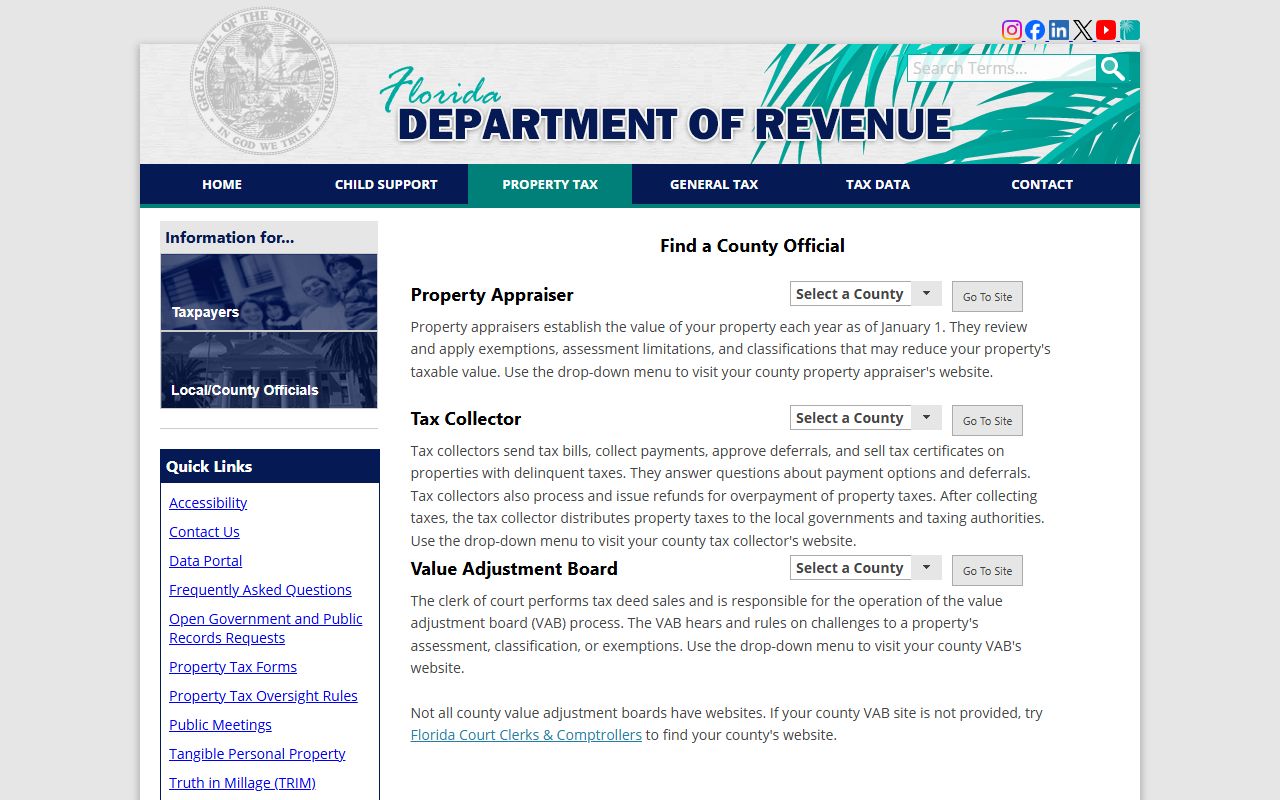
This DOR resource lists every county's property office and is updated regularly, making it a reliable starting point when the county's own website is hard to navigate.
Contesting Your Assessment
If you think your Gilchrist County property has been assessed too high, start with the appraiser's office. Request an informal review and bring evidence. Recent sales of similar properties in the area are the strongest argument. If the appraiser agrees, the value gets adjusted. If not, you can file a petition with the Gilchrist County Value Adjustment Board.
The VAB deadline is the date shown on your TRIM notice, usually in August. Miss that deadline and you lose your right to appeal that year's value. At the VAB hearing, you present your evidence and the appraiser presents theirs. The VAB makes a decision. After that, circuit court is the next step if you still disagree. The process is the same across Florida counties, governed by state statute.
Cities in Gilchrist County
Gilchrist County has no cities over the population threshold for dedicated city pages on this site. Trenton is the county seat and largest town. Bell and Fanning Springs are the other incorporated communities. None of these municipalities are large enough to qualify for a city page here.
Nearby Counties
Gilchrist County is surrounded by five counties. Alachua County lies to the east, Columbia to the north, Dixie to the southwest, Lafayette to the northwest, and Levy to the south and west. Each of those counties has its own property appraiser and Clerk of Courts for recorded documents.