
Lafayette County Property Records
Lafayette County property records are maintained by the Property Appraiser's office in Mayo and cover all parcels in this rural north-central Florida county. You can search records online through the county's official portal or request information by phone or in-person visit to confirm ownership, assessed values, and exemption status for any parcel in Lafayette County.
Lafayette County Property Records Quick Facts
Lafayette County Property Appraiser
The Lafayette County Property Appraiser's office is located at 120 W Main Street, Mayo, FL 32066. You can reach the office by phone at 386-294-1992. The office is responsible for identifying every parcel in the county, assigning values for tax purposes, and processing exemption applications. The website at lafayettecountyfl.net/property-appraiser provides public access to basic property data and contact information for staff.
Lafayette is one of Florida's smallest and least populated counties. That means the office handles a relatively modest number of parcels compared to larger counties, but the data it maintains is just as important. If you own land, a home, or a business in Lafayette County, your property details are on file here. The office follows the same state standards that apply to all 67 Florida county appraisers.
Florida law under Chapter 192 sets out the general framework for how property assessments work. The appraiser must assess all property at just value as of January 1 each year. That snapshot date drives the entire tax calendar for Lafayette County.
How to Search Lafayette County Property Records
The most direct way to search Lafayette County property records is through the Property Appraiser's online portal. You can look up parcels by owner name, property address, or parcel identification number. The results will show the property's assessed value, exemptions on file, and ownership information. For a small rural county like Lafayette, the database is not always as robust as those in larger urban counties, so an in-person visit can be useful if you need more detailed records.
To visit in person, go to 120 W Main Street in Mayo. Call ahead at 386-294-1992 to confirm hours and what documents to bring. Staff can pull up records and help you understand what the data means. If you need deeds or other recorded instruments, those are kept separately at the Clerk of Court, also in Mayo.
The Florida Department of Revenue maintains a statewide data portal at floridarevenue.com where you can access assessment data for every county, including Lafayette. This is useful if you want to compare values across counties or pull data in bulk.
The Florida Department of Revenue's data portal, shown below, provides state-level access to property tax data for Lafayette County and all 67 Florida counties.
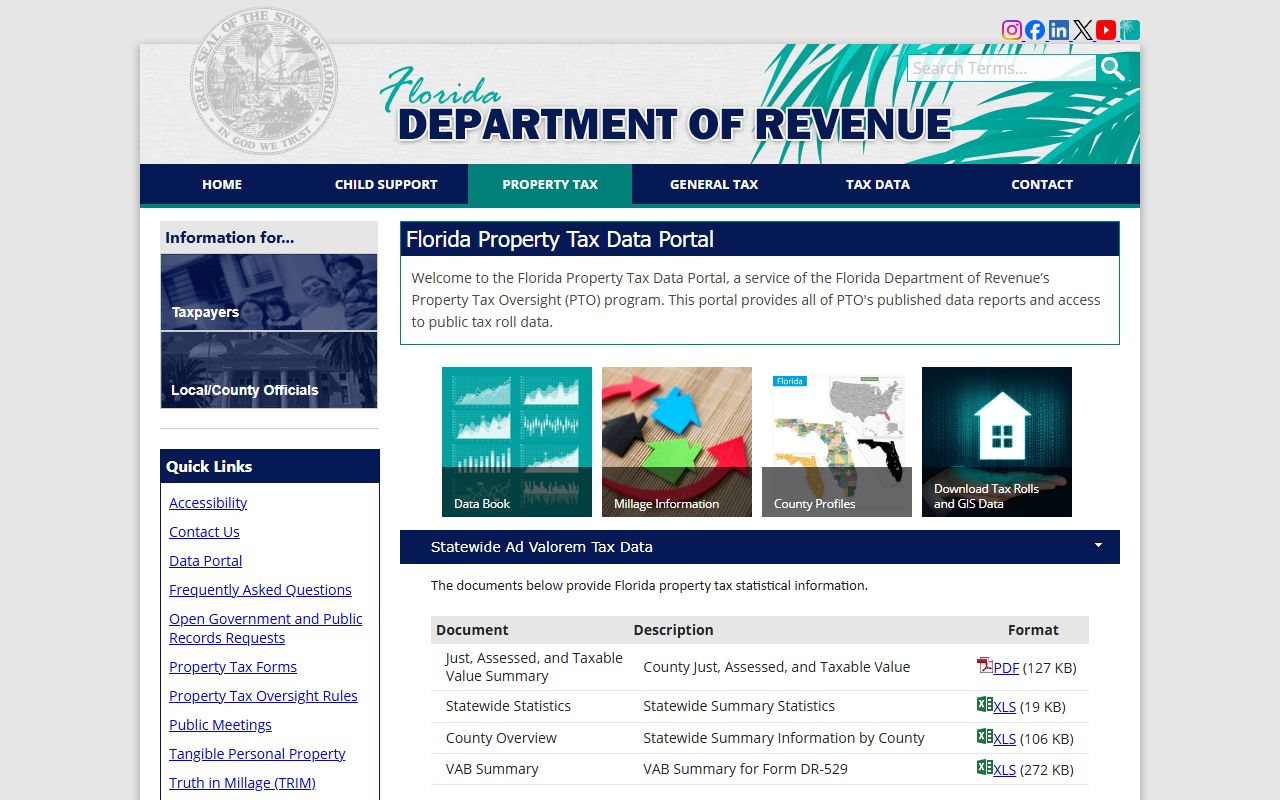
This portal is updated annually and includes tax roll summaries, county-by-county value totals, and links to each county appraiser's site.
What Lafayette County Property Records Show
A standard Lafayette County property record will show the parcel ID, the legal description of the land, the current owner of record, the mailing address on file, and both the just value and assessed value. You will also see the taxable value after any exemptions are applied. For residential properties, the record typically includes the year the structure was built, the square footage of living area, and a breakdown of land versus improvement value.
Sales history is part of the public record too. You can see prior transfers, the sale price, and the date of each transaction. This data is used by the appraiser's office when comparing similar properties to set values. Chapter 193 of Florida law governs how assessments are made and what factors the appraiser must consider, including recent sales data.
Agricultural land is common in Lafayette County. Parcels classified under agricultural use may receive a lower assessed value under Florida's agricultural exemption rules. The classification shows up in the property record and has a direct effect on what the owner pays in taxes.
Homestead Exemption in Lafayette County
Florida homeowners who live in their primary residence can apply for the Homestead Exemption, which reduces the taxable value of the property by up to $50,000. The first $25,000 applies to all property taxes. The second $25,000 applies only to non-school taxes. Together, these two tiers can produce meaningful savings for Lafayette County homeowners.
To apply, you must own and occupy the property as your primary residence as of January 1. The deadline to file is March 1 of the same tax year. You apply through the Lafayette County Property Appraiser's office. You will need proof of ownership, proof of Florida residency, and a valid Florida driver's license or ID with the property address. The office can walk you through what documents are required.
Once you have the Homestead Exemption, the Save Our Homes cap limits how much your assessed value can increase each year. The cap is 3% or the rate of inflation, whichever is lower. Over time, this can create a large gap between your assessed value and the actual market value of the home. If you sell and buy another home in Florida, you may be able to transfer that benefit through a process called portability.
Note: Portability applications must be filed with the Property Appraiser's office at the same time you apply for the Homestead Exemption at your new home.
The Property Tax Process in Lafayette County
Every year in August, Lafayette County property owners receive a TRIM Notice. TRIM stands for Truth in Millage. This is not a bill. It is a notice that shows what your proposed property taxes will be based on the current millage rates set by local taxing authorities. The notice shows your just value, your assessed value, any exemptions, your taxable value, and the proposed tax amount.
If you disagree with your assessed value, you have options. You can first contact the Property Appraiser's office informally to discuss the assessment. If that does not resolve the issue, you can file a petition with the Value Adjustment Board before the deadline shown on your TRIM Notice. The VAB is an independent body that hears appeals from property owners who believe their assessment is too high or that an exemption was wrongly denied.
Once the tax roll is certified, the Lafayette County Tax Collector sends out the actual tax bills, typically in late October or early November. You get a 4% discount if you pay in November, 3% in December, 2% in January, and 1% in February. Taxes become delinquent if not paid by April 1.
The Florida Department of Revenue oversees the work of all county property appraisers and tax collectors. You can find local officials and their contact details at the DOR local officials page.
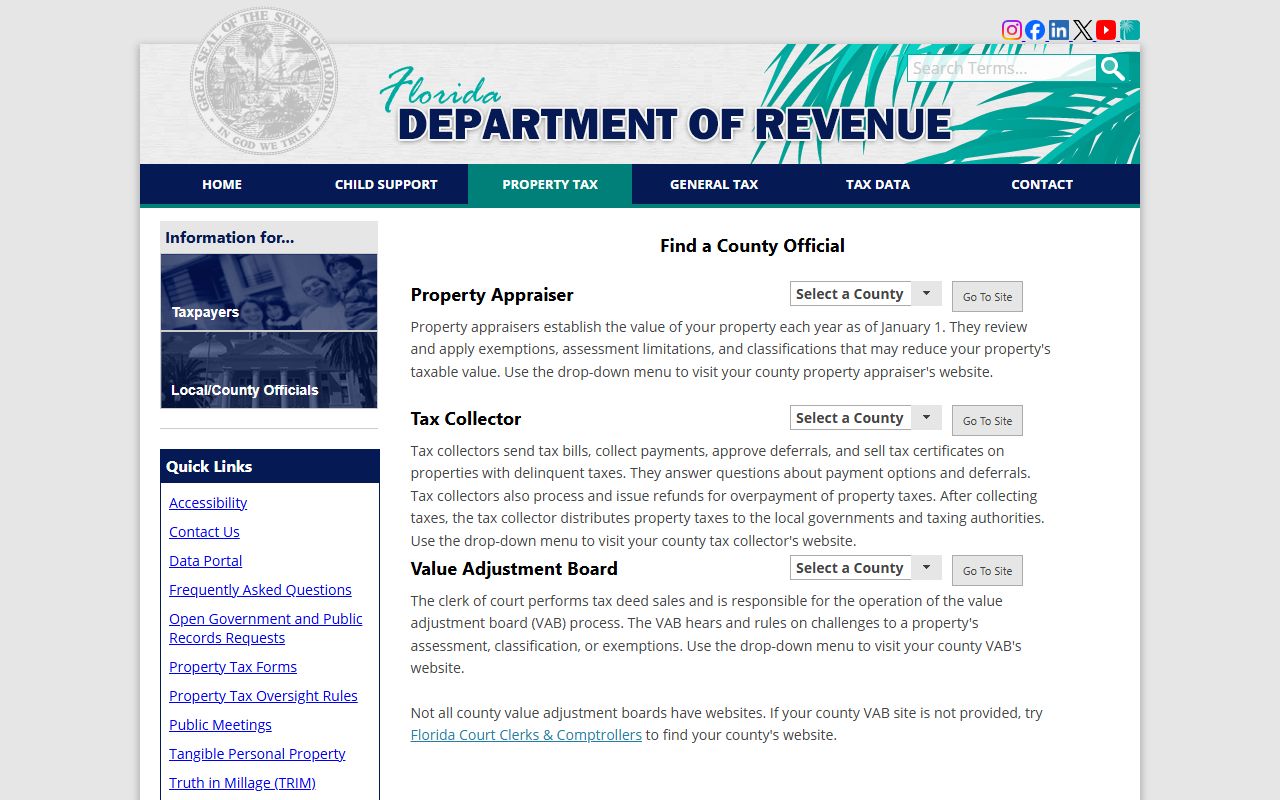
This directory lists the Property Appraiser and Tax Collector for every Florida county, including Lafayette, with current contact details.
Official Records at the Lafayette County Clerk
While the Property Appraiser handles assessments, the Lafayette County Clerk of Court is the keeper of official recorded documents. Deeds, mortgages, satisfaction of mortgage, liens, and other instruments affecting title to real property are recorded here. These records are available to the public under Chapter 119 of Florida's public records law.
When a property is sold in Lafayette County, the deed gets recorded with the Clerk. The recording gives public notice of the ownership change. Chapter 28 of Florida law covers the duties of the Clerk of Court, including how instruments must be recorded and what fees apply. The Clerk's office is located at the Lafayette County Courthouse in Mayo.
If you need to verify who holds a mortgage on a property, check for a lien, or confirm that a deed has been properly recorded, start with the Clerk of Court. Some of these records may also be searchable online through the Clerk's website. Call the Clerk's office directly to confirm what is available and whether a search fee applies.
Florida Department of Revenue Oversight
The Florida Department of Revenue's Property Tax Oversight program reviews the work of every county appraiser in the state, including Lafayette County. The DOR makes sure that assessment ratios stay within state-mandated ranges and that assessment practices meet the standards set by Florida law. If a county's assessments drift too far from market value, the DOR can intervene.
The DOR also publishes a range of resources for property owners, including guides on exemptions, instructions for filing petitions, and data on assessed values across Florida. These are available at floridarevenue.com/property. For Lafayette County property owners who want to understand how their values compare to the rest of the state, the DOR data portal is a free tool worth using.
Cities in Lafayette County
Mayo is the county seat and the largest community in Lafayette County. No cities in Lafayette County meet the population threshold for a dedicated city records page on this site. Mayo and other small communities in the county are served through the county-level Property Appraiser and Clerk offices described above.
Nearby Counties
Lafayette County borders several other north Florida counties, each with their own property records offices.