
Hendry County Property Records
Hendry County property records are kept by the county property appraiser and the clerk of court, giving anyone a direct way to find ownership information, assessed values, deed history, and exemption status for real estate across this rural south Florida county. Whether you are checking a parcel near LaBelle, researching farmland in Clewiston, or tracing the ownership history of agricultural land along the Caloosahatchee River, these records are public under Florida law and open to anyone who requests them.
Hendry County Property Records Quick Facts
Hendry County Property Appraiser
The Hendry County Property Appraiser office is located at 640 S Main Street, LaBelle, FL 33935. You can reach the office by phone at 863-675-5270. The main website is hendrycounty.org/Property-Appraiser, where the office publishes its property search tool, exemption application forms, and contact details. Staff are responsible for valuing all real and tangible personal property in the county each year and maintaining the tax roll in line with state requirements.
The office works under Florida Statutes Chapter 193, which sets out how counties must assess property, handle appeals, and certify the tax roll annually to the Department of Revenue. Hendry County has a large agricultural base, and the appraiser's office handles classification of farm and ranch land under agricultural use assessments, which can reduce taxable value significantly compared to market value.
Agricultural land in Hendry County is common. If your land is actively used for farming, ranching, or related purposes, you may qualify for an agricultural classification that lowers your assessed value. The appraiser reviews these applications annually. Ask the office about the classification process if you believe your land qualifies.
The Florida Department of Revenue maintains a statewide data portal that supplements county-level searches. The portal at floridarevenue.com includes property tax data, roll information, and resources for all 67 counties.
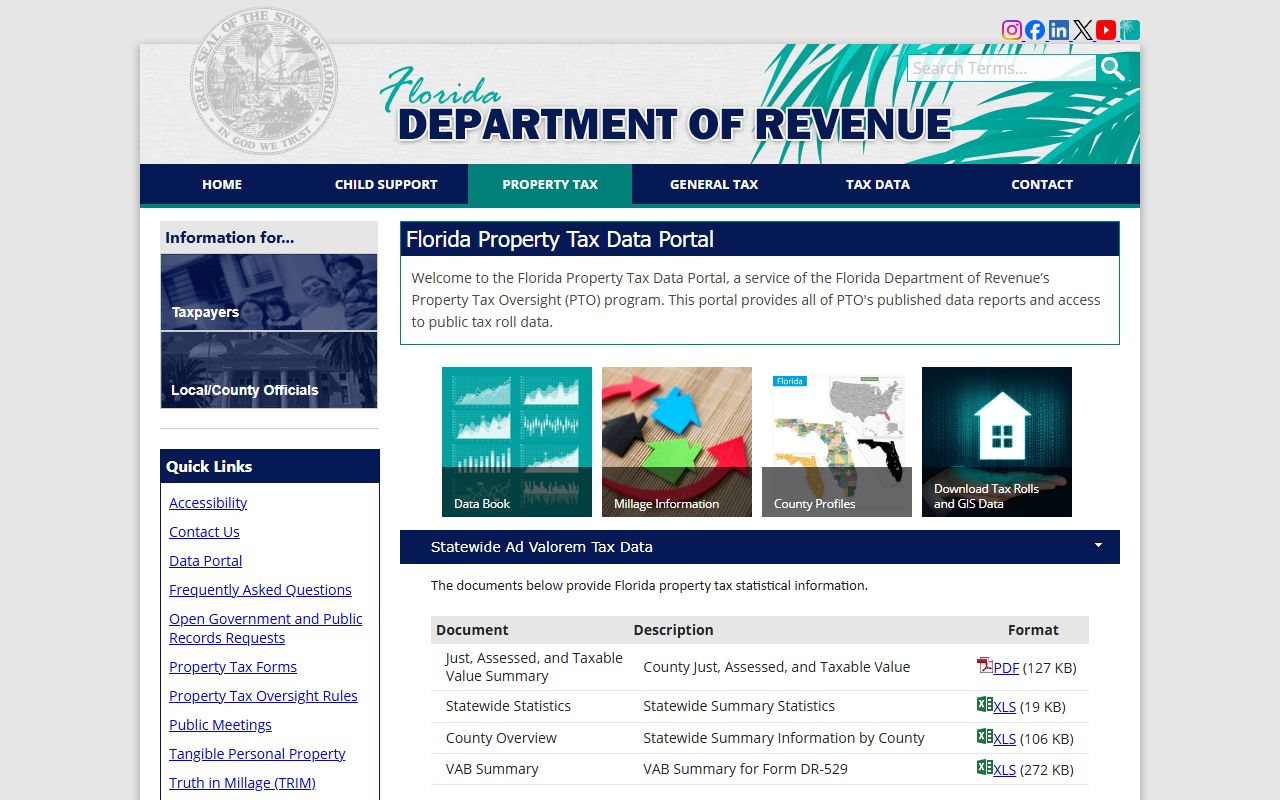
This statewide portal supplements the local Hendry County search and is useful when you need to compare data across county lines or access archived roll information.
How to Search Hendry County Property Records
The primary way to search is through the online portal linked from the appraiser's website at hendrycounty.org/Property-Appraiser. You can look up a parcel using the owner's name, the property address, or the parcel identification number. Search results typically include the legal description, current owner, assessed and just values, exemption status, and a sales history showing prior transactions with deed references.
In-person searches are also available at the LaBelle office on S Main Street. Staff can help with lookups that are difficult to do online, especially for older records or properties with complex legal descriptions. Bring what you have: a street address, a name from a prior deed, or a general location in the county is enough to start the search.
For recorded documents such as deeds, mortgages, and liens, you need to contact the Hendry County Clerk of Courts, not the property appraiser. The clerk maintains the official records index under Florida Statutes Chapter 28. Those records are separate from the appraisal data but link together through parcel numbers and legal descriptions. Note: The clerk's recording fees apply when you request certified copies of instruments such as deeds or satisfactions of mortgage.
What Hendry County Property Records Contain
A typical property record from the Hendry County Property Appraiser shows the current owner's name and mailing address, the physical property location, the parcel ID, and the legal description pulled from the recorded deed. The value section breaks down the just (market) value, the assessed value after any applicable limitations, and the taxable value after all exemptions are deducted. For agricultural parcels, the record may also show the agricultural classification value separately from the market value, which can be a large difference in Hendry County given the amount of active farmland.
Sales data is included in the record. You can see the date, price, and deed book reference for each prior sale. This chain of sales helps buyers, lenders, and researchers understand price trends for a specific parcel over time. Florida Statutes Chapter 192 requires that all real and tangible personal property be listed on the tax roll, which means every parcel in Hendry County has a record in the appraiser's database whether or not it has sold recently.
Building data includes square footage, year built, construction type, and condition as assessed by field staff. Land records show acreage and may include zoning and land use code. Extra features like fencing, irrigation systems, or outbuildings are often listed individually on agricultural parcels.
Homestead Exemption in Hendry County
Florida's homestead exemption removes up to $50,000 from the taxable value of a primary residence. The first $25,000 applies across all taxing authorities. The second $25,000 applies only to non-school taxes and covers the assessed value between $50,000 and $75,000. To get the exemption, you must own the property, live there as your permanent residence, and file an application with the Hendry County Property Appraiser by March 1 of the tax year you want coverage.
Once homestead is in place, the Save Our Homes cap under Florida Statutes Section 193.155 limits annual increases in assessed value to 3% or the rate of inflation, whichever is less. Over time, this cap can create a significant gap between assessed value and actual market value, which works in the owner's favor on the tax bill. If you sell and buy a new home in Florida, you may be able to move some of that benefit to your new property through portability. The appraiser's office can explain how to apply for portability when you purchase your next home.
Other exemptions are also available. Veterans with service-connected disabilities, surviving spouses of veterans, seniors with low income, and people with total and permanent disabilities may qualify for additional reductions. Ask the office for the full list of available exemptions and the documents you will need to support each application. Note: Missing the March 1 deadline means waiting until the next tax year, so apply early if you are a new owner.
Property Tax Process in Hendry County
The property tax cycle in Hendry County follows the same statewide calendar used in all 67 Florida counties. In August, property owners receive a Truth in Millage (TRIM) notice showing the proposed assessed value, the exemptions on file, and the proposed tax rates from each taxing authority. The TRIM notice is not a bill. It tells you what your taxes will be if the proposed rates are adopted and lets you know when public budget hearings are scheduled.
If you disagree with the value shown on the TRIM notice, you have the right to challenge it. Start by calling or visiting the property appraiser's office. Many disputes are resolved informally at that stage. If the office does not adjust the value to your satisfaction, you can file a petition with the Value Adjustment Board before the deadline printed on the TRIM notice. The board is independent and can reduce values when evidence supports a lower assessment.
Tax bills go out in November. Paying by November 30 earns a 4% discount. December payments get 3% off, January payments get 2%, and February payments get 1%. The full amount is due by March 31. Properties with unpaid taxes may eventually face a tax certificate sale, which can put ownership at risk. The Hendry County Tax Collector handles billing and payments separately from the property appraiser.
The Florida Department of Revenue provides general taxpayer guidance at floridarevenue.com/property/Pages/Taxpayers.aspx, with explanations of the TRIM process, exemptions, and appeals that apply statewide.
Official Records at the Hendry County Clerk
Deeds, mortgages, satisfaction of mortgage documents, liens, and other instruments that affect title to real property in Hendry County are recorded and maintained by the Clerk of the Circuit Court. When you buy property, the deed gets recorded with the clerk and becomes part of the official public record. Anyone can search those records, and constructive notice of ownership runs from the date and time of recording.
Florida's public records law, Chapter 119, makes most recorded instruments available to the public. You can search the clerk's index in person or online, depending on what access the Hendry County clerk provides. Certified copies cost a fee per page. If you are conducting a title search before purchasing real estate, checking both the appraiser's records and the clerk's official records gives you the most complete picture of a property's ownership and encumbrance history.
The Florida Department of Revenue also maintains a list of county officials, including property appraisers and tax collectors, that can help you find the right office quickly.
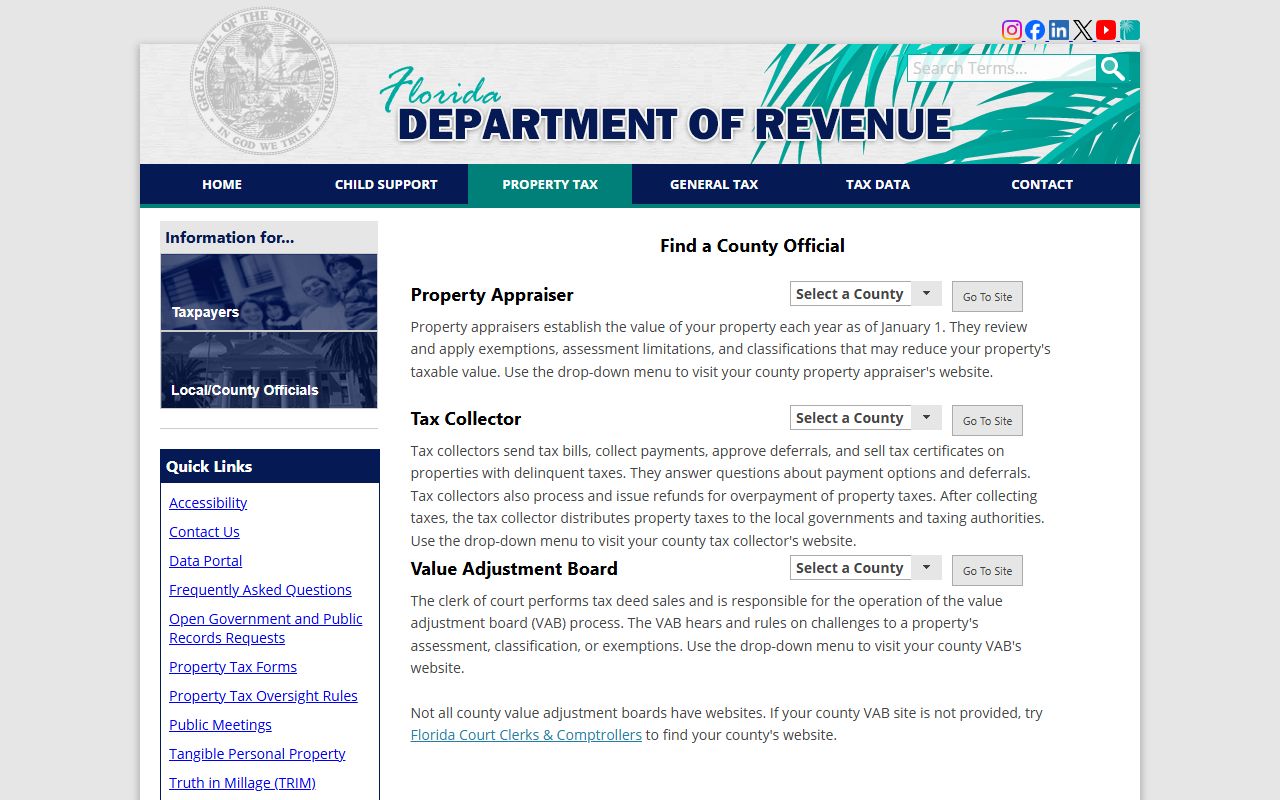
The county officials directory links directly to each county's local offices, which is helpful when contact information changes or you need to verify a mailing address for correspondence.
Nearby Counties
Hendry County is bordered by several counties in southwest and south-central Florida. Each county has its own property appraiser and official records system.