
Find Lee County Property Records
Lee County property records are maintained by the Property Appraiser's office in Fort Myers and cover all parcels in this Southwest Florida county, including Cape Coral, Fort Myers, and unincorporated areas. You can search ownership data, assessed values, exemptions, and sales history free of charge through the online portal at leepa.org, which is available 24 hours a day, 7 days a week for public use.
Lee County Property Records Quick Facts
Lee County Property Appraiser
The Lee County Property Appraiser's office is at 2480 Thompson Street, 4th Floor, Fort Myers, FL 33901. Phone: 239-533-6100. The office is responsible for identifying, locating, and placing a fair value on all property in Lee County for tax purposes. That covers real estate across the county's many communities, as well as tangible personal property owned by businesses. The appraiser's team also handles exemption applications and maintains the county's official property database.
Lee County is one of Florida's largest counties by population, with well over 700,000 residents. The sheer volume of parcels in the county makes the online search system at leepa.org essential. It is the primary tool for anyone who needs to look up property data, and it is built to handle high traffic while returning accurate, current results.
Florida law under Chapter 192 sets out the general rules that apply to all Florida county appraisers. The Lee County Property Appraiser's Office is committed to openness and accountability in all of its operations. As a public office, it follows Florida's Government-in-the-Sunshine laws and public records requirements under Chapter 119.
How to Search Lee County Property Records Online
The official property search portal is hosted on the Lee County Property Appraiser's website at leepa.org. It is available 24/7 and free for public use. The portal is updated regularly, ensuring that assessments, exemptions, and ownership details reflect the most recent filings.
The Lee County Property Appraiser's online portal, shown below, is the main starting point for any property record search in the county.

From the homepage you can access the parcel search, GIS maps, tax estimator, and sales history tools. The site also links to the Lee County Tax Collector for payment information.
To search, follow these steps. Go to leepa.org and choose your search method: owner name, parcel ID, or property address. Enter the information and review the property record. The record will show assessed value, market value, property description, ownership history, sales data, taxable value, and any exemptions. You can also use additional tools on the site including the GIS map viewer, a tax estimator, and a detailed sales history report for any parcel.
For in-person help, visit the office at 2480 Thompson Street in Fort Myers. Staff can assist with searches, explain assessment details, and help you complete exemption applications. Call 239-533-6100 before you go to confirm current hours.
What Lee County Property Records Show
A Lee County property record is a detailed public document. It shows the parcel identification number, legal description of the property, current owner of record, owner's mailing address, and the date the current ownership began. The record lists the just value, assessed value, and taxable value separately so you can see how exemptions reduce the taxable amount.
For residential properties, the record includes the year the structure was built, the size of the living area, the number of bedrooms and bathrooms, the type of construction, and a breakdown of land versus improvement value. You will also see a history of past sales with dates and prices. This sales data is public under Chapter 119 and is one of the most commonly used parts of the record for buyers and investors researching the market.
The assessment rules that govern how values are set are found in Chapter 193. The appraiser uses the cost approach, sales comparison approach, and income approach as appropriate to arrive at a fair value for each property type.
Homestead Exemption in Lee County
The Homestead Exemption can reduce the taxable value of a primary residence in Lee County by up to $50,000. Applications must be submitted by March 1 of the tax year. The exemption applies to Florida residents who own and occupy the property as their permanent home on January 1. The first $25,000 of the exemption applies to all property taxes, and the second $25,000 applies to non-school taxes only.
Additional exemptions may also apply. Seniors who meet income thresholds can qualify for an additional exemption under Florida law. Disabled persons and veterans may qualify for further reductions. The Lee County Property Appraiser's office can tell you which exemptions you qualify for and what documentation is needed.
The Save Our Homes cap, under Section 193.155 of Florida law, limits the annual increase in assessed value for homestead properties to 3% or the Consumer Price Index rate, whichever is lower. In a county like Lee where real estate values fluctuate, this cap has historically provided meaningful protection against large tax increases tied to rapid market appreciation.
Portability lets homeowners who move within Florida carry their accumulated Save Our Homes benefit to a new home. You apply for portability at the same time you apply for the Homestead Exemption at your new property. The benefit is based on the difference between the prior home's market value and its capped assessed value.
Tangible Personal Property in Lee County
Businesses operating in Lee County must file a Tangible Personal Property return each year. Tangible personal property includes equipment, furniture, computers, machinery, and other movable business assets. The annual filing deadline is April 1. If the return is not filed on time, penalties are added to the tax bill at 5% per month, up to a maximum of 25%.
Failure to file at all results in an estimated assessment and a 25% penalty applied to the total assessed value. Businesses with assets totaling less than $25,000 may qualify for an exemption, but they must still file the initial return to establish eligibility. The Property Appraiser reviews TPP returns and may conduct field inspections to verify reported values. If you have questions about what to include in a return or how to estimate your asset values, call the office at 239-533-6100.
Note: Tangible personal property returns are separate from real property records and are handled by the same Property Appraiser's office.
The Property Tax Process and TRIM Notices
Each August, Lee County property owners receive a TRIM Notice. TRIM stands for Truth in Millage. This notice is not a bill. It is a preview of your proposed property taxes based on current values and proposed millage rates from all taxing authorities. Review it carefully. It tells you how much each taxing district plans to collect from your parcel and gives you the deadline to file a petition if you think your value is wrong.
If your assessed value seems too high, contact the Property Appraiser's office first. An informal review may resolve the issue. If not, file a petition with the Lee County Value Adjustment Board before the deadline on the TRIM Notice. The VAB hearing gives you a chance to present evidence for a lower value.
Tax bills are sent by the Lee County Tax Collector starting in November. A 4% discount applies if you pay in November, 3% in December, 2% in January, and 1% in February. Taxes not paid by March 31 become delinquent. The county can then sell a tax certificate on the unpaid balance, which begins a legal process that can eventually result in loss of the property.
The Florida DOR's property tax FAQ page covers common questions about the entire process, from assessment to payment.
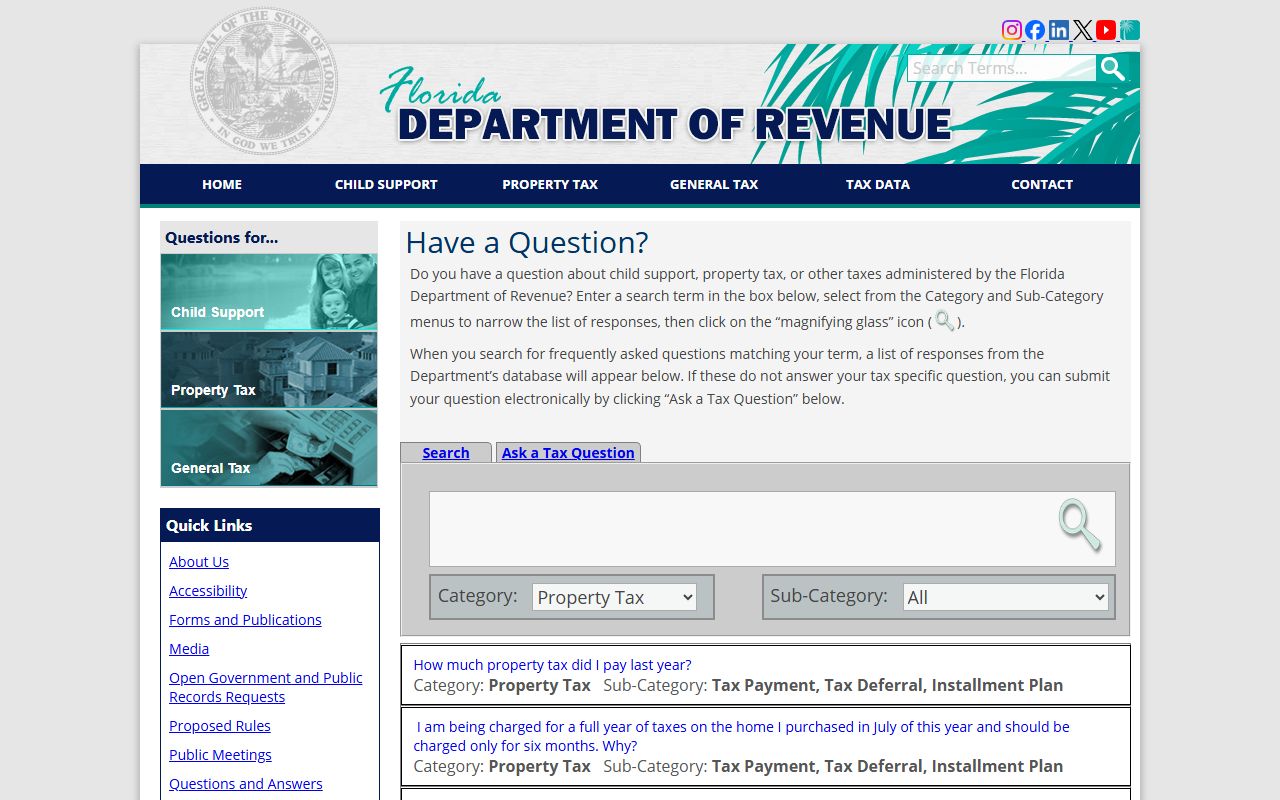
The FAQ page answers common questions about assessments, exemptions, tax bills, and appeals that apply to Lee County property owners.
Official Records at the Lee County Clerk
The Lee County Clerk of Court maintains all recorded documents affecting real property in the county. When a home sells in Lee County, the warranty deed is recorded here and becomes part of the permanent public record. Mortgages, satisfactions of mortgage, liens, and easements are all recorded with the Clerk. You can search these records to verify ownership history or check for encumbrances on a property.
Chapter 28 governs how the Clerk records and indexes official instruments. Recording fees apply. The Clerk's office is at the Lee County Justice Center in Fort Myers. Many recorded documents are searchable online through the Clerk's public records portal, which is separate from the Property Appraiser's site.
Cities in Lee County
Lee County includes Cape Coral and Fort Myers, both of which have dedicated property records pages on this site.
Nearby Counties
Lee County borders these Southwest Florida counties, each with their own property records offices.