
Martin County Property Records Search
Martin County property records are maintained by the Martin County Property Appraiser in Stuart, covering all parcels from Hobe Sound and Jensen Beach to Palm City and beyond. You can search for ownership data, assessed values, sales history, and exemption information online through the appraiser's public portal at mcpa-online.com, or contact the office directly at 111 SE Monterey Road.
Martin County Property Records Quick Facts
Martin County Property Appraiser Office
The Martin County Property Appraiser serves as the official keeper of all property data in Martin County. The office is at 111 SE Monterey Road, Stuart, FL 34994, and the main phone line is 772-288-5600. You can reach the office and use the free online search tool at mcpa-online.com. The site allows searches by owner name, parcel ID, or property address and returns full parcel detail records.
Martin County is a relatively small county by Florida standards, with a population under 200,000 and a land area of about 556 square miles. Despite its size, it has a substantial property tax base because of high-value waterfront and golf community properties. The appraiser's office manages these varied parcel types, from coastal condominiums to agricultural tracts in the western part of the county.
The office handles homestead exemptions, agricultural classifications, tangible personal property returns, and appeals filed with the Value Adjustment Board. Staff can walk you through any part of the process, either in person or by phone. If you need a specific parcel report or a copy of a property record card, the office can provide those on request.
Note: The Property Appraiser sets values but does not mail tax bills or collect taxes. Contact the Martin County Tax Collector for payment questions.
Searching Martin County Property Records Online
The fastest way to find a Martin County property record is through the online search portal at the appraiser's website. You can search by owner name, parcel number, or street address. Each record includes the current owner, the parcel's legal description, the assessed and taxable values, and the sales history with deed book and page references. The site also shows any active exemptions on the parcel.
The Florida Department of Revenue provides a taxpayer information page that gives property owners guidance on assessment, exemptions, and their rights under Florida law. That resource is useful if you have general questions about how the assessment process works across the state.
The DOR's Taxpayer Information page explains Florida property tax rules, how values are set, and what options taxpayers have when they disagree with an assessment.
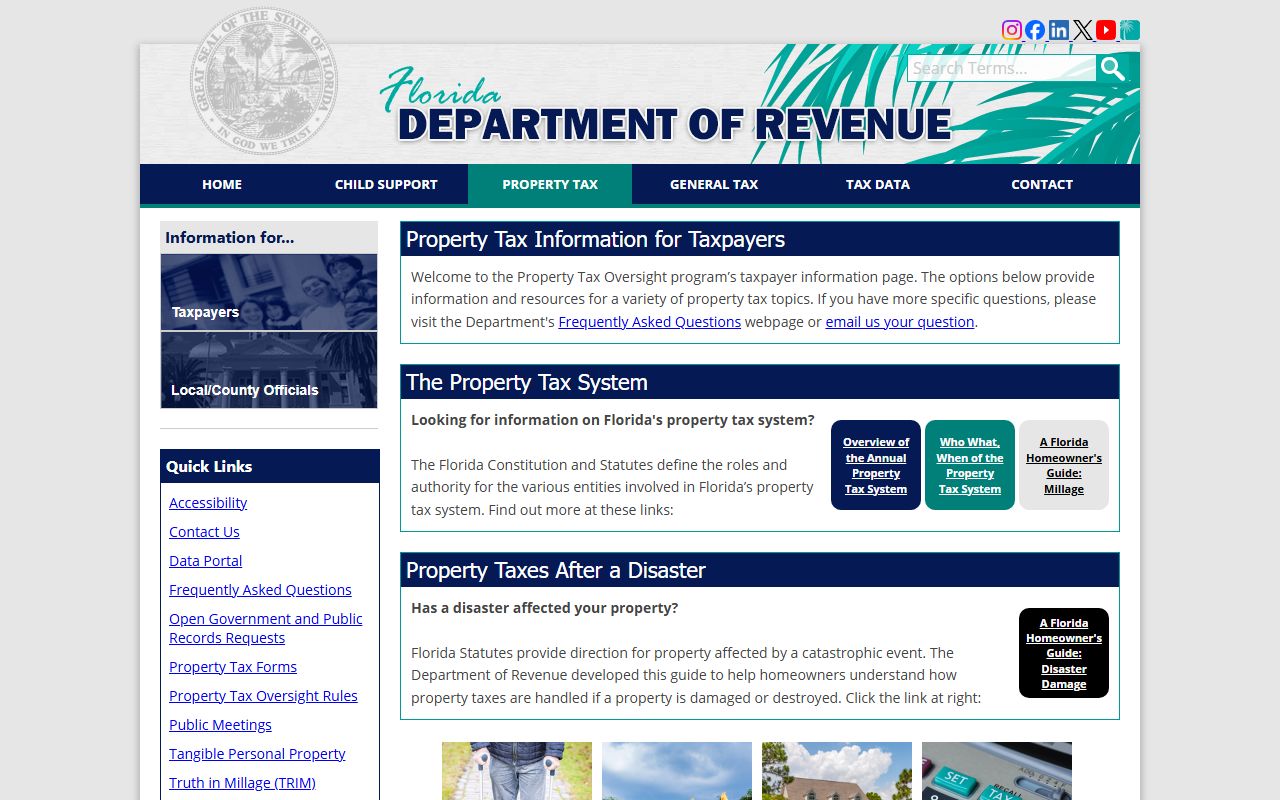
This page is a good starting point if you are new to Florida property taxes or are dealing with a specific issue like an incorrect assessment or a denied exemption.
What Martin County Property Records Show
Each parcel record in Martin County contains a set of standard data fields. The record shows the owner's name and mailing address, the situs (physical) address, the legal description, the parcel identification number, and the land use or zoning code. Valuation fields include just value, assessed value (with any Save Our Homes cap applied), and taxable value after exemptions.
Residential records include construction details like the year built, heated area in square feet, number of bedrooms and baths, exterior wall type, and roof style. These details come from field inspections that the appraiser's staff conduct on a rotating basis. When you pull a parcel record, you can see when the property was last inspected and whether any changes to the structure were noted.
Sales history is part of every parcel record. Each transaction shows the date, sale price, deed type, and the official records instrument number where the deed was recorded with the clerk. You can use this data to see how a property's value has changed over time and how it compares to nearby sales.
Martin County also has a significant number of boat docks, seawalls, and other waterfront improvements. These are treated as real property improvements and included in the appraiser's records, which means waterfront assessments often reflect these structures in addition to the land and main building.
Homestead Exemption and Save Our Homes in Martin County
Martin County residents who own and occupy their home as a primary residence can apply for the homestead exemption. The exemption reduces the assessed value by up to $50,000. The first $25,000 reduces taxes across all levies, and the second $25,000 applies only to non-school taxes. You must file with the Martin County Property Appraiser by March 1 of the tax year in which you want the exemption to take effect.
The Save Our Homes cap limits annual increases in a homesteaded property's assessed value to 3% or the rate of inflation, whichever is less. In a county like Martin, where waterfront properties have appreciated significantly over the past decade, longtime homeowners have often seen large gaps between market value and assessed value. This cap is one of the most valuable protections available to Florida homeowners.
When you sell a homesteaded property, you can carry the accumulated Save Our Homes benefit to a new Florida home through the portability process. You apply for portability when you file for homestead on the new property. The amount you can port depends on the difference between the just value and the assessed value of the old home at the time of sale.
Other exemptions available in Martin County include those for widows and widowers, veterans with service-connected disabilities, first responders with total and permanent disability, and senior citizens with qualifying income limits. The appraiser's office can tell you which exemptions you may qualify for and what documentation you will need to apply.
TRIM Notices and Property Tax Timeline
In August of each year, Martin County property owners receive a Truth in Millage (TRIM) notice. This document is not a tax bill, but it shows the proposed assessed value, any exemptions, and the proposed tax rates set by each taxing body that covers the property. Taxing bodies in Martin County include the county government, school board, water control districts, and municipal governments for Stuart and other incorporated areas.
Review your TRIM notice carefully when it arrives. If the assessed value looks wrong, you can contact the appraiser's office to discuss it. An informal review with staff is often the fastest way to resolve a discrepancy. If that does not work, you have 25 days from the date the TRIM notice was mailed to file a formal petition with the Martin County Value Adjustment Board.
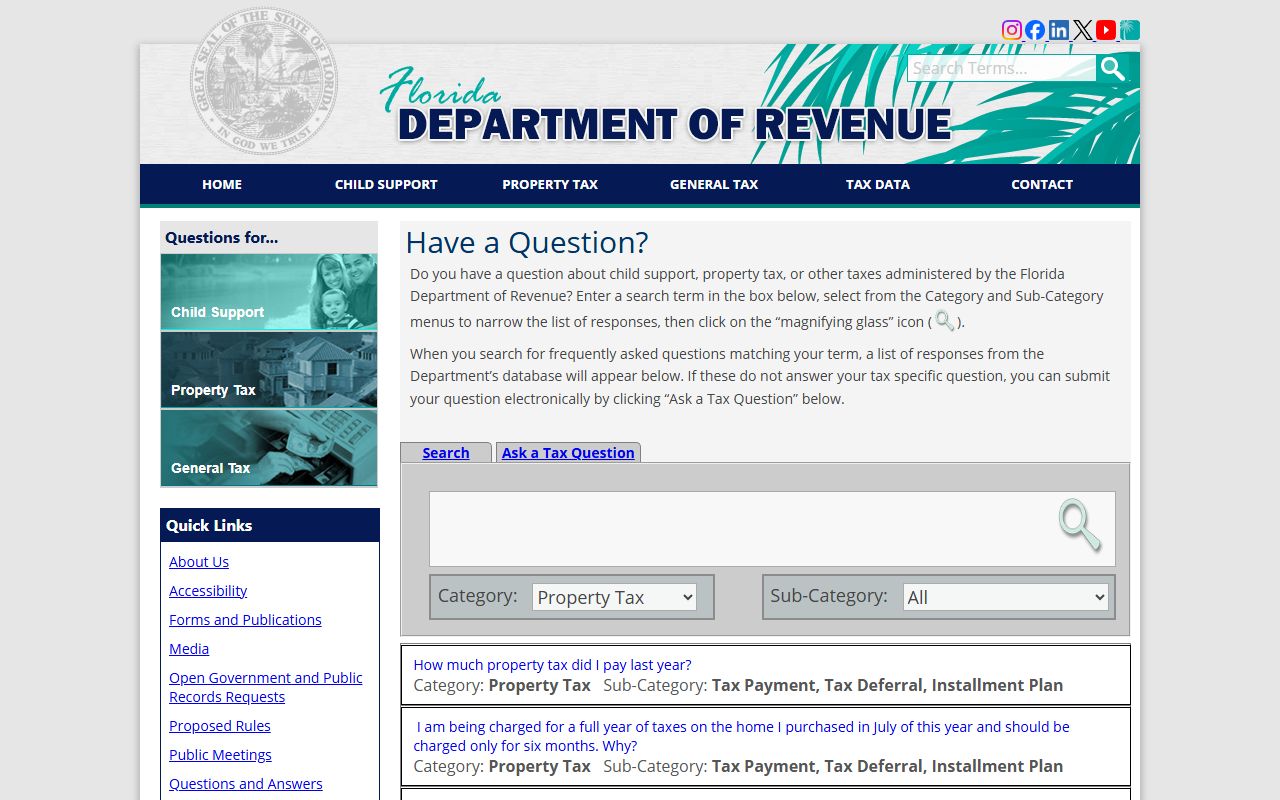
The DOR's FAQ page covers many common property tax questions and can help you understand how to read your TRIM notice and what your options are.
The Florida DOR's Property Tax FAQ page answers questions about TRIM notices, exemptions, and the appeals process that apply across all Florida counties including Martin.
After taxing authorities set final millage rates, the Martin County Tax Collector sends out actual tax bills in November. You can pay early and earn a discount, or pay by the March 31 deadline to avoid penalties.
Official Records and the Martin County Clerk
The Martin County Clerk of Circuit Court records all instruments that affect real property in the county. These include deeds, mortgages, satisfactions, liens, and other documents that must be in the public record to be legally effective against third parties. The clerk's office is at the Martin County Courthouse in Stuart.
Recording is governed by Chapter 28, Florida Statutes. Fees are set by statute based on page count, and all recorded documents become part of the public record the moment the clerk accepts them. Most Martin County official records are searchable online through the clerk's website by grantor or grantee name or by document type and date range.
When a deed gets recorded, the clerk transmits ownership information to the property appraiser, who updates the tax roll. This process keeps the two databases in sync, though there can be a short lag between when a deed is recorded and when the appraiser's records reflect the new owner. If you have just bought a property and the online records still show the prior owner, check back in a few weeks or contact the appraiser's office directly.
Florida Statutes Governing Property Records
Florida property assessment follows rules set out in Chapter 192 and Chapter 193, Florida Statutes. Chapter 192 defines the core concepts of just value and taxable value and establishes the basic rights of property owners. Chapter 193 sets the detailed rules for how appraisers must value different categories of property, from single-family homes to timberland and agricultural land.
Public access to property records is protected by Chapter 119, Florida Statutes, the Public Records Law. Under this law, all property records held by the appraiser and the clerk are open to the public unless a specific statutory exemption applies. A small number of records, such as the home addresses of certain protected persons like judges and law enforcement officers, may be kept confidential under limited circumstances.
The Florida Department of Revenue provides oversight and guidance to ensure Martin County and all other counties comply with state assessment requirements. The DOR can require corrective action if a county's assessments deviate significantly from just value standards.
Cities in Martin County
Stuart is the county seat and largest city, but it does not meet the 100,000 population threshold for a city page on this site. Hobe Sound and Palm City are unincorporated communities, and the city of Sewall's Point and town of Jupiter Island are small. All Martin County property records, regardless of the community, are managed through the county property appraiser and clerk offices in Stuart.
Nearby Counties
Martin County sits in southeast Florida and borders several other counties, each with its own property records system.