
Find St. Lucie County Property Records
St. Lucie County property records are held by the Property Appraiser's office in Fort Pierce and are open to the public under Florida law. You can search parcel data, check assessed values, look up ownership, and request copies of records for any property in the county.
St. Lucie County Property Records Quick Facts
St. Lucie County Property Appraiser's Office
The St. Lucie County Property Appraiser's office is at 2300 Virginia Avenue, Fort Pierce, FL 34982. You can call the office at 772-462-1000. The official website is at stluciepa.org. Fort Pierce is the county seat, while Port St. Lucie is the county's largest city and one of the fastest-growing cities in Florida.
St. Lucie County sits on Florida's Treasure Coast, bordered by the Atlantic Ocean to the east. The county has a large and diverse real estate market that includes single-family homes, condominiums, waterfront properties, commercial parcels, and agricultural land. Port St. Lucie in the southern part of the county has driven most of the population growth over the past two decades, while Fort Pierce remains the center of county government.
The Property Appraiser values all real property in St. Lucie County as of January 1 each year. That value is used to calculate property taxes collected by the Tax Collector. The office must physically inspect every parcel at least once every five years under Florida law. Between inspections, staff rely on permit data, aerial photography, and sales analysis to keep the tax roll accurate.
Florida Department of State and Official Records
The Florida Department of State maintains several programs relevant to property ownership and public records. The Division of Library and Information Services oversees records management standards that apply to county agencies including the Property Appraiser and Clerk of Court. Understanding how Florida manages government records at the state level can help you locate the right agency for your needs.
Florida Department of State homepage covering records, licensing, and public information
The Florida Department of State at dos.fl.gov oversees public records management standards across state and county agencies in Florida, including those that apply to St. Lucie County property records.
Property Tax Frequently Asked Questions
The Florida Department of Revenue maintains a searchable database of frequently asked questions about property taxes in Florida. This covers topics such as how assessed values are determined, what exemptions are available, how to appeal an assessment, and what happens when property changes hands. It is a useful starting point if you have general questions about how property taxes work in St. Lucie County.
Florida DOR property tax frequently asked questions database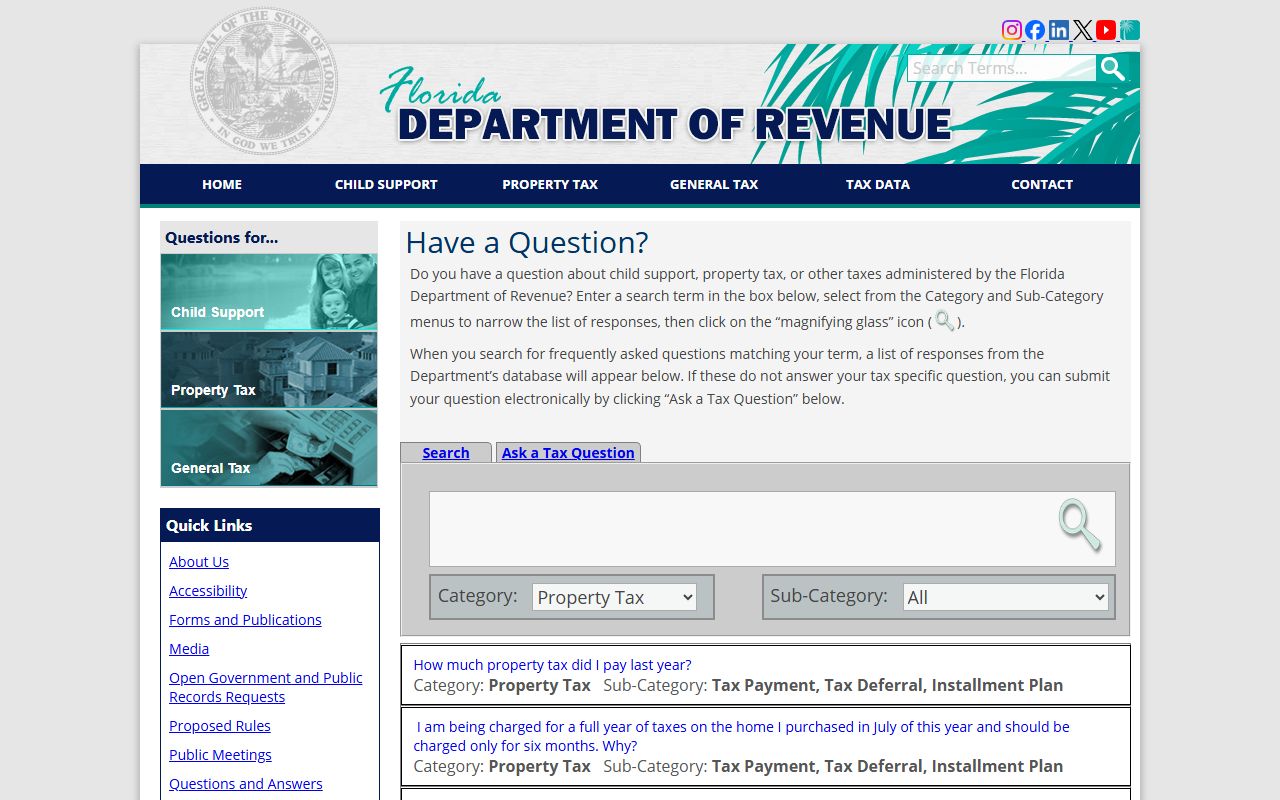
The Florida DOR property tax FAQ page at floridarevenue.com answers common questions about assessments, exemptions, appeals, and deadlines that apply to St. Lucie County property owners.
Homestead Exemption and Assessment Caps
Florida homestead exemption can reduce your assessed value by up to $50,000 if you own and live in the property as your permanent residence on January 1. You must file by March 1 each year. First-time filers can apply at the St. Lucie County Property Appraiser's office in Fort Pierce or through the office's online portal. You will need proof that the property is your primary home, such as a Florida driver's license, Florida vehicle registration, or Florida voter registration showing the property address.
Once homestead is granted, the Save Our Homes cap limits your assessed value increase to 3% per year or the CPI change, whichever is lower. This protection can produce a significant gap between assessed value and market value over time, especially in a market like St. Lucie County where values have risen quickly in recent years. When you sell and move, you can transfer the accumulated benefit to a new Florida home through portability.
Additional exemptions are available to several groups. Veterans with service-connected disabilities may qualify for extra exemptions, and some totally disabled veterans pay no property taxes at all under Florida law. Seniors 65 and older with limited income may qualify for a local option exemption. People with total and permanent disabilities, widows, and widowers are also entitled to additional reductions. Contact the office at 772-462-1000 to learn what applies to your situation.
Non-homestead properties face a 10% annual cap on assessed value increases, but no Save Our Homes protection. If you own rental property or a second home in St. Lucie County, your assessed value can rise more quickly in a strong market, and portability is not available for those properties.
Public Records and Recorded Documents
Most records held by the St. Lucie County Property Appraiser are public under Chapter 119 of the Florida Statutes. You can request parcel data, assessment rolls, exemption files, and other records by contacting the office. There is no required form for a request. Copy fees apply for printed documents, and the office may charge for extensive staff time on large requests.
Deeds, mortgages, and other instruments recorded against real property are held by the St. Lucie County Clerk of Circuit Court, not the Property Appraiser. Under Chapter 28 of the Florida Statutes, the Clerk maintains and provides access to official records. The Clerk is required to offer internet access to most recorded documents. Contact the Clerk's office separately if you need copies of deeds or title-related instruments.
Property assessment in St. Lucie County is governed by Chapter 192 and Chapter 193 of the Florida Statutes. These laws set out how property must be valued, what deadlines apply, and what rights property owners have in the assessment and appeals process.
Assessment Appeals in St. Lucie County
TRIM notices go out each August and show your proposed assessed value along with estimated taxes. If you think the value is wrong, start with an informal review at the Property Appraiser's office. Call 772-462-1000 or visit in person. Staff can explain how your value was calculated and may adjust it if the data supports a change.
If the informal review does not resolve your concern, you can file a petition with the St. Lucie County Value Adjustment Board before the deadline on your TRIM notice. The VAB is independent and can lower your assessment if you show credible evidence. Good evidence includes recent sales of comparable properties or an independent appraisal done close to January 1 of the tax year in question.
Cities in St. Lucie County
Port St. Lucie is the only city in St. Lucie County with a population over 100,000, and it has its own property records page here. Fort Pierce, the county seat, has a smaller population and does not have a separate page. All St. Lucie County properties are assessed by the Property Appraiser's office at 2300 Virginia Avenue, Fort Pierce.
Nearby Counties
St. Lucie County is bordered by three other Florida counties on the Treasure Coast.